
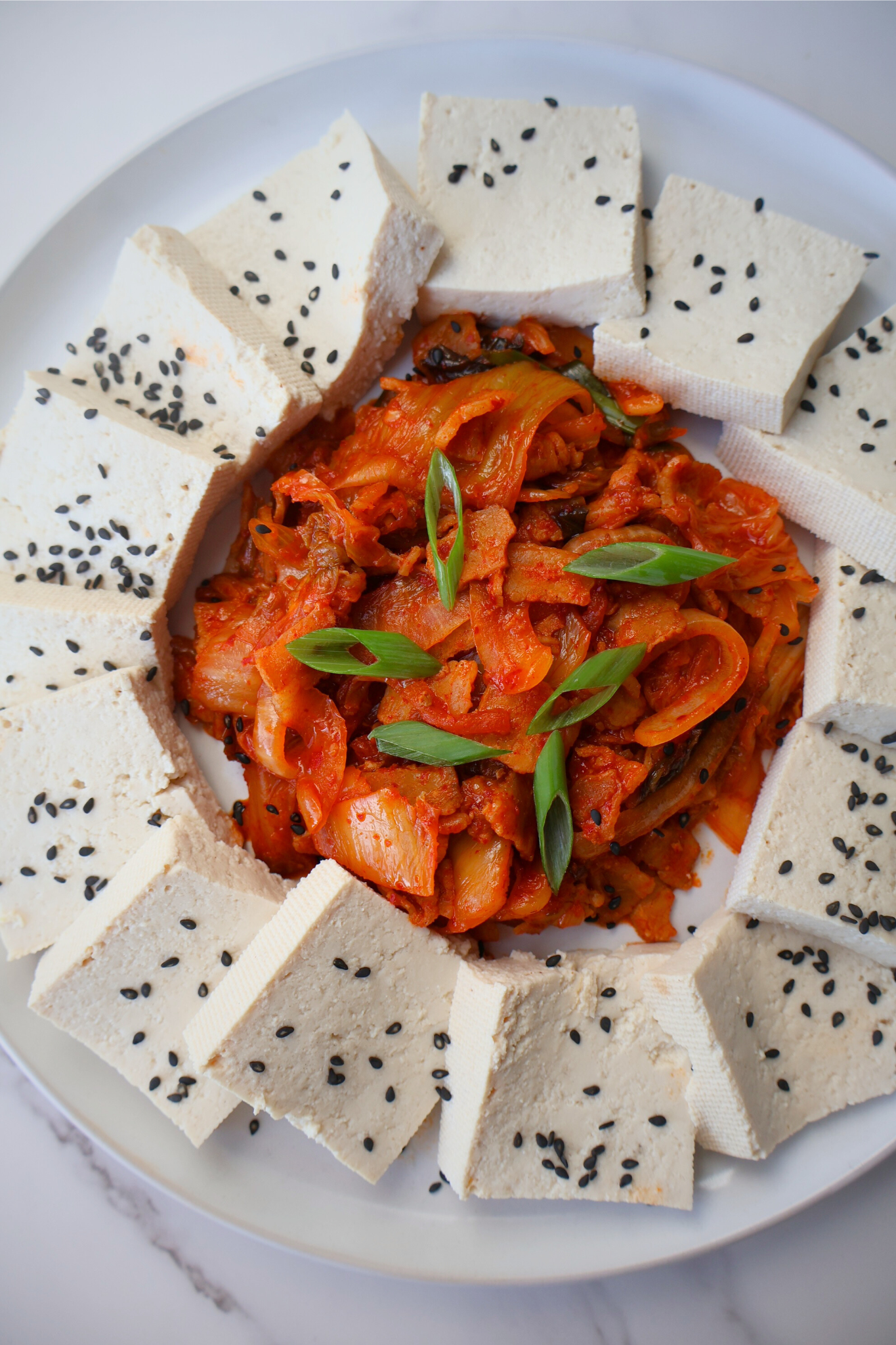
Dubu Kimchi (두부김치) | Tofu with Stir-Fried Kimchi and Pork
By Emilia Kim
Prep Time: 10 minutes | Cook Time: 20 minutes | Total Time: 30 minutes | Servings: 2–3
Why Dubu Kimchi Is My Ultimate Comfort Food
There are certain dishes that do not just feed you. They hold you. Dubu Kimchi is one of those dishes for me.
I first really fell in love with this recipe the way most people fall in love with great food — not in a restaurant, not from a cookbook, but from the kind of casual, repeated eating that eventually makes something feel like yours. My husband and I eat this often. It is the kind of meal we return to without thinking about it too hard, the kind that shows up on a Tuesday night when we both just need something real. Living in the DFW area, truly great Korean food can be hard to find (although new spots are opening and it’s getting better), so I make this at home and honestly, I would not have it any other way.
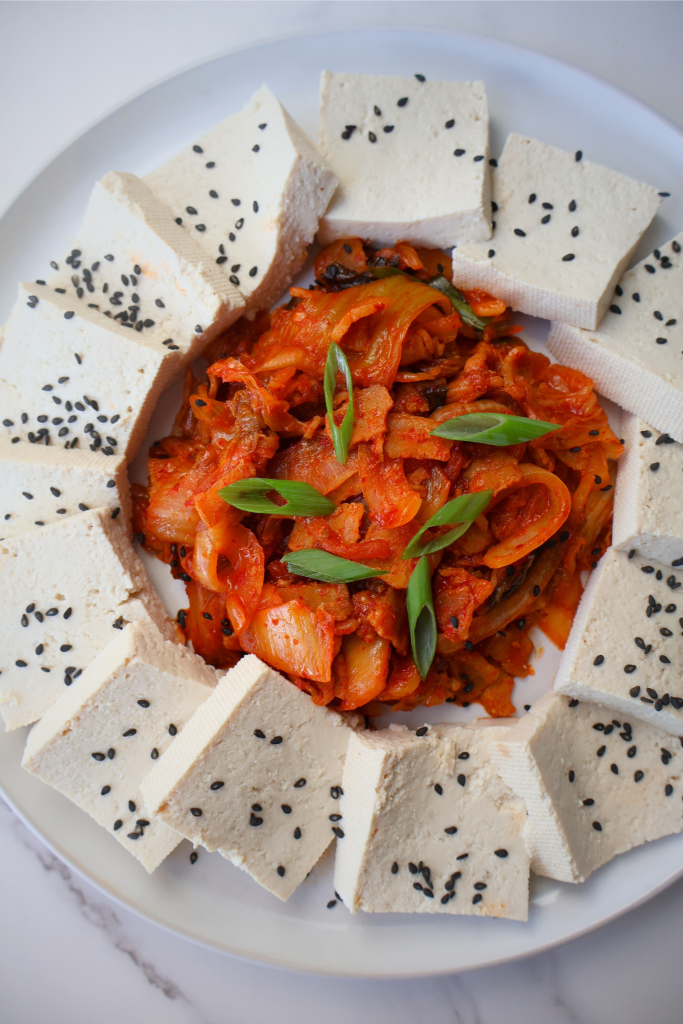
Dubu Kimchi translates simply to “tofu and kimchi,” but do not let the simplicity fool you. This dish is a study in contrast: the warm, firm tofu against the hot, spicy-sweet pork and kimchi mixture. The gochujang brings a deep, fermented heat. The brown sugar pulls it back into something almost caramelized. The sesame oil threads through everything like a whisper. It is the kind of flavor combination that makes you close your eyes for a second after the first bite.
If you have been wanting to cook more Korean food at home, this is the recipe to start with.
What Is Dubu Kimchi?
Dubu Kimchi (두부김치) is a classic Korean dish traditionally served as an anju, meaning food eaten alongside drinks, though it works beautifully as a full meal. It consists of two components: plain boiled or steamed firm tofu, and a savory stir-fried mixture of kimchi, pork, and aromatics seasoned with gochujang and soy sauce.
The tofu is intentionally kept simple and mild. It is there to balance the boldness of the kimchi side. The contrast is the whole point — bland and bold, soft and chewy, cool and warm. In Korean home cooking, that kind of intentional contrast is everywhere, and it is one of the things I love most about the cuisine.
Ingredient Notes and Substitutions
Firm tofu: Firm tofu holds its shape after boiling and gives you those beautiful thick rectangles for plating. Extra-firm works too. Avoid silken tofu here — it will fall apart.
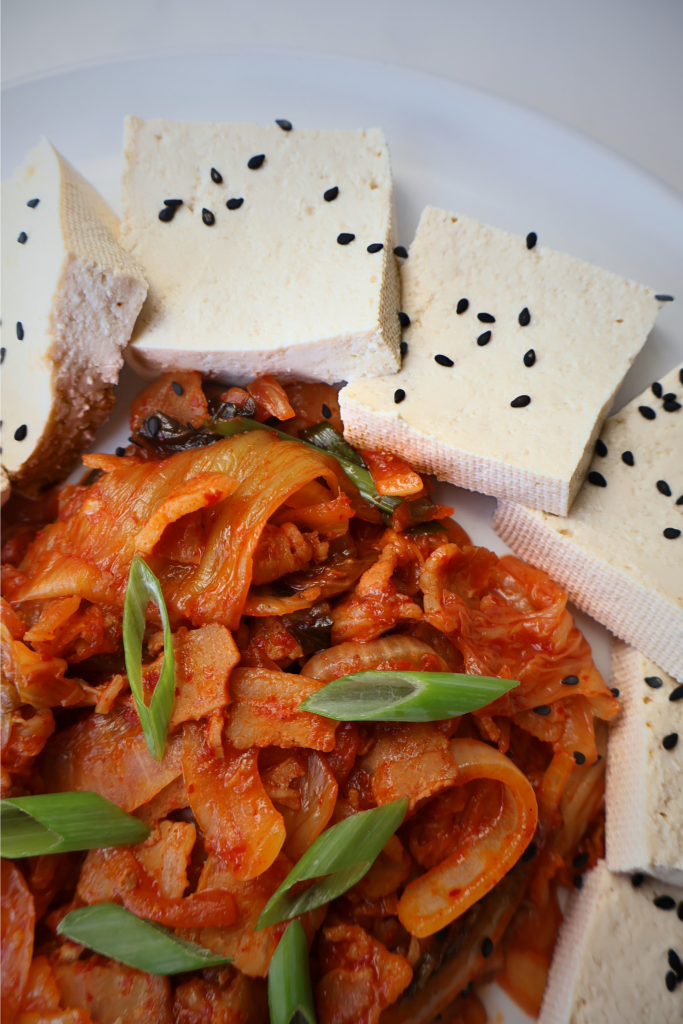
Pork belly: Thinly sliced pork belly is traditional and gives you the best texture — slightly crispy edges with tender, fatty pieces throughout. If you cannot find it pre-sliced, ask at your Asian grocery store or pop it in the freezer for 20 minutes before slicing to make it easier. Thinly sliced pork shoulder or pork loin are good substitutes.
Kimchi: Store-bought kimchi works perfectly here. In fact, older kimchi (the kind that has been sitting in your fridge for a few weeks and has gotten a bit more sour) is ideal for cooking because that fermented funk deepens beautifully in a hot pan. Any brand you like the flavor of raw will taste even better stir-fried.
Gochujang: This fermented chili paste is the backbone of the dish. It is sweet, spicy, and deeply savory all at once. You can find it at any Korean or Asian grocery store, and most major grocery chains now carry it too. Do not substitute with plain chili paste — the fermented quality of gochujang is what makes this dish taste the way it does.
How to Make Dubu Kimchi
Step 1: Prepare the Tofu
Bring a pot of water to a gentle boil. Add the whole block of firm tofu and simmer for 2 to 3 minutes. Remove it carefully and set it aside. Alternatively, you can steam the tofu if you prefer. Once it has cooled slightly, slice it into thick rectangles and arrange them on your serving plate. Set aside while you make the stir-fry.
Boiling or steaming the tofu is a small but important step. It warms the tofu all the way through and gives it a slightly firmer, silkier texture than raw cold tofu straight from the package.
Step 2: Cook the Pork
Heat a pan over medium heat and add the neutral oil. Add the thinly sliced pork belly and cook, stirring occasionally, until the pieces are lightly browned and slightly crispy on the edges. The fat will render out as it cooks and become the base for your sauce — do not drain it.
Step 3: Add the Kimchi
Stir in the kimchi, using kitchen scissors to cut it into bite-sized pieces directly in the pan if needed. Let it cook with the pork for a minute or two, letting them get acquainted.
Step 4: Season
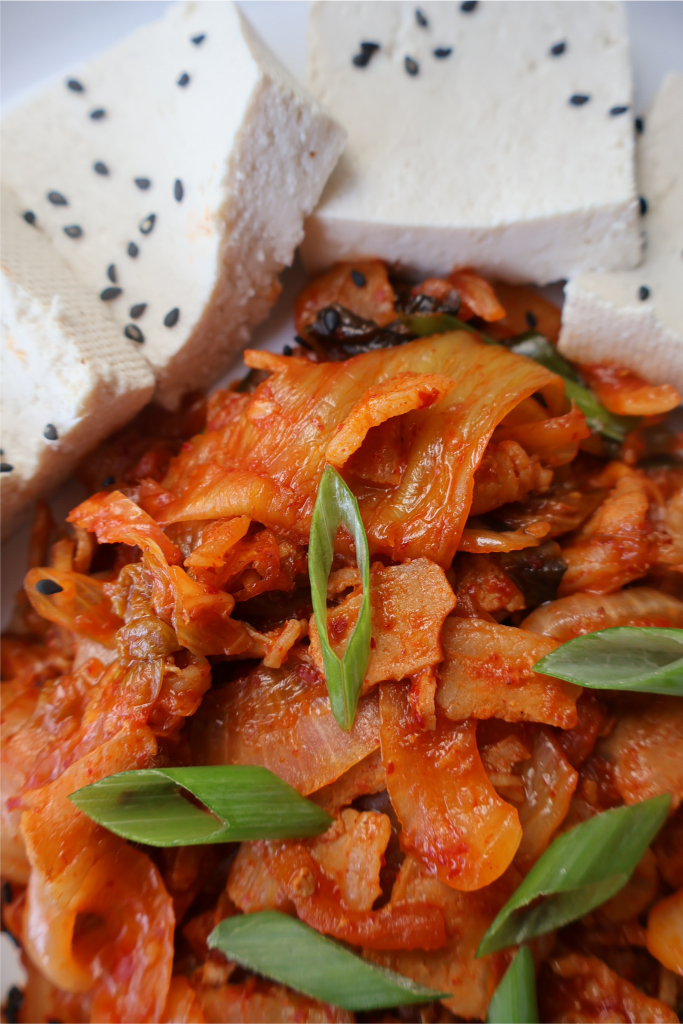
Add the gochujang, brown sugar, soy sauce, and sesame oil. Stir well to combine everything into a glossy, fragrant sauce that coats every piece of pork and kimchi.
Step 5: Add the Aromatics
Add the sliced onion and cook until softened, about 2 to 3 minutes. Then add the sliced green onions and continue stir-frying for a few more minutes until everything is well coated, heated through, and deeply fragrant. Taste and adjust seasoning if needed — a little more gochujang for heat, a pinch more sugar if you want to pull back the spice.
Step 6: Plate and Garnish
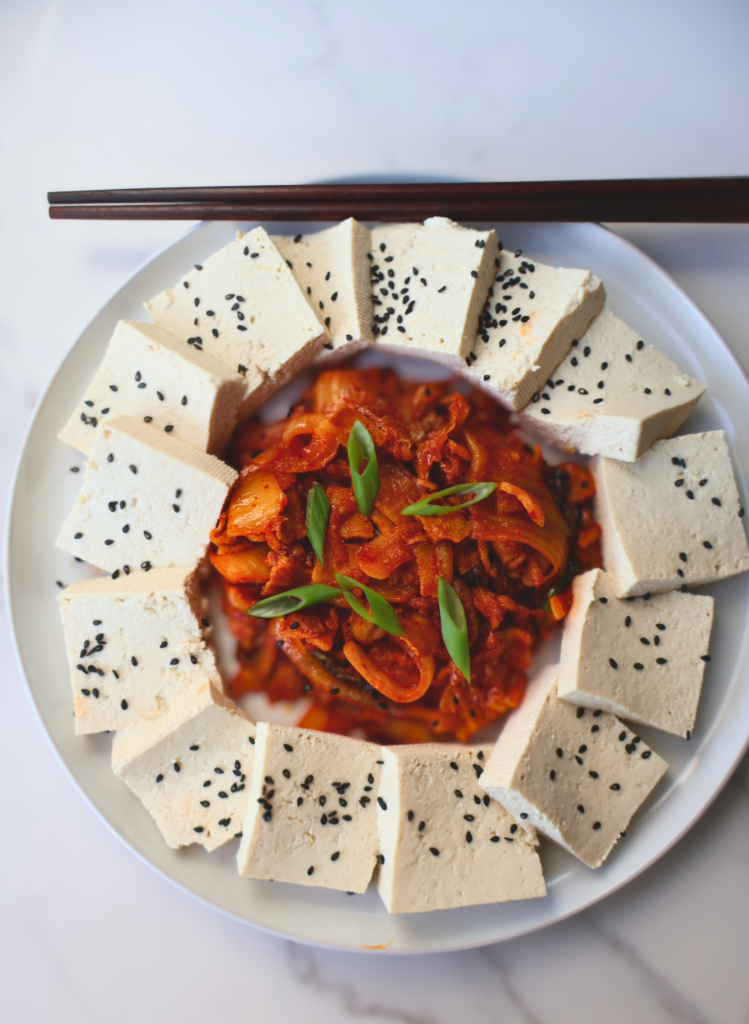
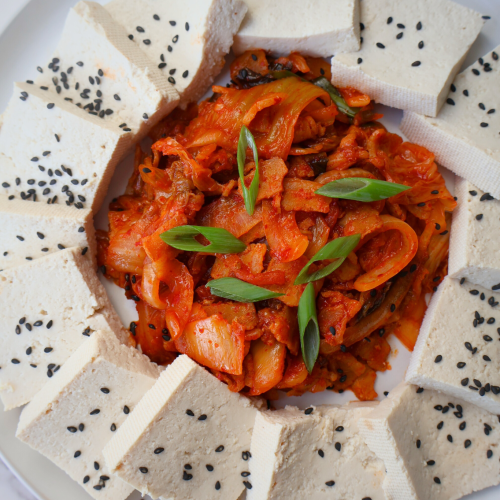
Spoon the hot kimchi and pork mixture into the center of your plate. Arrange the sliced tofu around it. Sprinkle black sesame seeds over the tofu and top the whole dish with extra green onions. Serve immediately.
Tips for the Best Dubu Kimchi
Use older, fermented kimchi if you have it. Fresh kimchi is mild and bright; aged kimchi is funky and sour in the best possible way. Both work, but aged kimchi gives you a more complex, deeply savory stir-fry.
Do not rush the pork. Let it get those slightly crispy, golden edges before you add anything else. That caramelization is where a lot of the flavor lives.
Taste as you go. Kimchi brands vary in saltiness and acidity, so your final seasoning adjustments matter. Trust your palate.
Make it a full meal. Dubu Kimchi is traditionally served with a bowl of plain steamed white rice. The rice soaks up the sauce beautifully and makes this a fully satisfying dinner.
Serving Suggestions
This dish is best served immediately, while the tofu is still warm and the stir-fry is hot and saucy. Pair it with:
- A bowl of steamed short-grain white rice
- A side of simple Korean cucumber salad (oi muchim)
- Miso soup or Korean doenjang jjigae for a full spread
- A cold Korean beer or makgeolli if you are going the anju route
Make It Your Own
Dubu Kimchi is flexible. Here are a few ways to riff on it:
Make it vegetarian: Skip the pork entirely and add a little extra sesame oil and a splash of vegetable broth to keep the sauce loose and rich.
Add more vegetables: Zucchini, mushrooms, or shredded cabbage all work well in the stir-fry and add more body to the dish.
Control the heat: One heaping tablespoon of gochujang gives you a medium heat. Add more if you want it fiery, or cut it back to half a tablespoon for a milder version.
Why This Recipe Works for Beginners
If you are new to cooking Korean food, this is genuinely one of the most approachable recipes in the cuisine. There is no special equipment required, no complicated technique, and the ingredients are easy to find once you have gochujang and kimchi in your pantry (which, honestly, everyone should). The whole dish comes together in about 30 minutes and uses one pan for the stir-fry. It is weeknight-friendly in the best way.
Frequently Asked Questions
Can I use silken tofu instead of firm tofu? I would not recommend it for this recipe. Silken tofu is too soft to hold its shape after boiling, and you want those clean, thick rectangles that contrast visually and texturally with the stir-fry. Stick with firm or extra-firm.
What if I cannot find pork belly? Thinly sliced pork shoulder or even pork loin work well. The key is that the pork is thinly sliced so it cooks quickly and gets those slightly crispy edges.
Can I make this ahead of time? The stir-fry can be made ahead and reheated. The tofu is best prepared fresh, but it only takes a few minutes, so I recommend boiling it right before serving.
Is this dish very spicy? With one heaping tablespoon of gochujang, it has a medium, warm heat. The brown sugar balances it significantly. You can easily dial it up or down depending on your preference.
Can I make this without meat? Yes. Omit the pork and add a few extra mushrooms or a little more kimchi. You can also add a teaspoon of gochugaru (Korean chili flakes) for more depth.
Dubu Kimchi (두부김치) | Tofu with Stir-Fried Kimchi and Pork

Equipment
- pan or skillet
- pot (for boiling tofu) or steamer
- knife
- kitchen scissors
- cutting board
Ingredients
- 1 block firm tofu
- 2/3 cup thinly sliced pork belly (or any thinly sliced pork)
- 1 cup store-bought kimchi (cut into smaller pieces)
- 1 tbsp gochujang (heaping tablespoon)
- 2 tbsp brown sugar
- 2 tsp soy sauce
- 1 drizzle sesame oil
- 1 tbsp neutral oil for sauteing
- 1 small onion sliced
- 2 green onions, sliced plus extra for garnish
- black sesame seeds for garnish
Instructions
- Bring a pot of water to a gentle boil. Add the tofu and simmer for 2–3 minutes. Remove and set aside. (Alternatively, you can steam the tofu.)
- Slice the tofu into thick rectangles and set aside for plating later.
- Heat a pan over medium heat and add a small amount of neutral oil.
- Add the thinly sliced pork and sauté until lightly browned and slightly crispy on the edges.
- Stir in the kimchi (cut into bite-sized pieces using kitchen scissors if needed).
- Add the gochujang, sugar, soy sauce, and sesame oil. Stir well to combine.
- Add the sliced onion and cook until softened.
- Add the sliced green onions and continue stir-frying for a few minutes until everything is well coated and heated through.
- Taste and adjust seasoning if needed.
- Plate by placing the kimchi and pork mixture in the center. Arrange the sliced tofu around it.
- Garnish the tofu with black sesame seeds and top the dish with extra green onions.
Notes
- You can adjust the sweetness by reducing or increasing the sugar slightly.
- Use well-fermented kimchi for deeper flavor.
- Pork belly adds richness, but any thinly sliced pork works well.
- This dish is best served warm, with the tofu soft and the kimchi hot.
Pin this recipe for later: Dubu Kimchi — Korean Tofu with Stir-Fried Kimchi and Pork Belly | Easy 30-Minute Korean Dinner | Gochujang Stir Fry | Asian Comfort Food | Spicy and Sweet Korean Recipe | theemiliakim.com
dubukimchi #두부김치 #Koreanfood #Koreanrecipe #Koreancooking #Koreandinner #kimchirecipe #kimchistirfry #porkbelly #tofurecipe #firmtofu #gochujang #Asianfood #Asiandinner #Asiancomfortfood #easyKoreanrecipes #easyAsianrecipes #easydinnerrecipes #30minutemeals #weeknightdinner #comfortfood #homecooking #foodblogger #recipeblogger #Koreanfoodie #Koreanhomecooking #banchan #anju #spicyfood #theemiliakim

I really loved this recipe!! It came out so good!