Hosting Greece: A Full Greek Table and the Meaning of Philoxenia
Welcome to Hosting the World. This week I am hosting Greece, and I want to take you all the way through it, the food, the table, and the one idea that holds the whole thing together.
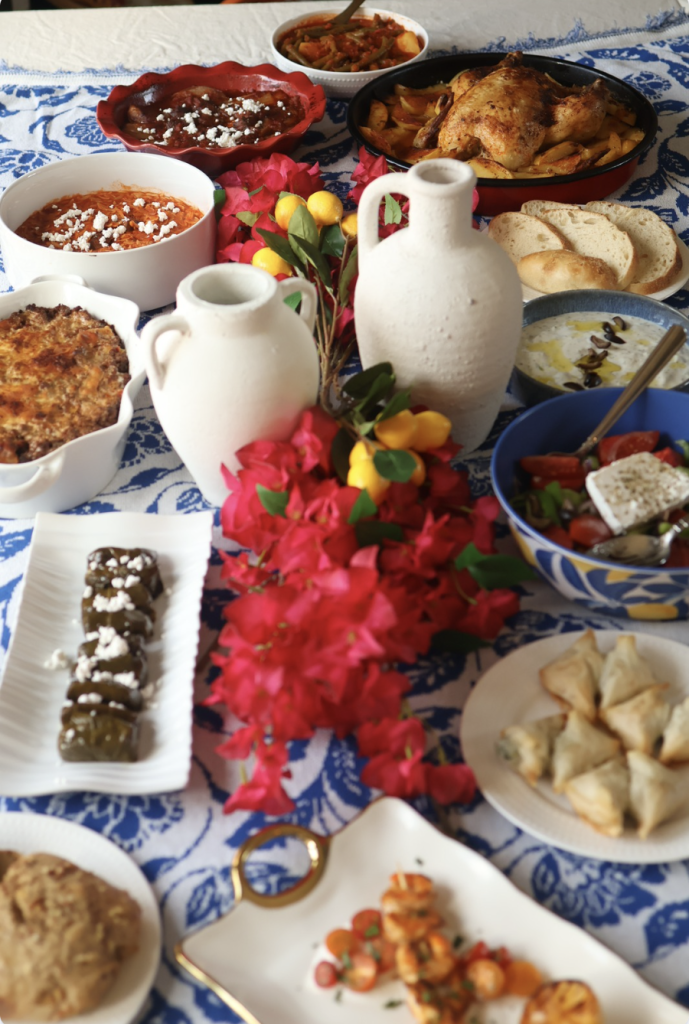
I cook one country every week. Its centerpiece dish, its way of welcoming people, and the table it all gets served on. Greece was a joy to host because Greek hospitality is not a small thing you do for guests. It is a whole way of seeing the world. The Greeks have a word for it, philoxenia, and once you understand it, your own table starts to change.
Here is everything I made, everything I learned, and the story behind the dish a friend of mine carried all the way from a Greek village to the MasterChef kitchen.
What Philoxenia Really Means
Philoxenia translates to love of the stranger. It comes from two words, philos, meaning love or friend, and xenos, meaning stranger. Put together, it describes the duty and the joy of welcoming a guest as if they were a friend you already knew.
This idea goes all the way back to ancient Greece, and the reason behind it is interesting… People believed that a stranger knocking at your door could be a god in disguise, walking the earth to see how mortals treated one another. So you fed that stranger first. You gave them a place to rest. You offered them your best, and you asked their name later. You never knew who you were really welcoming, so you welcomed everyone with open arms.
Zeus himself was considered the protector of guests, known in that role as Zeus Xenios. Greek mythology is full of stories of gods arriving as tired travelers, and the people who treated them with warmth were blessed, while the ones who turned them away were not. That belief shaped a culture, and what amazes me is that the instinct is still alive in Greece today. Walk into a Greek home and within five minutes there is bread, olives, something to drink, and a seat waiting for you. Not because you asked. Because that is simply what a host does.
That is the spirit I wanted on my table this week.

Setting a Greek Table That Feels Like the Aegean
Before I get to the food, I want to talk about the table, because this is where I learned the most this week.
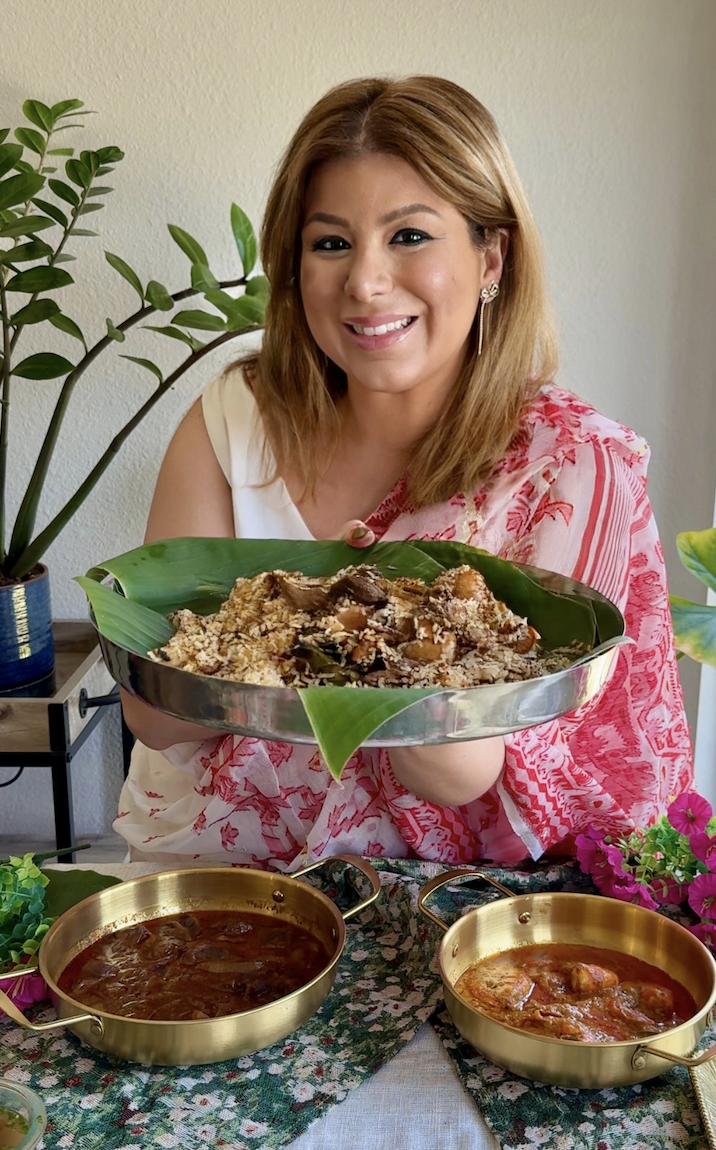
I wanted the table to feel Greek without leaning on the obvious. So I played with contrast. The vases I chose gave the table a grounded, mainland feeling, a little rustic and old world, like a long lunch in the hills. Then I layered in the things that pull your mind straight to the islands. Fresh flowers. Whole lemons. Touches of blue against the white.
That blue and white together with the lemons is what created the Aegean feeling, the Santorini vibe, that sun on whitewashed walls and water everywhere kind of mood. The bougainvilleas (those fuchsia colored flowers) were placed there purposefully, as this flower is commonplace in the Greek islands. The mainland warmth underneath and the island brightness on top gave the whole table a feeling of somewhere real rather than a theme.
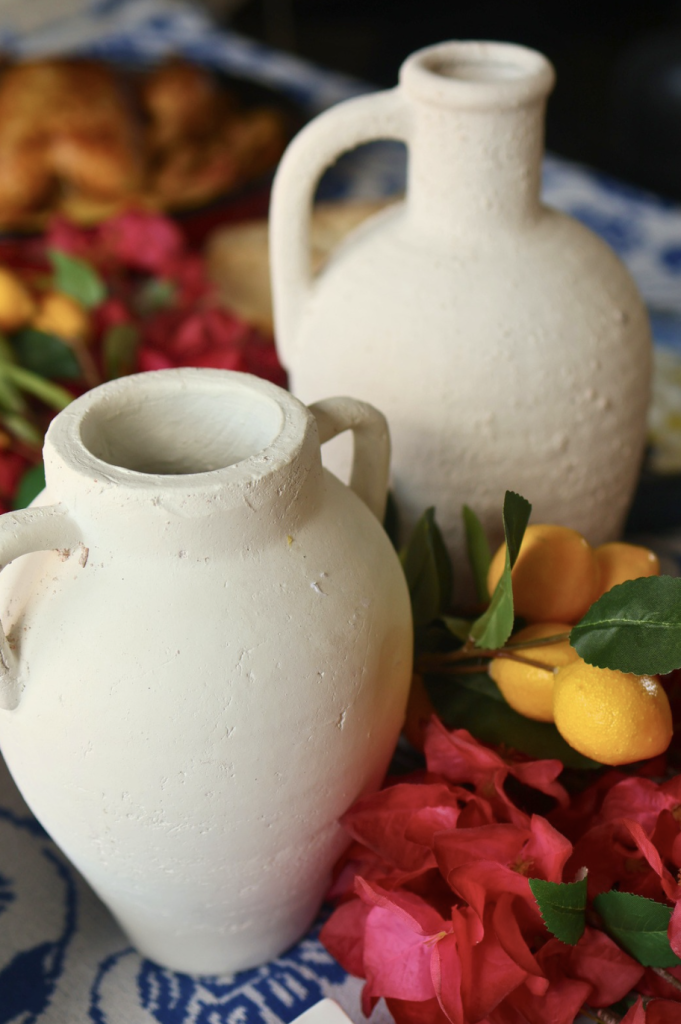
Plate in the Center, Not Individually
Here is a simple thing that changes everything about how a Greek meal feels. You do not plate Greek food individually. The platters go in the center of the table and everyone serves themselves and shares everything.
It sounds small, but it transforms the meal. The food belongs to the table, not to any one person. Everyone reaches in. Everyone passes things around. The meal becomes a shared act instead of a series of private plates. If you take one hosting idea from this whole post, let it be this one. Put the food in the middle and watch the night open up.
The Greek Menu, Dish by Dish
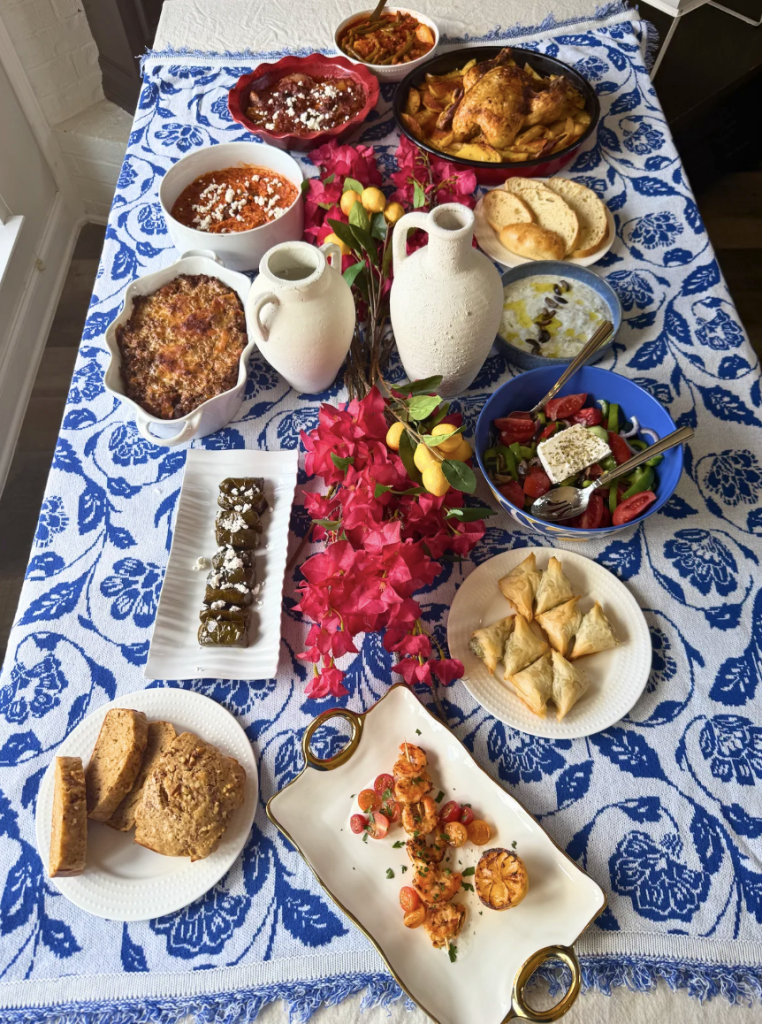
This was a generous table, and I want to walk you through what I made and why.
Greek Chicken and Potatoes
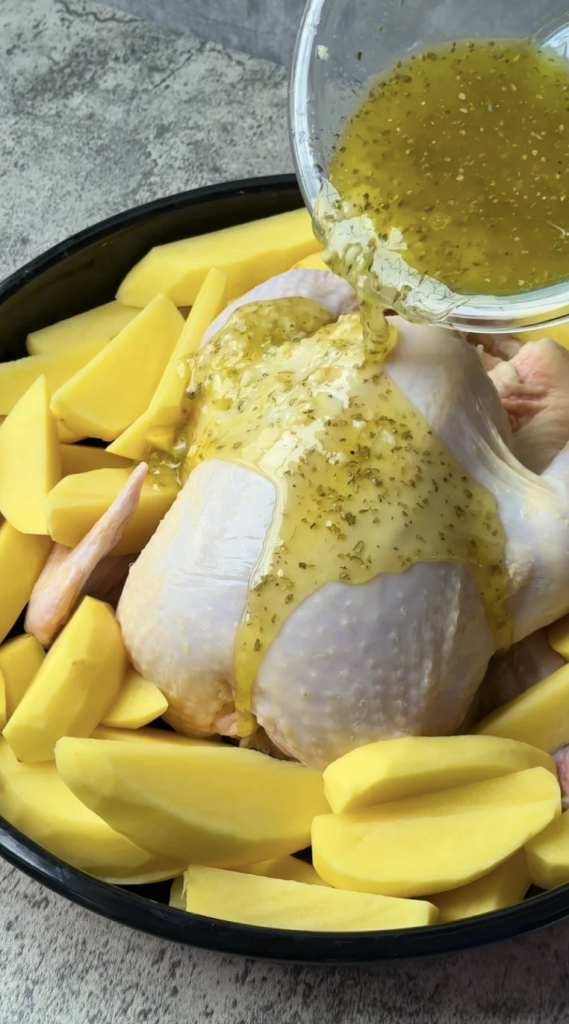
I have to start here because this was my favorite thing on the entire table. Greek chicken and potatoes is the kind of dish that looks humble and tastes like a celebration. The chicken roasts on top of potatoes, and as it cooks, all of that lemon, olive oil, garlic, and oregano drips down and soaks into the potatoes underneath.
Those lemony, oily potatoes are everything. They are crisp at the edges, soft in the middle, and carrying every bit of flavor from the chicken above them. If you have never made this, start here. It is the most comforting dish I made all week.
Horiatiki, the Original Greek Salad
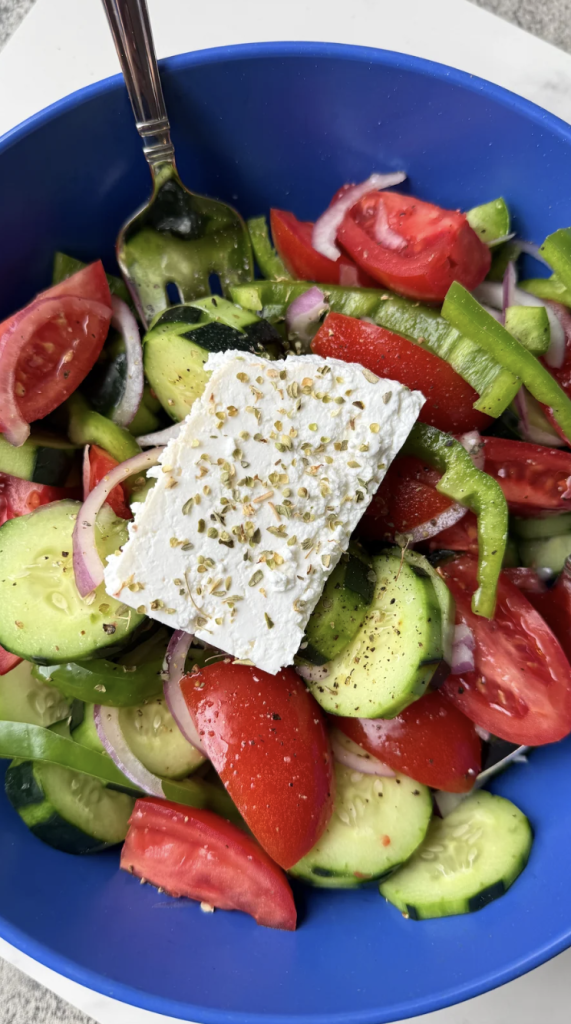
A real Greek salad, called horiatiki, does not have lettuce. I know that surprises some people, but it is true. The original is tomato, cucumber, red onion, Kalamata olives, and a thick slab of feta on top, finished with olive oil and oregano. No lettuce anywhere.
Once you taste it the traditional way, the lettuce version starts to feel like a watered down copy. The tomatoes and the feta and the good olive oil do all the work. It is simple and it is perfect.
Giouvetsi and Stifado, Two Dishes You Do Not See Often
I wanted to make a couple of dishes that are not the usual ones, the ones people might not know of.
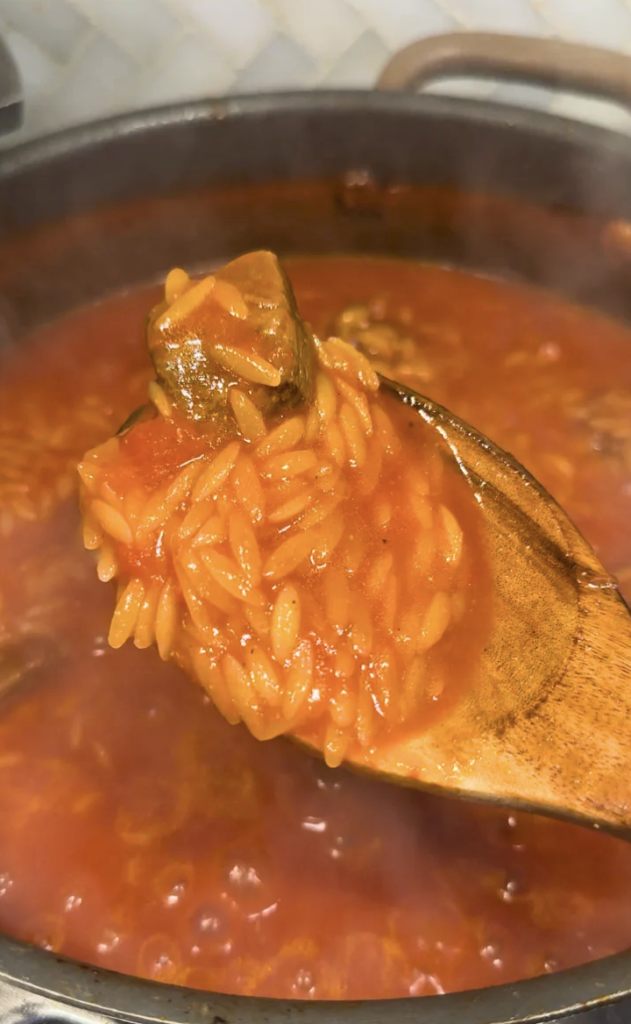
The first is giouvetsi, a Greek baked dish of meat and orzo cooked together in a rich tomato sauce until the pasta drinks up all the flavor. It is deeply savory and comforting, the kind of thing a Greek grandmother would pull out of the oven.
The second is stifado, a slow cooked beef and shallot stew. The whole shallots go sweet and soft as they cook down with the beef in a sauce warmed with spices. It is patient food, the kind of dish that fills the kitchen with a smell that makes everyone ask when dinner is ready.
Both of these feel like the real, lived in Greece, the food people actually make at home rather than the few dishes that travel onto every restaurant menu.
Fasolakia, Spanakopita, Dolmades, and the Bread
Around those mains I built out the rest of the table. Fasolakia, green beans braised slowly in tomato and olive oil until they go silky. Spanakopita, the classic spinach and feta pie wrapped in crisp phyllo. Dolmades, grape leaves stuffed and rolled by hand. And rustic bread with homemade tzatziki, because the bread always comes first in Greece.
Walnut Cake Instead of Baklava
For dessert I made a Greek walnut cake. I thought about baklava, but baklava is so well known that I wanted to show people something different. Greek desserts go well beyond the one everybody recognizes.
The walnut cake is warm and a little spiced, dense with chopped walnuts, and it pairs beautifully with strong coffee at the end of a long meal. It felt like the right way to close a table like this, familiar enough to comfort and new enough to surprise.
Ted’s Shrimp Souvlaki and the Memory Behind It
I saved this one for its own section because it deserves it.
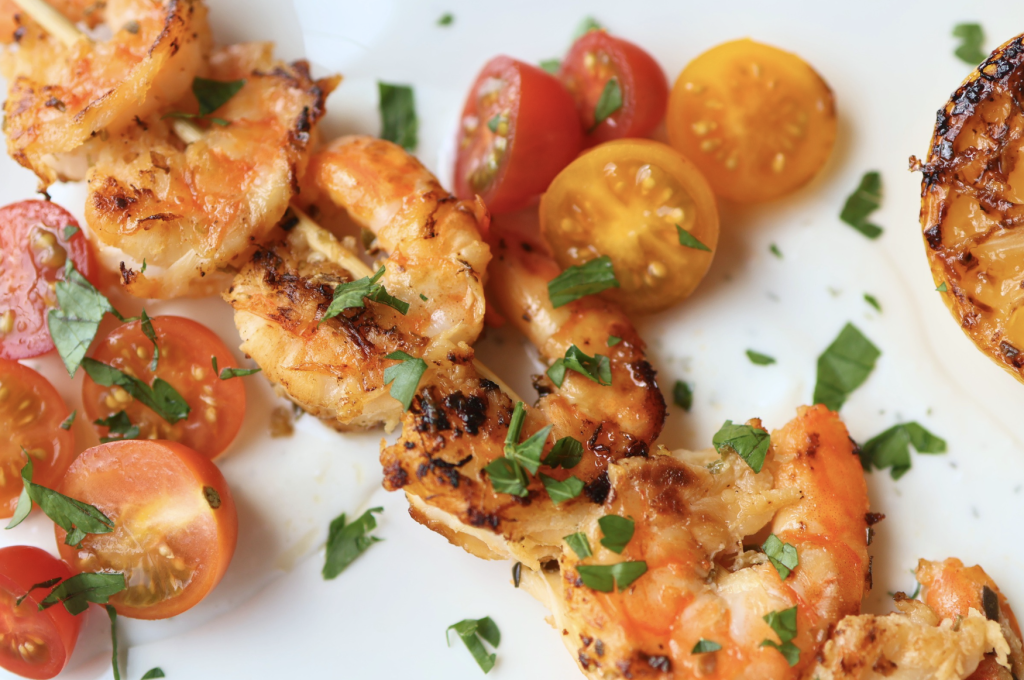
My friend Ted recently auditioned for MasterChef, and the dish he made won him his apron on the show. It is a shrimp souvlaki, and he let me make it for this Greek table.
The shrimp are marinated in lemon zest and ouzo, that anise scented Greek spirit, then grilled until the edges char. He elevated the whole thing with a whipped feta mousse, light and tangy, that turns a simple skewer into something you remember.
What makes this dish special is the story behind it. Ted told me it means a lot to him because of going to a village in Greece as a kid. He remembers platters of souvlaki and skewers, so much meat being served, the whole table loaded with food, and the warmth of being fed like that as a child. Those memories stayed with him. When he had the chance to represent Greece, he chose a souvlaki, but he made it his own. He turned the meat skewers of his childhood into a refined shrimp version with that feta mousse, a way of honoring the memory while showing how far he has come as a cook.
Making his dish on my table felt like the most honest version of philoxenia I could put into practice. A recipe passed from a friend, carrying his history, shared with all of you. That is hosting the world the way I want to do it.
Why a Greek Meal Lasts for Hours
One last thing I learned this week, and it might be the most important.
In Greece the meal is not the thing you do before the gathering. The meal is the gathering. Nobody rushes to clear the plates. Wine is poured slowly and never on an empty stomach. There is no strict order of courses, you tear some bread, dip it in tzatziki, reach for a little chicken, take an olive, go back for more bread. The night unfolds however it wants to.
A long dinner is the highest compliment you can pay a Greek host. Lingering is the whole point. When I set this table, I was not just cooking food. I was building a reason for people to stay.
Bringing Philoxenia to Your Own Table
You do not have to be Greek to host like this. I am not Greek. I am originally from Puerto Rico and I am cooking in Texas. But the philosophy travels, and you can borrow it tonight.
Put the bread out before anyone asks. Plate the food in the center and let everyone share. Fill the wine before the glass runs empty. Make a seat for whoever shows up. Welcome people like they matter, because they do, and maybe, the way the ancient Greeks believed, like they might be something more than they appear.
That is philoxenia. Love of the stranger. The warmth of feeding someone you care about, and even someone you have only just met.
This is the start of something I am building one country at a time. A full table, a real story, and a way of welcoming the world into my home and yours.
Next week I host a new country. Until then, the table is set, and there is always a seat for you.