Hosting Japan: Omotenashi, Japanese Curry, and the Friend Who Taught Me How to Welcome
Some episodes of Hosting the World teach me a recipe. This one taught me a philosophy.
Hosting Japan was never going to be about food alone, though the food, as you will see, was extraordinary. It was about a single word that does not fully translate into English, no matter how many times I have tried to explain it: omotenashi.
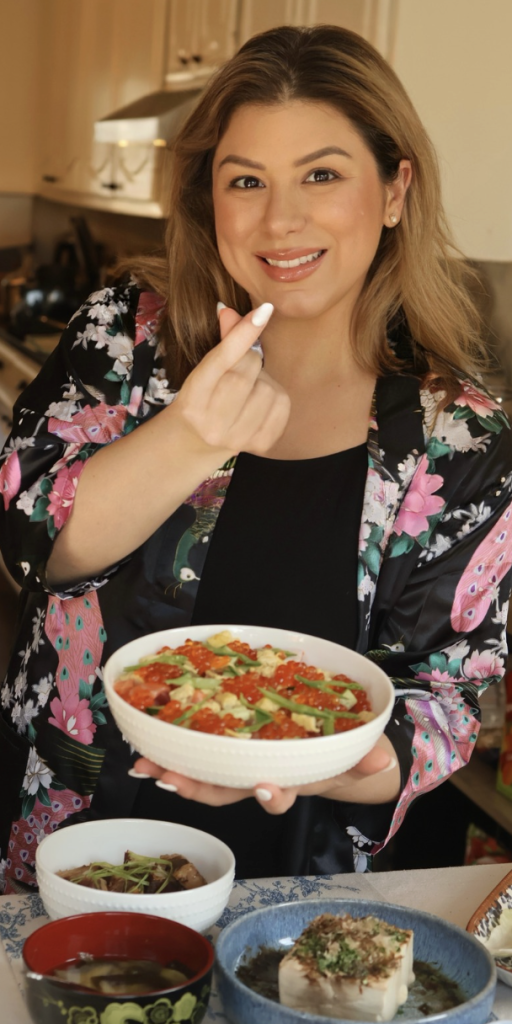
And it was about my friend Kaori, who did not just help me cook. She helped me understand what it actually means to welcome someone.
Why Japan, and Why Now
Every episode of Hosting the World starts the same way for me. I pick a country, and then I ask myself one question before anything else: what does hospitality actually look like here, underneath the food, underneath the traditions, underneath everything a visitor might notice on the surface?
Japan was different from the moment I started planning it, because I already had a personal answer waiting for me. I did not need to research the concept of Japanese hospitality from a distance. I had a friend who lived it, who could show me instead of simply telling me, and who could correct me the moment I got something wrong. That is a rare gift when you are building a series about cultural accuracy and respect.
So this episode became something slightly different from the others. It was not just research translated into a table setting. It was friendship translated into a table setting.
What Omotenashi Really Means
Omotenashi is often translated as “hospitality,” but that flattens it. The word carries something closer to selfless anticipation. It is the art of caring for a guest before they even know they need something, and doing it so quietly that the guest never feels the weight of the effort behind it.
There is no tipping in Japan, and this is not an accident. Hospitality there is not a transaction you pay for at the end of the meal. It is a gift, extended without any expectation of return. The tea is poured at exactly the right temperature. The seat is angled toward the best view in the room. Every small decision is made on your behalf, invisibly, so that all you experience is comfort.
I did not learn this from a book. I learned it from watching Kaori move through the kitchen.
The Friend Behind the Episode
I met Kaori on the set of a competitive culinary production. We were strangers for exactly as long as it took to realize we were going to be friends for a very long time. That is simply how it happened. Some connections do not need years to become real.
Kaori was born and raised in Japan and attended college there before eventually building her life in the United States. She now runs Babachan’s Cooking, a business built entirely around the recipes her mother taught her. Babachan means grandma, and every dish she makes carries her family inside of it. That is not a marketing angle. That is simply true.
Kaori is also currently competing in the Favorite Chef competition, and if you have not gone to vote for her yet, please do. She is building something real, and she deserves to be seen doing it. Here is a link to vote for her: https://favchef.com/2026/kaori-mincer
When it came time to host Japan, there was no version of this episode that did not include her. She did not just help me cook. She taught me the discipline behind omotenashi, the kind of care that shows up in details most guests will never consciously notice, but will always feel.
Setting the Table: Red and Blue
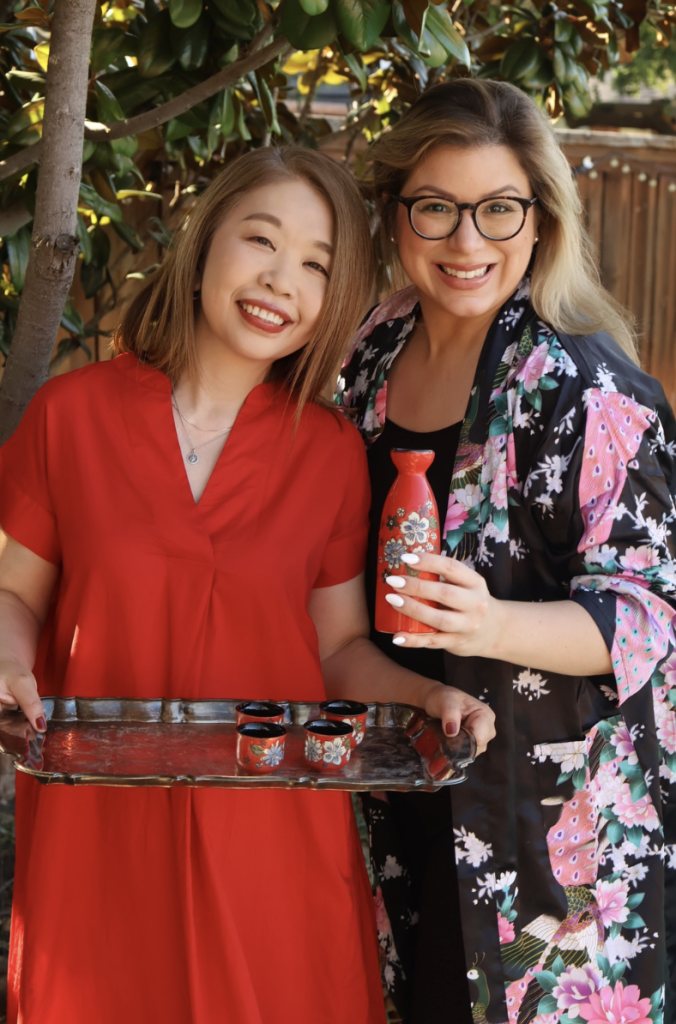
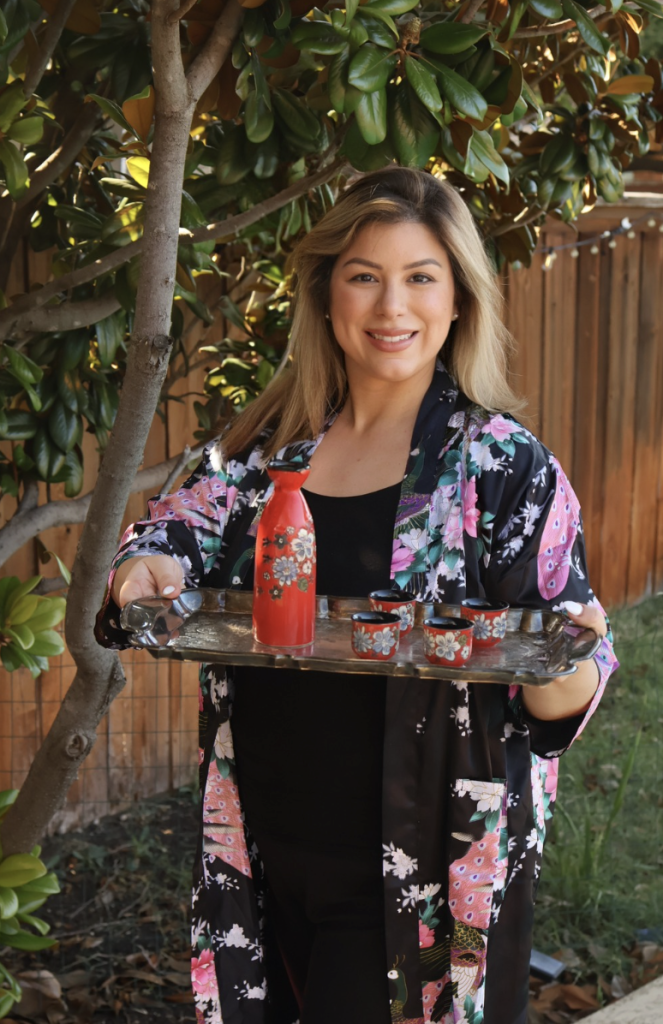
Every table I set for Hosting the World is a small act of storytelling before a single dish is served, and Japan called for a very specific palette. I chose red and blue for this table, two colors that carry real weight in Japanese design and symbolism.
Red appears throughout Japanese culture as a color of protection, celebration, and vitality. You see it in torii gates, in ceremonial textiles, in the small flashes of color against otherwise minimal, restrained settings. Blue, particularly the deep indigo shade historically used in traditional dyeing techniques, brings calm and depth, and it grounds the red so the table never feels overwhelming.
Together, the two colors mirror something I learned from Kaori about Japanese hospitality itself. Nothing is accidental. Nothing is excessive. Every element on the table is chosen with intention, and the beauty comes from restraint, not abundance.
The Menu
This menu moved from delicate cold starters into rich, comforting main dishes, and finished with something simple and sweet. Below is everything we served, and a little bit about what makes each dish meaningful.
Side Dishes
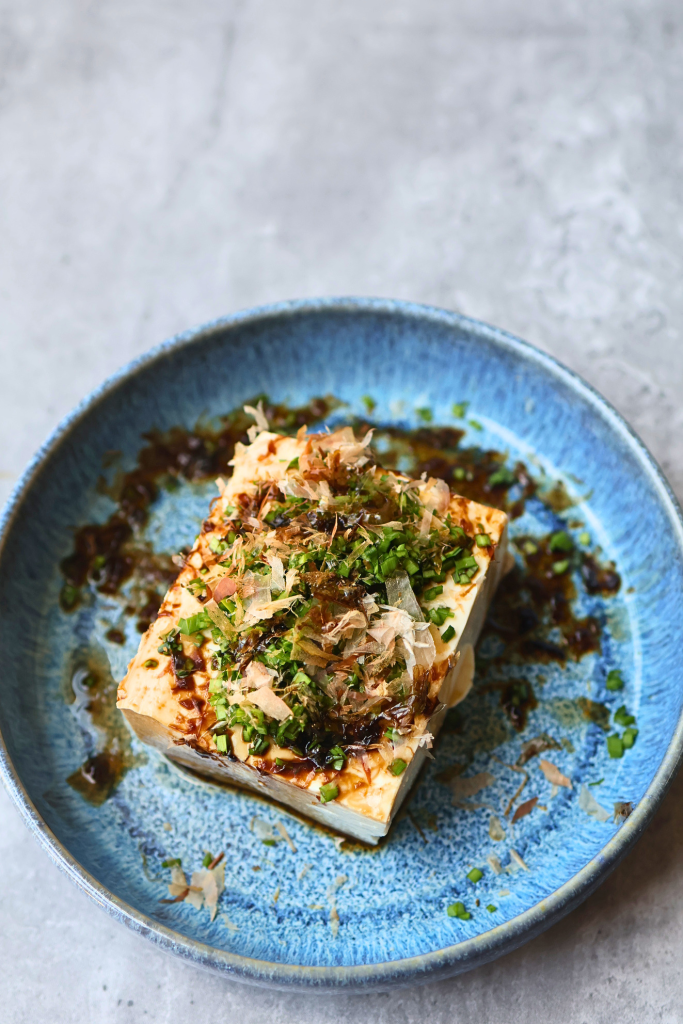
Hiyayakko, chilled silken tofu, opened the meal. This dish is deceptively simple, just cold tofu topped with a few classic garnishes, but that simplicity is the point. In the height of a Japanese summer, hiyayakko is served precisely because it asks nothing of you. It cools you down and eases you into the meal without any heaviness.
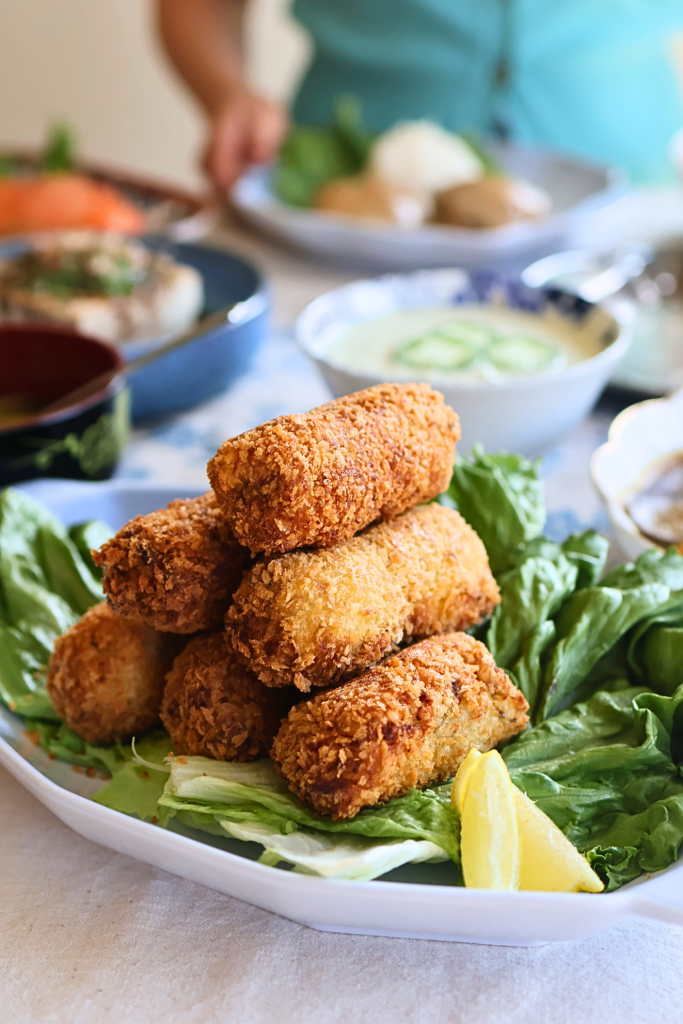
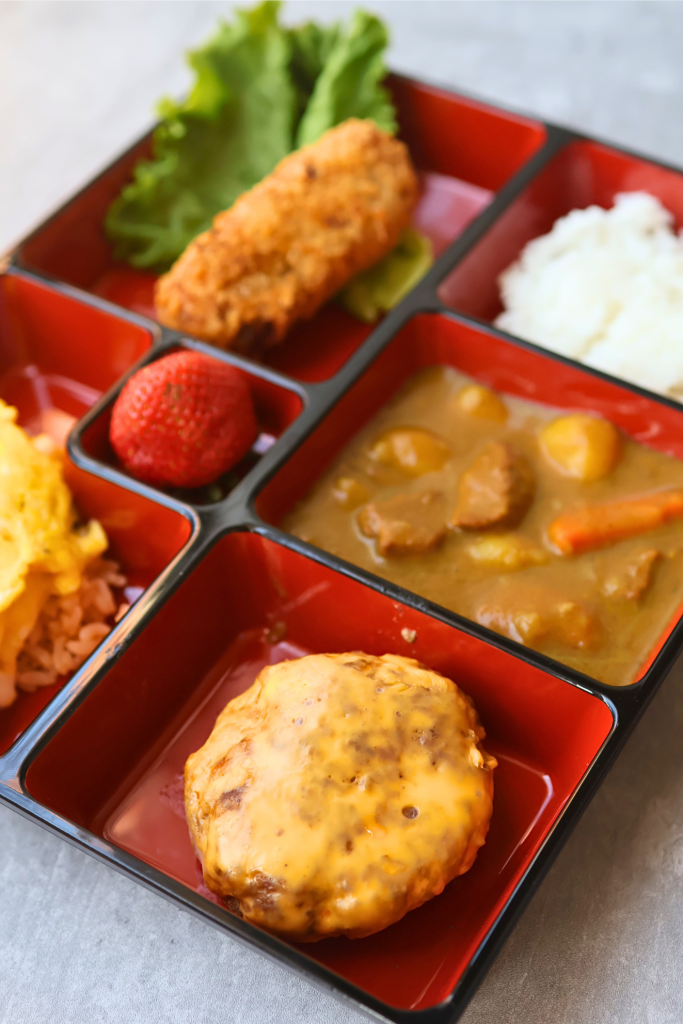
Korokke, Japanese style potato croquettes, followed. Crisp on the outside, soft and savory inside, korokke is a dish you will find in nearly every Japanese household and convenience store, and yet homemade versions are worlds apart from anything store bought. Kaori’s version had that specific comfort that only comes from a recipe passed down rather than looked up.
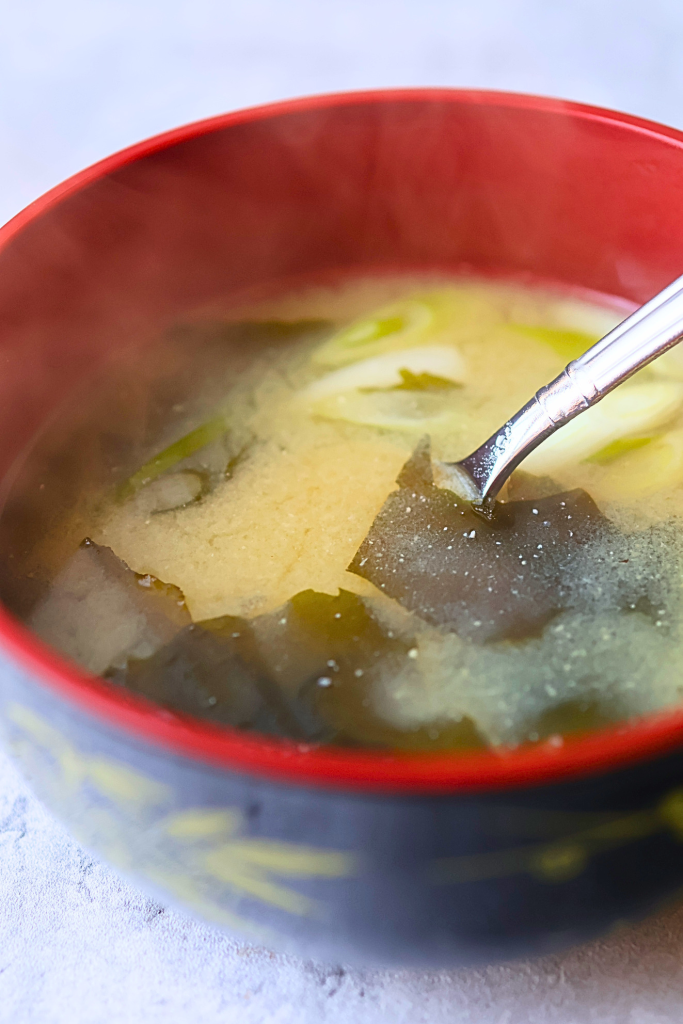
Miso soup rounded out the openers, the way it does at nearly every Japanese meal. Miso soup is not really a course so much as a constant, a quiet companion to whatever else is on the table.
And then there was Kaori’s silken tofu and jalapeño dip, the one dish on this table that was entirely her own invention. It bridges her Japanese foundation with the flavors she has picked up living in the United States, and it might be my favorite thing she has ever put in front of me. Bright, a little spicy, completely unexpected, and completely her.
Main Dishes
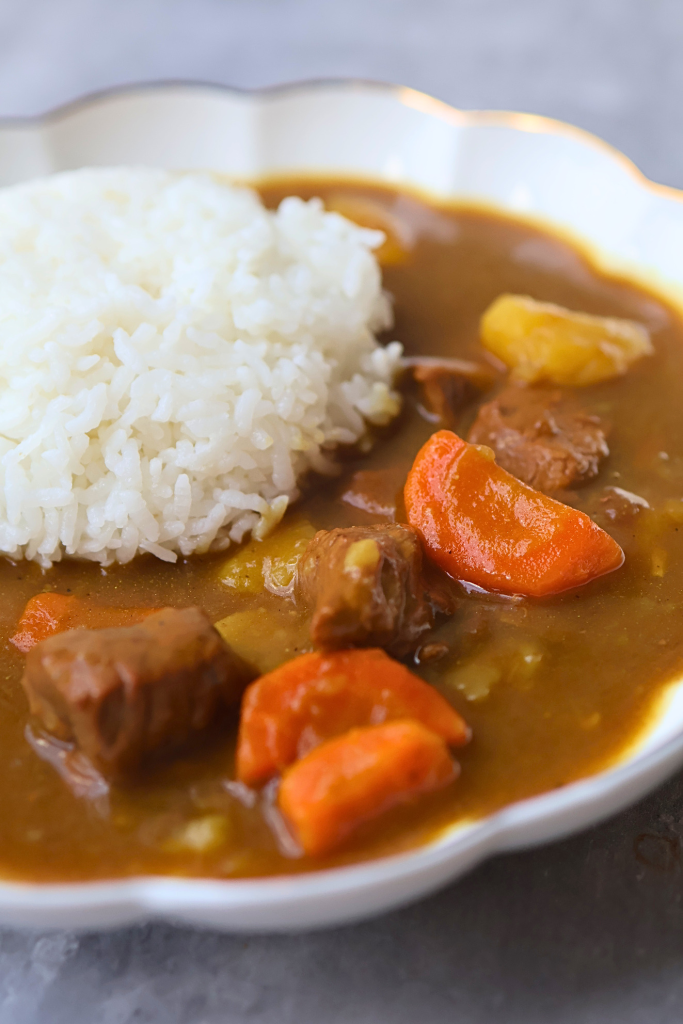
Kare raisu, Japanese curry with rice, is one of the most beloved comfort foods in Japan, and for good reason. It is thicker and milder than most curries you may have had elsewhere, built for warmth rather than heat, and it is the dish most Japanese people will tell you they grew up eating on a weeknight.
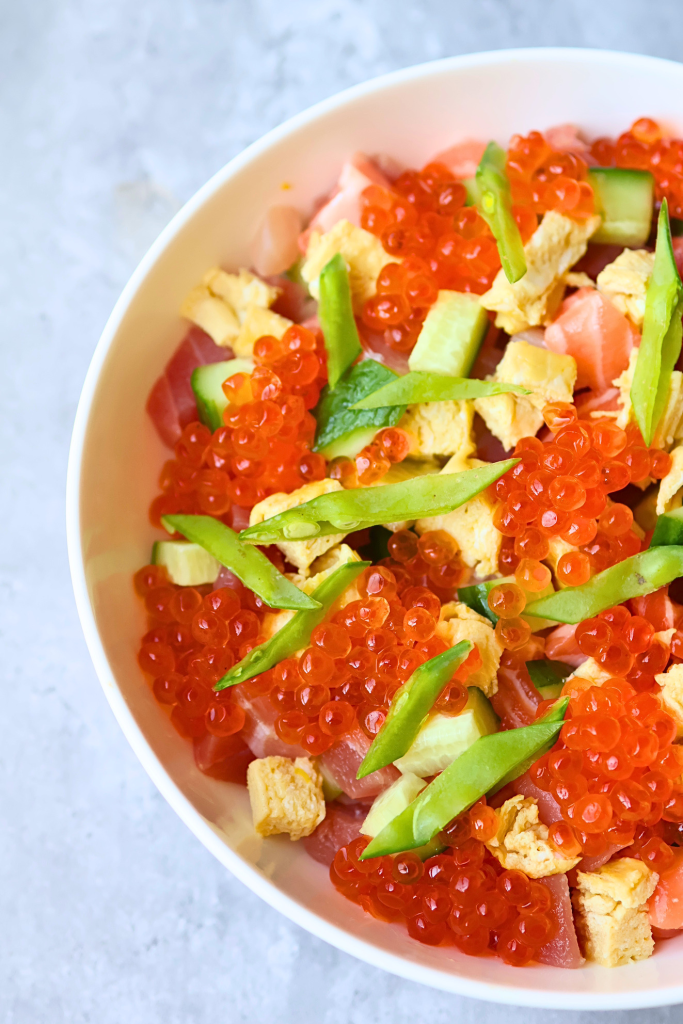
Chirashizushi, a scattered sushi bowl, was one of the most visually stunning dishes of the night. Instead of rolled sushi, chirashizushi is an arrangement, seasoned rice topped with an assortment of fish, vegetables, and garnishes, each piece placed with real care. It is a dish that rewards patience, and watching Kaori build it was like watching someone compose a small piece of art.
We also served an okosama lunch, a Japanese kids meal, and there is something genuinely lovely about how much care goes into food made for children in Japan. It is not an afterthought. It is often just as thoughtfully composed as anything served to an adult, usually arranged with the same attention to color and balance.
Miso marinated salmon brought depth and umami to the table, the fish absorbing the sweetness and saltiness of the marinade until it nearly caramelizes under heat. Alongside it, pork belly and jammy eggs, rich, tender, and deeply savory, the kind of dish that makes a table feel complete.
And finally, hambagu, a Japanese hamburger patty, closed out the mains. Hambagu is proof that Japanese home cooking has never existed in isolation. It absorbed influence from the West decades ago and turned it into something entirely its own, softer and more delicate than a Western burger patty, usually finished with a savory sauce rather than served on a bun.
Dessert
We ended the meal with strawberries and condensed milk, and I would argue nothing else could have followed that menu the way this did. It is not fussy. It is not elaborate. It is built entirely on the idea that the best ending to a generous meal is something light, something sweet, and something that lets you leave the table still smiling rather than full to the point of discomfort. Kaori says her babachan used to feed her this dessert when she was a kid.
What Hosting Japan Taught Me
Every country I feature on Hosting the World teaches me something about what it means to welcome someone properly, and Japan’s lesson has stayed with me more than most.
Omotenashi is not about how much you do for a guest. It is about how much thought you put into what they will need before they even ask. It is quiet. It is intentional. And it asks nothing in return.
I did not learn that from a cookbook. I learned it from a friend who happened to sit next to me on a set none of us expected to change our lives, and who has been showing me what real hospitality looks like ever since.
This is what hosting the world is really about. Sharing our cultures, sharing our tables, and being genuinely happy while we do it.
Kaori, this episode was always going to be for you.
If you want to see more from Kaori, follow her cooking on Babachan’s Cooking. And if you want to see more of Hosting the World, a new country and a new table is coming next week.
Quick Recap: Hosting a Japanese Dinner at Home
If you want to recreate a version of this table for your own guests, here is the shorthand version of everything above.
The concept: Omotenashi, the Japanese practice of anticipating a guest’s needs before they ask, offered quietly and without expectation of anything in return.
The colors: Red for celebration and vitality, blue for calm and depth, used sparingly so the table feels intentional rather than crowded.
The menu: Hiyayakko, korokke, miso soup, and Kaori’s silken tofu and jalapeño dip to start. Kare raisu, chirashizushi, an okosama lunch, miso marinated salmon, pork belly and jammy eggs, and hambagu for the mains. Strawberries and condensed milk to finish.
The lesson: Real hospitality is rarely loud. It is in the small, invisible decisions made on a guest’s behalf, long before they ever sit down at the table.
That is what it meant to host Japan, and that is what it meant to sit at a table built by someone who taught me what welcoming someone really looks like.