Hosting the World: Nigeria – Featuring Jollof, Suya, and Different Types of Hospitality
Welcome back to Hosting the World, the series where we travel to a new country every week (through hosting that is)! This episode takes us to Nigeria, a country often called the Giant of Africa, not just for its size and population but for the sheer scale of its culture, flavor, and generosity. When I started planning this menu, I knew I wanted to capture the warmth that Nigerian hosts are famous for, the kind of hospitality where no guest leaves hungry.
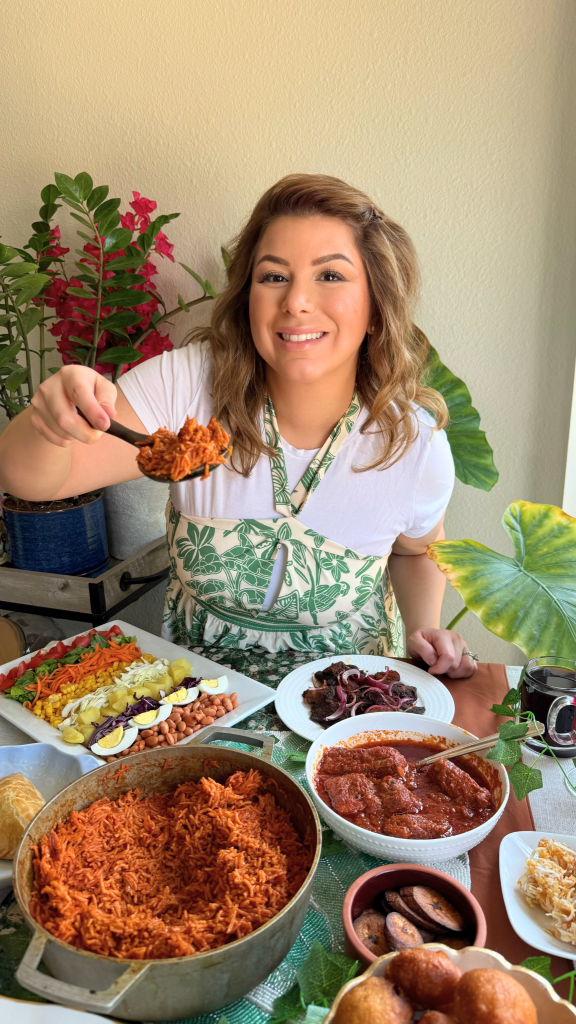
For this spread I cooked jollof rice, suya, Nigerian beef pies, Nigerian fish stew, Nigerian salad, fried plantains, puff puff, and coconut candy, and I served maltina and hibiscus iced tea alongside it all. My dear friends who are Nigerian generously made the fufu and egusi soup for this table, since those are dishes that really benefit from a lifetime of practice. Below, I am walking through every dish, sharing what I learned about Nigeria’s incredible ethnic diversity, and passing along a few fun facts that surprised even me.
The Menu: A Nigerian Feast
Nigerian cuisine is bold and built for sharing. Every dish on this table had a purpose, and together they created a spread that felt like a true celebration.
Jollof Rice
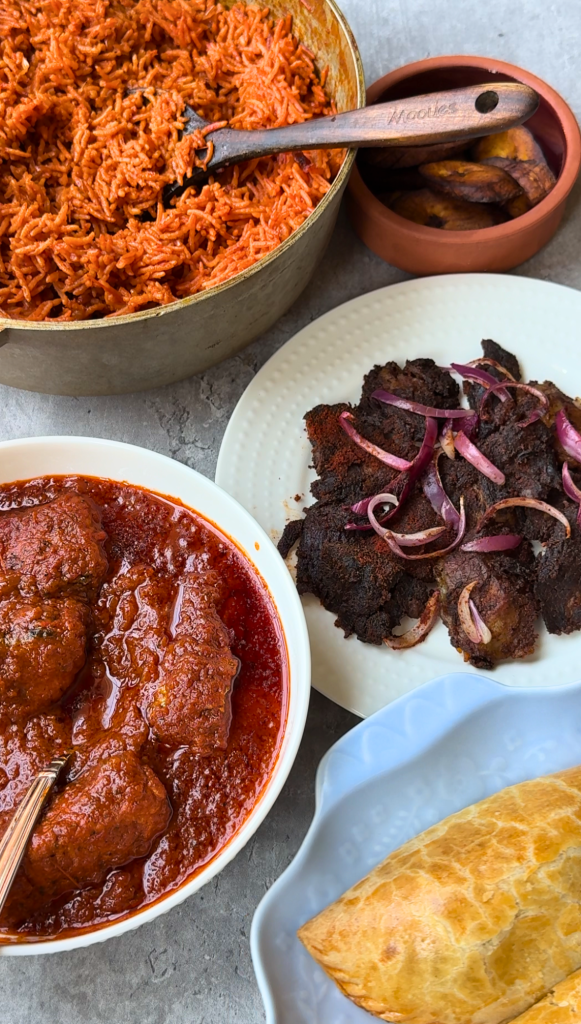
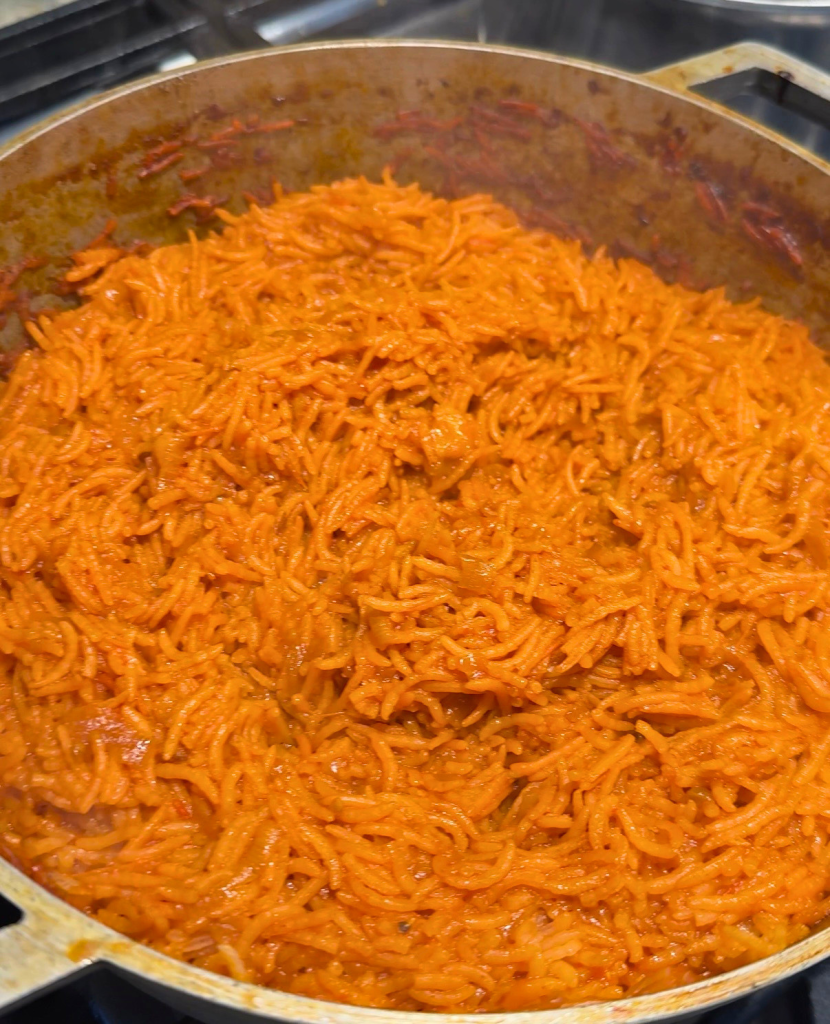
No conversation about Nigerian food can start anywhere else. Jollof rice is a one-pot rice dish cooked in a rich tomato and pepper base, seasoned with onions, garlic, and a blend of spices that gives it that deep, smoky flavor. Jollof rice is loved across West Africa, and there is a long-running, good-natured rivalry between Nigeria, Ghana, and Senegal over who makes it best. I am not touching that debate with a ten-foot spoon, but I will say the Nigerian version I made leaned smoky and slightly spicy, with that signature party jollof char on the bottom of the pot that everyone fights over.
Suya
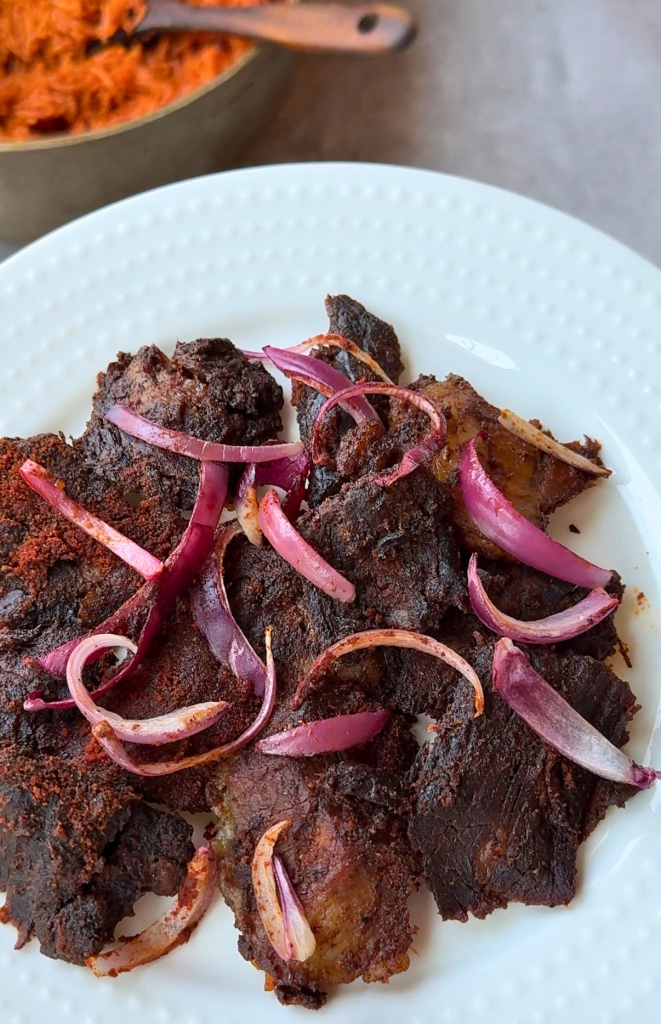
Suya is Nigeria’s answer to grilled skewers. Thin strips of beef are coated in yaji, a spice blend made from ground peanuts, ginger, garlic, and cayenne pepper, then grilled until slightly charred and served with sliced onions and tomatoes. Suya is classic Nigerian street food, the kind of thing you would grab from a roadside vendor late at night in Lagos or Abuja. The peanut-forward spice rub gives it a flavor that is smoky, nutty, and a little addictive.
Fufu and Egusi Soup
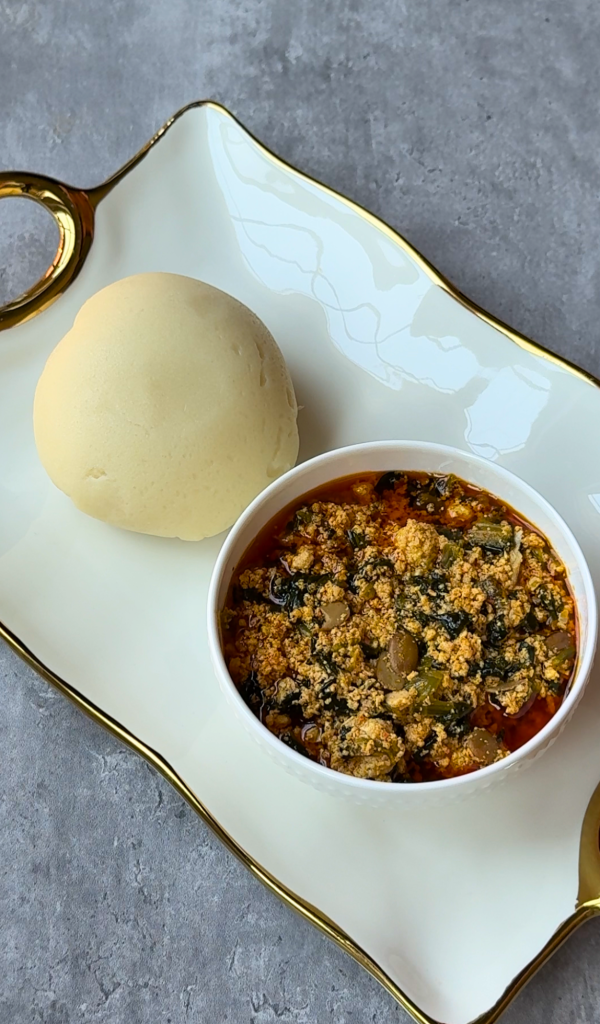
I want to be honest here because cultural accuracy matters to me. I did not make the fufu and egusi soup myself. My Nigerian friends made these dishes for the table, and I am so grateful they did, because both require technique that is best learned from people who grew up making them. Fufu is a smooth, stretchy dough made from cassava, yam, or plantain that is used as a utensil to scoop up soup. Egusi soup is made from ground melon seeds, leafy greens, and a rich blend of peppers and proteins. Together they are a staple combination across much of Nigeria, and eating them the traditional way, using your hand to pinch off fufu and scoop the soup, is part of the experience.
Nigerian Beef Pies
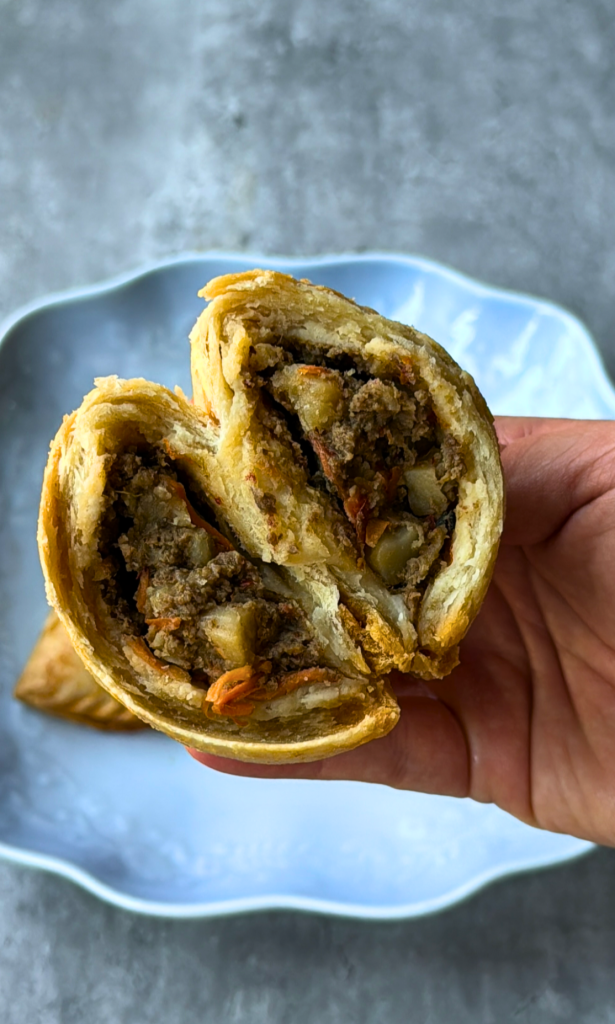
These are often compared to empanadas, and honestly that comparison makes a lot of sense. Nigerian meat pies feature a flaky, slightly savory pastry crust wrapped around a filling of seasoned ground beef, potatoes, and carrots, then baked until golden. They are a beloved snack and party food across Nigeria, sold in bakeries and served at nearly every celebration. I love how portable and satisfying they are, a perfect handheld bite packed with flavor.
Nigerian Fish Stew
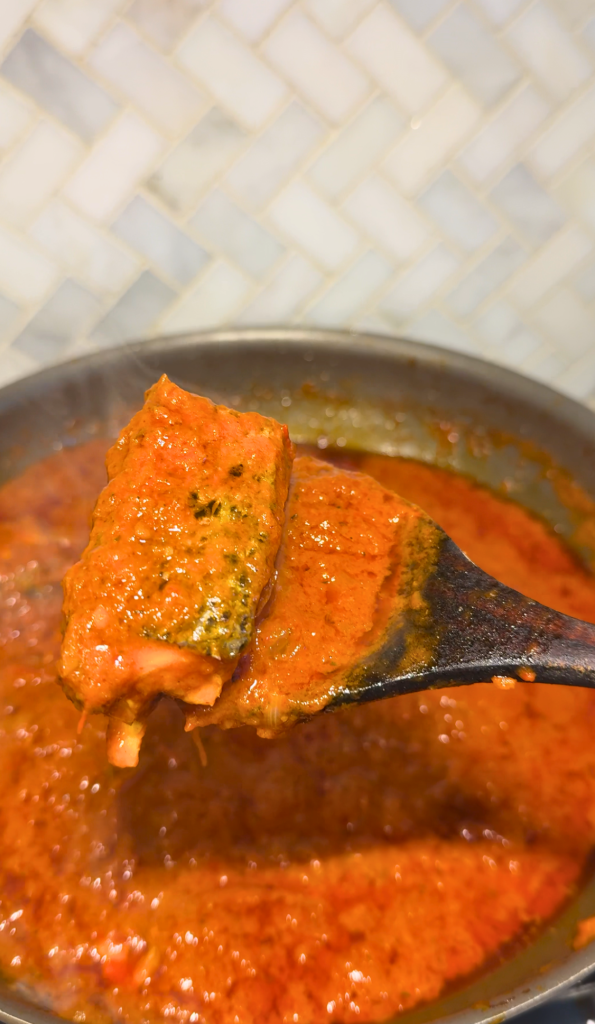
Nigerian fish stew is built on the same tomato and pepper base as jollof rice, but it is simmered slowly with fish, usually a firm variety that holds up well, along with onions, bell peppers, and a blend of warming spices. The result is a stew that is rich, slightly smoky, and deeply comforting. It is often served over rice and is a staple in homes across the country, especially for special gatherings.
Nigerian Salad
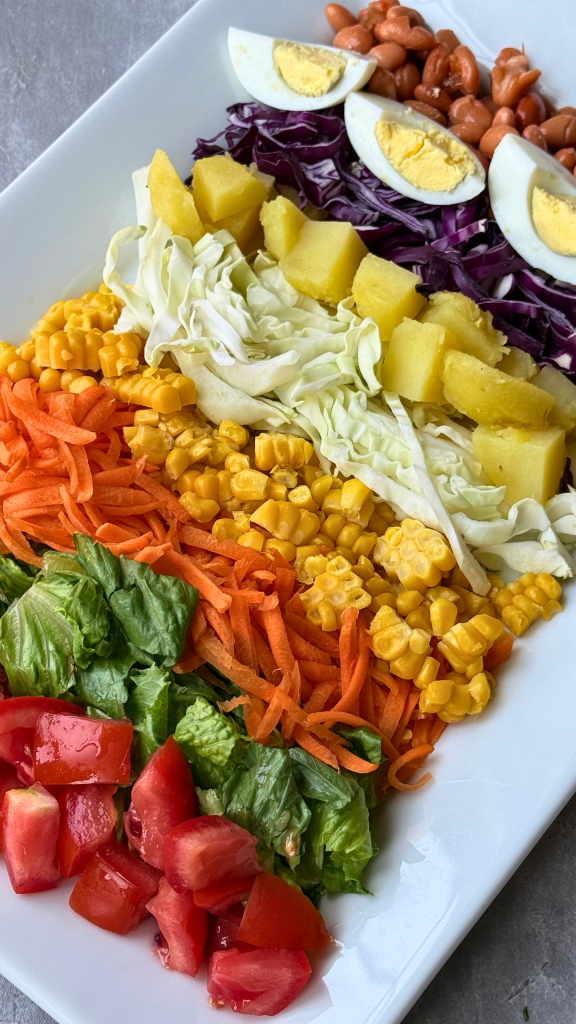
This dish surprised a lot of my guests. Nigerian salad is not your typical leafy green salad. It usually includes a mix of cabbage, carrots, cucumbers, boiled eggs, and beans, all tossed together with a mayonnaise-based dressing and sometimes a touch of sweetness from fruit like apples or pineapple. It is creamy, hearty, and a little unexpected if you are only familiar with Western-style salads, but it fits perfectly on a table full of rich, spiced dishes because it offers a cool, refreshing contrast.
Fried Plantains
No West African spread feels complete without fried plantains on the side. Sliced ripe plantains are fried until caramelized and golden, offering a natural sweetness that balances out the heat and spice from dishes like suya and jollof rice. Simple, comforting, and universally loved.
Puff Puff
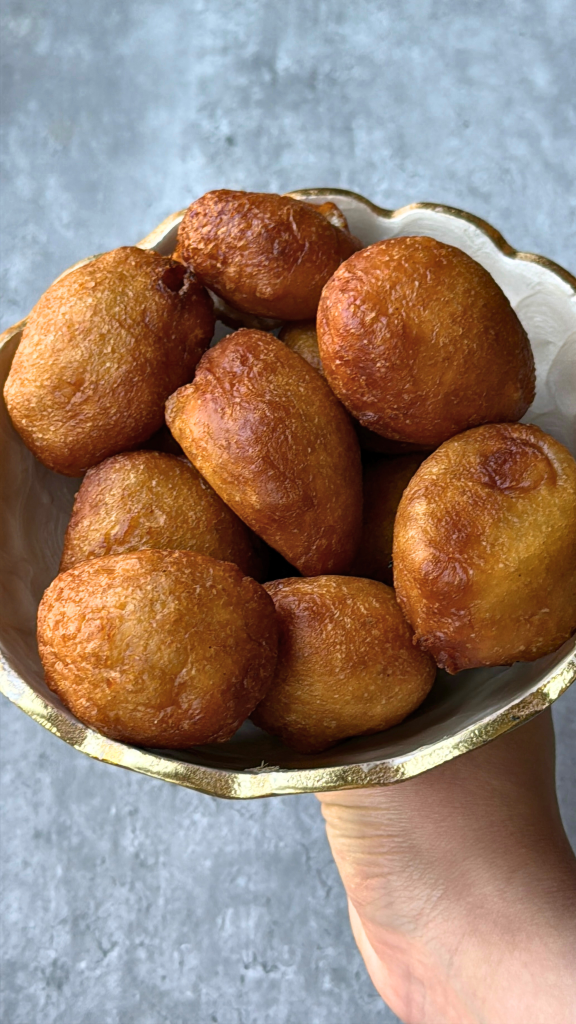
Puff puff are Nigeria’s beloved fried dough balls, made from a lightly sweetened, yeasted batter that puffs up into golden, pillowy bites when fried. They are similar in spirit to doughnut holes, but with their own distinct texture, slightly chewy on the inside with a crisp exterior. Puff puff is a party staple in Nigeria, the kind of snack that disappears from the tray within minutes.
Coconut Candy
To round out the sweets, I made coconut candy, a chewy, caramelized treat made by cooking shredded coconut with sugar until it forms a sticky, toffee-like confection. It is a popular snack across Nigeria and West Africa more broadly, and it brought a lovely tropical sweetness to the dessert table.
Drinks: Maltina and Hibiscus Iced Tea
To drink, I served maltina, a popular Nigerian malt beverage that is sweet, slightly caramel-flavored, and non-alcoholic, alongside hibiscus iced tea, known in Nigeria as zobo. Zobo is made by steeping dried hibiscus petals with ginger, cloves, and sometimes fruit, then sweetening it and serving it chilled. It has a tart, cranberry-like flavor and is a refreshing counterpoint to all the rich, spiced food on the table.
Nigeria’s Beautiful Diversity: More Than One Way to Host
One of the most important things I learned while planning this episode came from conversations with Nigerian friends. Nigeria is home to more than 250 ethnic groups, and hospitality traditions can look quite different depending on the region and culture. What counts as proper hosting etiquette in an Igbo household may differ from Yoruba or Hausa customs, and each group brings its own rituals, foods, and unwritten rules to the table.
The Igbo Kola Nut Tradition
One tradition that came up again and again in my conversations was the kola nut ceremony, which is central to Igbo hospitality. When a guest arrives in an Igbo home, presenting and breaking the kola nut is often one of the first acts of welcome. The kola nut itself is a bitter, caffeine-containing seed, and the ceremony surrounding it is steeped in symbolism and respect.
Traditionally, the eldest person present or the host presents the kola nut to the gathering, often with a short prayer or blessing. The nut is then broken, sometimes by the eldest man, and shared among everyone present. There is even a well-known Igbo saying, “he who brings kola brings life,” which reflects just how significant this small gesture is. It is not simply about the nut itself, it is about acknowledging your guests, honoring the moment, and setting a tone of respect and community before anything else happens.
This is just one example of how hosting in Nigeria is not a single, uniform practice. It is a living tradition shaped by dozens of ethnic groups, each with their own customs around welcoming guests, and that variety is part of what makes Nigerian hospitality so rich to explore.
Fun Facts About Nigeria
Here are a few facts that stuck with me while researching this episode.
- Nigeria is the most populous country in Africa and one of the most populous in the world, with over 200 million people calling it home.
- The country is home to more than 250 ethnic groups, with the Hausa, Yoruba, and Igbo being the three largest.
- Nigerians speak over 500 languages, making it one of the most linguistically diverse countries on earth, with English serving as the official language that connects everyone.
- Nigeria’s film industry, known as Nollywood, is one of the largest in the world by volume of films produced each year, second only to India’s Bollywood.
- Nigeria is often nicknamed the Giant of Africa, a nod to both its population size and its outsized cultural and economic influence across the continent.
Lessons in Nigerian Hospitality
What struck me most while putting this table together was how food in Nigeria is never just food. It is a language of welcome. Whether it is the ceremony of the kola nut, the shared act of eating fufu and egusi soup with your hands, or the simple joy of watching puff puff disappear from a tray, every dish and every gesture is designed to make a guest feel seen and cared for.
This episode reminded me that hosting is not about following one universal rulebook. It is about understanding the traditions of the people at your table and honoring them. Nigeria, with its extraordinary diversity, teaches that lesson better than almost anywhere else.
Final Thoughts
This Nigeria table was one of the most flavorful and meaningful spreads I have put together for Hosting the World. From the smoky char of jollof rice to the sweetness of coconut candy and the deep symbolism behind the kola nut ceremony, every element carried a piece of Nigeria’s culture and generosity. I am so grateful to my Nigerian friends for their guidance and for making the fufu and egusi soup that anchored this table.
If you try any of these dishes at home, I would love to hear how it goes. And if you have your own family traditions around hosting, whether Nigerian or otherwise, please share them with me. That is the whole spirit of this series, learning how the world welcomes each other, one week, one country.
Follow along with Hosting the World by Emilia Kim for more country-by-country explorations of food, culture, and hospitality.