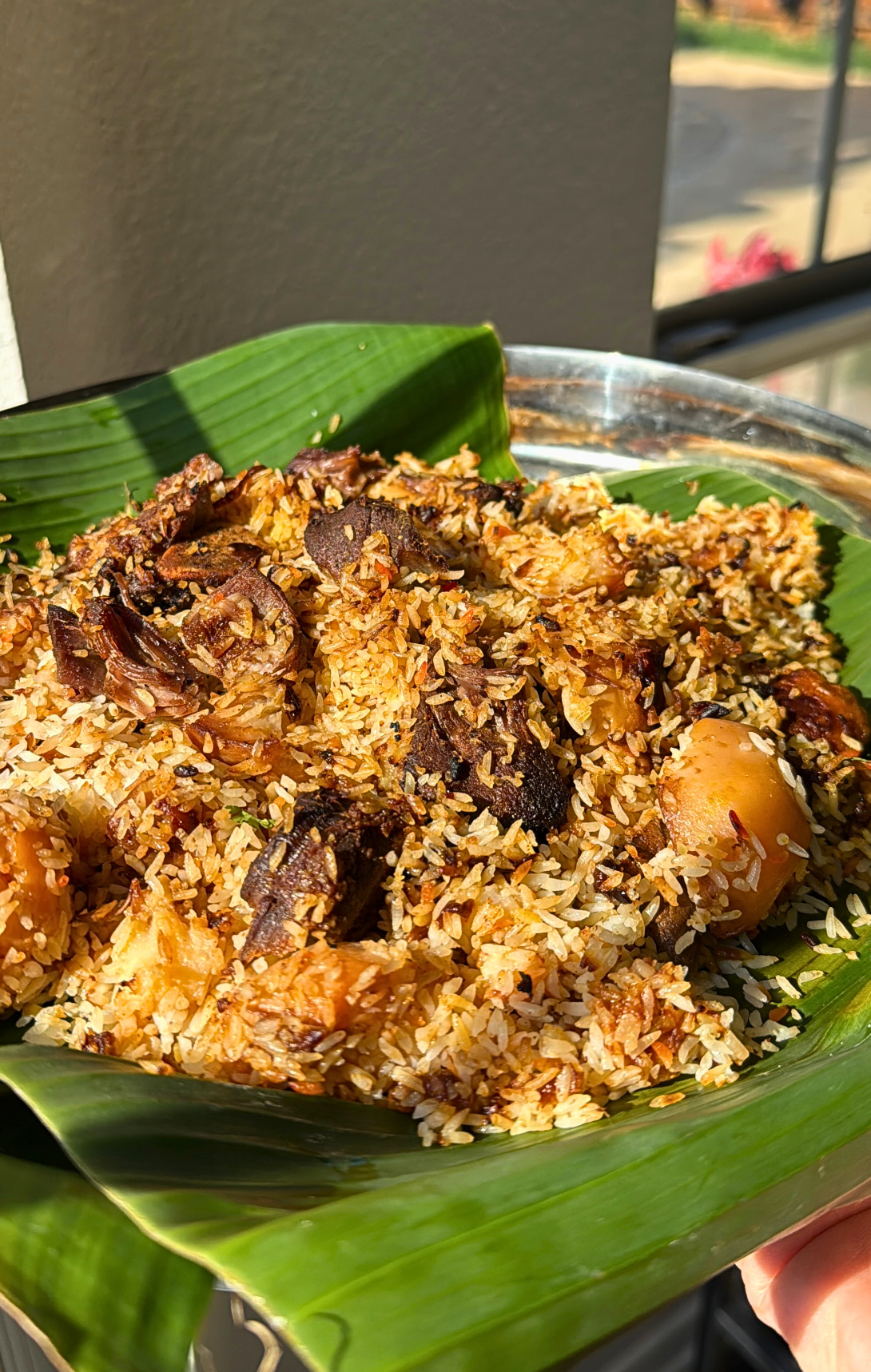
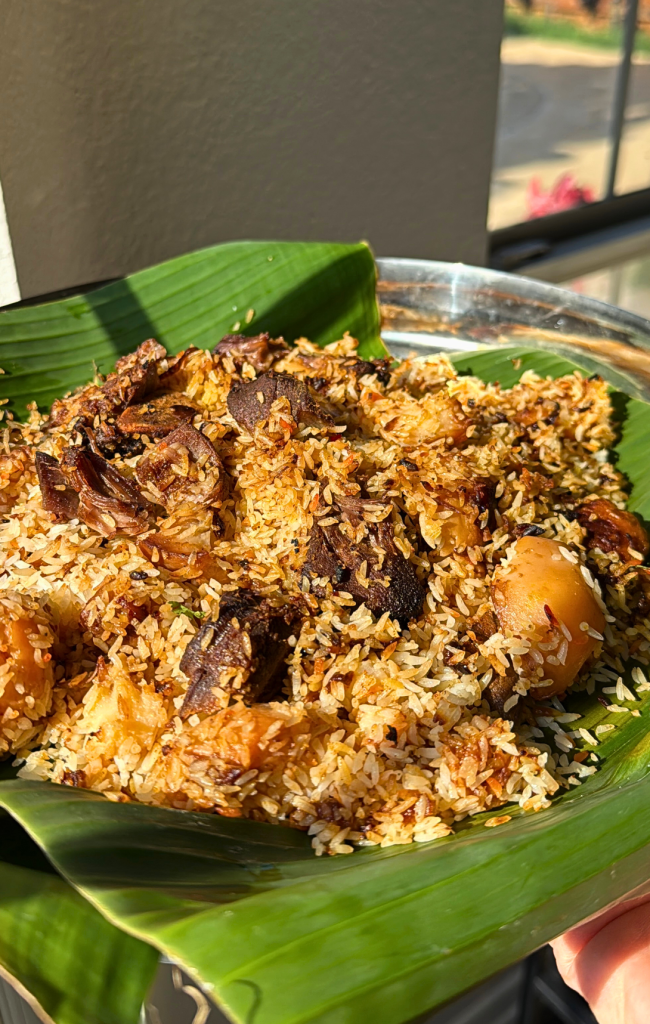
Bangladeshi Kacchi Biryani Recipe for Beginners: A Detailed Step-by-Step Guide to the Traditional Dum Method
Welcome back! If you have been following along with Hosting the World, you may have seen the kacchi biryani video I posted recently, and I have been so happy to see how many of you asked for the full written tutorial. I want to be upfront that I am a complete beginner when it comes to kacchi biryani. I had never made it before this episode, and I am sharing this recipe as someone learning right alongside you, not as an expert. Kacchi biryani is one of the most iconic dishes in Bangladeshi cuisine, if not, the most iconic! Most biryani recipes online use basmati rice and pre-cooked meat, but that is not how it is traditionally made in Dhaka (but of course, modern versions are common there now too). For this episode, I spent a week learning the real method, and it completely made me see how biryani can vary culture to culture.
Before diving into the recipe, I want to be transparent about my sources. I am not Bangladeshi, and I built this recipe by studying two YouTube videos as my main references:
I used these as a guide and I genuinely recommend watching them yourself, especially if this is your first time making kacchi biryani. Seeing the layering and the dough seal in motion makes the process much easier to follow than any written recipe alone.
I also want to give credit to a few people who helped me along the way. I have learned so much from following The Hungry Coder on Instagram, whose content was a big help in understanding Bangladeshi cooking. And a huge thank you to my friend Shompa (@shompsz), who kindly verified this menu for me and made sure I was staying true to the dish.
What Makes Bangladeshi Kacchi Biryani Different
Learning this recipe reframed almost everything I thought I understood about biryani. Here is what stood out to me most.
What Is the Dum Method?
Before getting into the details, it helps to understand dum, since it is the technique the entire dish is built around. Dum cooking means sealing a pot completely so that steam has nowhere to escape, then cooking everything low and slow using only that trapped steam and pressure. In kacchi biryani, this is what allows the raw meat and the parboiled rice to finish cooking together in the same pot, at the same time, without ever mixing directly over open flame. Nothing is added or checked on halfway through. You seal it, you cook it, and you trust the process until it is time to open it. It is a patient method, but it is also what gives kacchi biryani its texture and flavor, since everything cooks together rather than being combined after the fact.
The Rice Is Not Basmati
The first thing that changed my understanding was the rice itself. Traditional Bangladeshi kacchi is not made with basmati. It uses Chinigura rice, (but you can use Kalijeera if you cannot find Chinigura), a short, intensely fragrant grain that is native to Bangladesh. It behaves completely differently than basmati. It cooks faster, it holds a shorter grain shape, and the aroma is much stronger and sweeter. Once you smell it cooking, you understand immediately why it is the traditional choice. I had a tough time finding Chinigura rice here in Texas. I found Kalijeera rice at Patel Brothers, my local Desi supermarket.
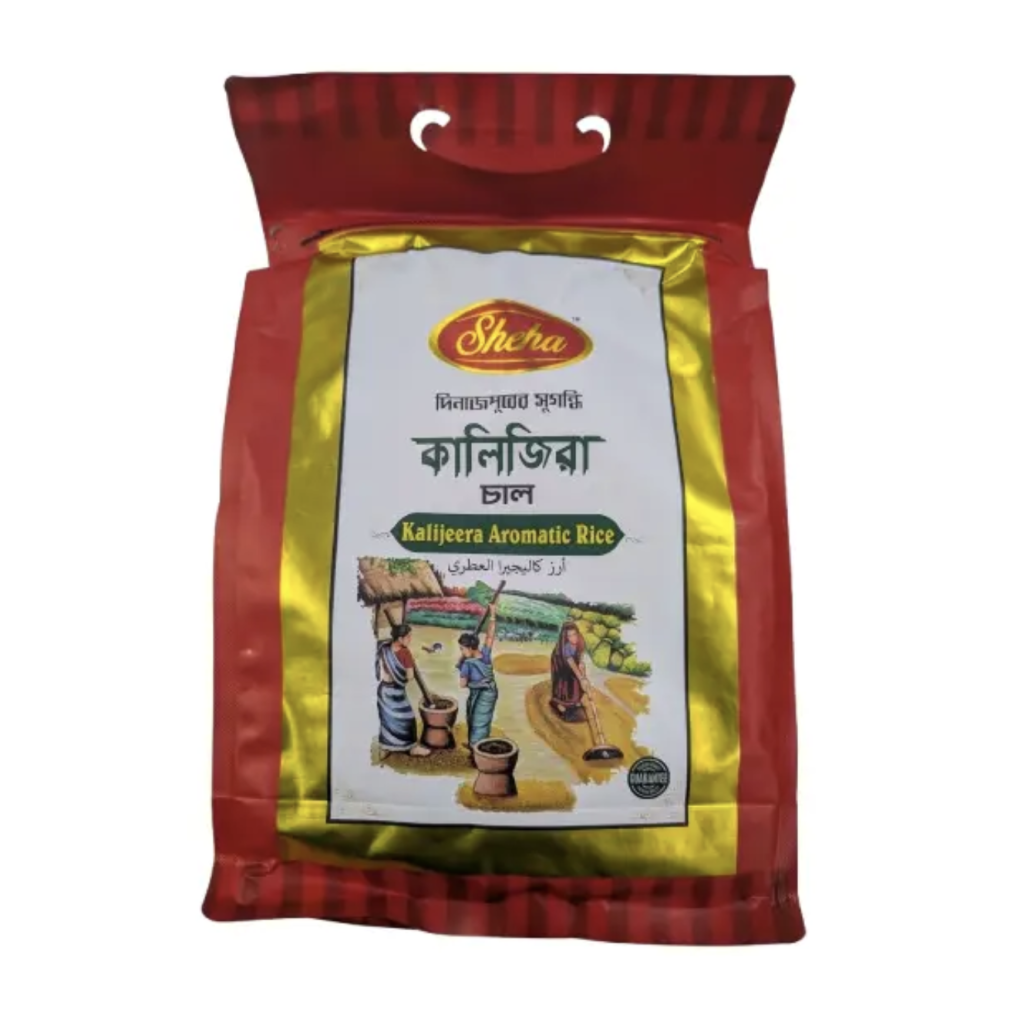
Note: Chinigura is the traditional rice for Bangladeshi kacchi biryani, but after researching the dish, I found that kalijeera rice is also an authentic and commonly accepted alternative due to its similar aroma and texture. I could not find Chinigura, but I was able to find Kalijeera.
Goat vs. Lamb
Traditional Bangladeshi kacchi biryani is made with mutton, meaning goat, not lamb. Goat has a firmer texture and a slightly different flavor that holds up well during the dum cooking process. For this recipe, I used lamb instead, mainly because goat can be hard to track down depending on where you live. Lamb is a widely accepted substitute in biryani recipes outside of South Asia, and it still delivers a rich, tender result. If you can find goat, it is worth using for the most authentic version, but lamb is a completely reasonable swap if that is what is available to you.
The Meat Goes in Raw
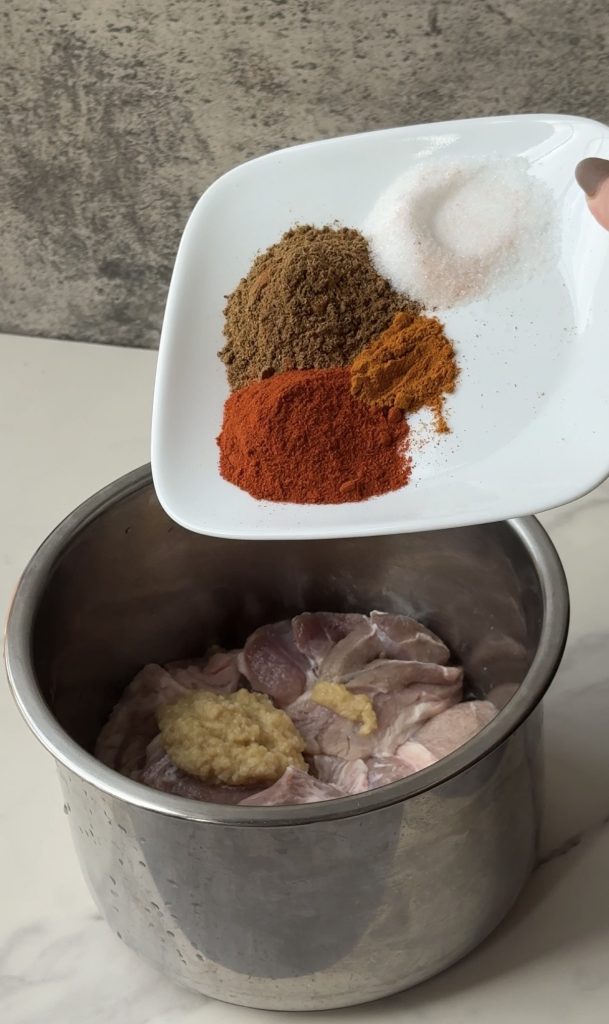
This is the part that really reframed the dish for me. Kacchi literally means raw, and that is not just a name. The marinated meat goes into the pot completely raw, sitting at the bottom of the pot, and it cooks entirely from the trapped steam of the rice and its own juices during the dum process. There is no pre-cooking the meat separately like I had always done before. That single detail changes the entire texture of the final dish.
Finding the Right Cuts of Meat
One thing I did not expect was how hard it would be to find the right cut of meat at a regular American supermarket. Biryani calls for specific bone-in pieces, and most American grocery stores simply do not carry lamb cut that way. I ended up going to my local halal store, a Middle Eastern market near me, instead. There, it was already labeled “lamb for biryani” in the meat case, ready to go. If you do not see it labeled, the butchers at these stores are familiar with the cut and can prepare it for you on request. If you have a halal or Middle Eastern grocery store near you, I would start there rather than a typical American supermarket.
Only One Layer of Meat, One Layer of Rice
I also learned that an authentic kacchi is not built with many alternating layers like a lot of modern recipes suggest. It is one solid layer of marinated raw meat on the bottom, and one layer of parboiled rice on top. That is it!
Milk Powder Between the Layers
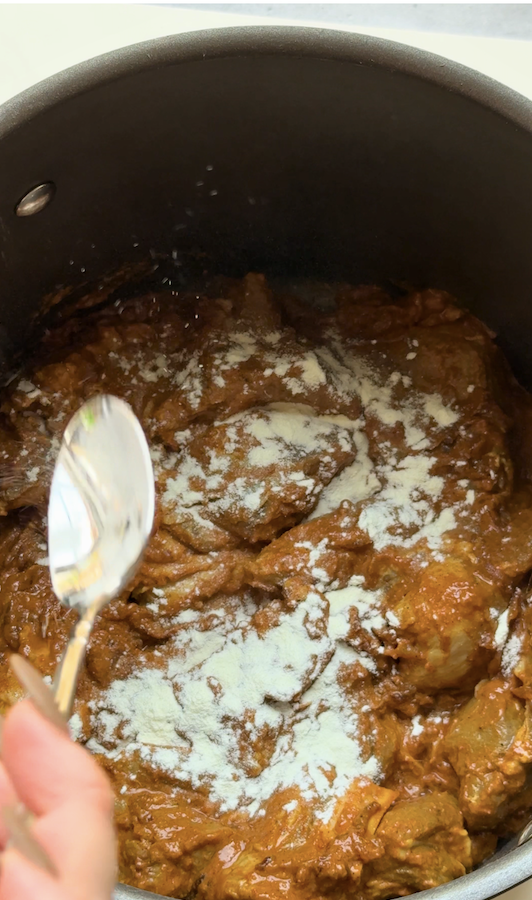
Between the meat and the rice, a bit of milk powder is added. This was completely new to me. It was funny because I literally thought the milk powder was parmesan powdered cheese (I was watching the tutorial in Bangla language and was not understanding what it was initially haha!) It helps create richness and a subtle creaminess in the final dish, without adding liquid, and it also helps bind some of that steam and moisture as the pot cooks. It is a small detail, but it is one of those things that separates a home cook’s attempt from something closer to the real thing.
One of the ingredients that makes Bangladeshi kacchi biryani so unique is milk powder. Sprinkled over the marinated mutton before layering, it adds richness and helps create the signature flavor found in many traditional Dhaka-style recipes. 🇧🇩✨ You can find it in your local Desi grocery store in the milk powder section (brands such as Nido for example).
Alubukhara in the Center
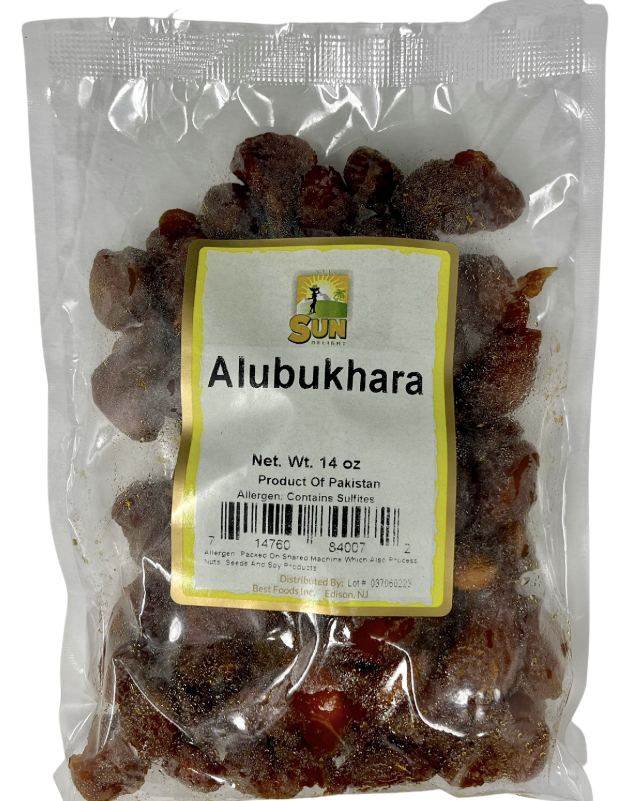
Dried plums, called alubukhara, get tucked into the center of the dish. They soften as the pot steams, and they release these little pockets of tart sweetness throughout the rice that balance out all of the richness from the meat and the ghee. It is a small ingredient that does a lot of work. I also saw some versions that add raisins. I got this at my local Patel Brothers grocery store in the dry fruit section.
The Dunghar Method
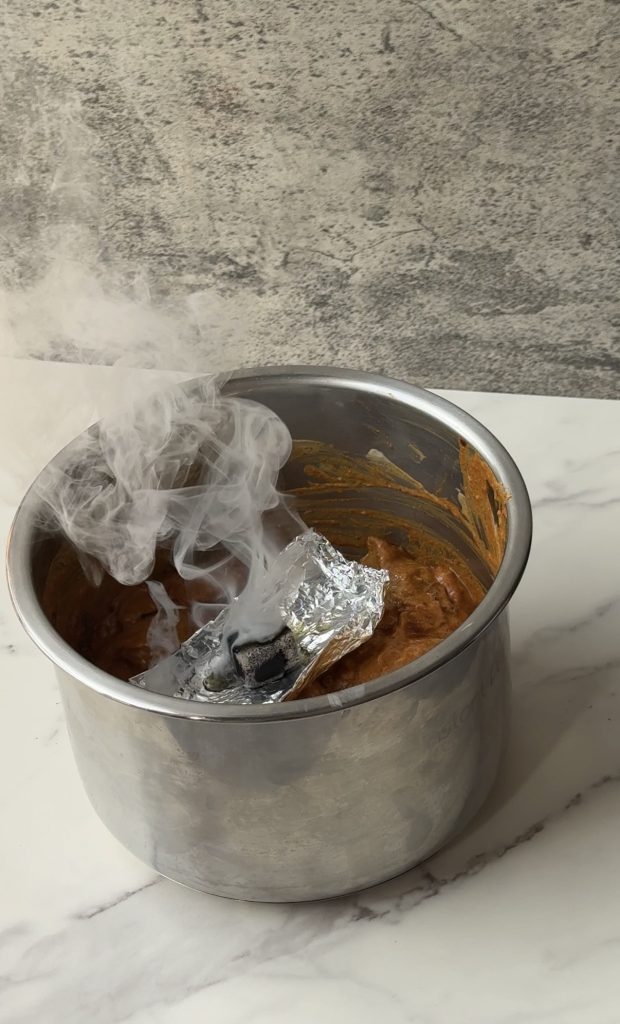
Some traditional recipes for the marination step call for the dunghar method, a smoking technique where a small piece of hot coal is placed in a bowl (or aluminum foil in my case) inside the marinated meat, doused with a bit of ghee, and covered so the smoke infuses the meat before it ever touches the pot. I actually used this same technique when I researched Pakistani chicken tikka boti for an earlier episode, so it was interesting to see how it shows up again here in a Bangladeshi context. It adds a smokiness that you genuinely cannot get any other way.
Kewra Water for Fragrance
Another detail I had never worked with before is kewra water, a fragrant extract made from the screwpine flower. A few drops get added over the rice as it layers into the pot, and it gives the biryani that unmistakable floral aroma you notice the second the lid comes off. It is subtle, but it is one of those ingredients that makes the dish smell unmistakably like kacchi biryani rather than just any spiced rice and meat. Some versions I researched also add rose water to the marinade.

Sealing the Pot with Dough
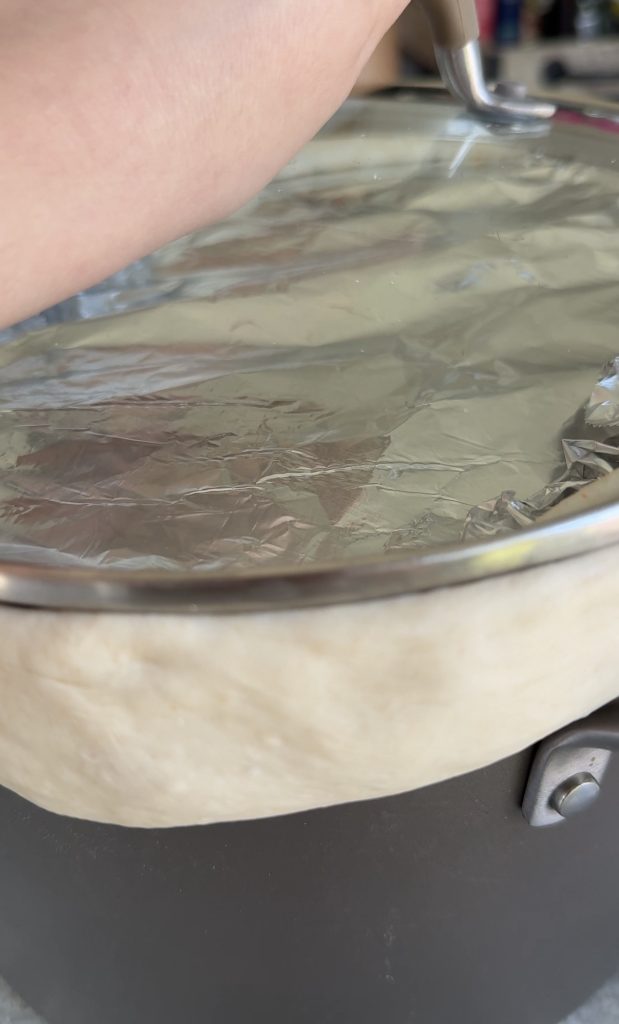
Instead of just covering the pot with a lid, the entire rim gets sealed with a simple flour and water dough. This locks in every bit of steam so the raw meat and rice cook entirely through trapped pressure and moisture. Breaking that dough seal at the table is genuinely one of the most satisfying reveals I have filmed for this series. The smell that comes out when you crack it open is incredible.
Learning all of this in one week made kacchi biryani the clear highlight of this episode for me. I have made biryani so many times, but I had never actually understood the mechanics behind why it is made the way it is.
I Burned My First Batch
I want to be honest that my first attempt at this recipe did not go perfectly. I burned the bottom of the pot. In my head, I assumed lamb would take a while to cook through, so I was not worried about direct heat under the pot. What I did not account for is that the meat had already marinated overnight, and marinated meat that has had that much time to break down cooks much faster than you expect. By the time I realized what was happening, the bottom layer had scorched. Using a heat diffuser between the flame and the pot is the fix, and I would consider it essential rather than optional. The bottom of the pot is always going to heat up faster than the rest, so if you skip the diffuser, that is where you are most likely to run into trouble too.
Learning all of this in one week made kacchi biryani the clear highlight of this episode for me. It took me a few days to understand the entire process. I have made biryani so many times, but I had never actually understood the mechanics behind why it is made the way it is.
Now let’s get into the recipe itself.
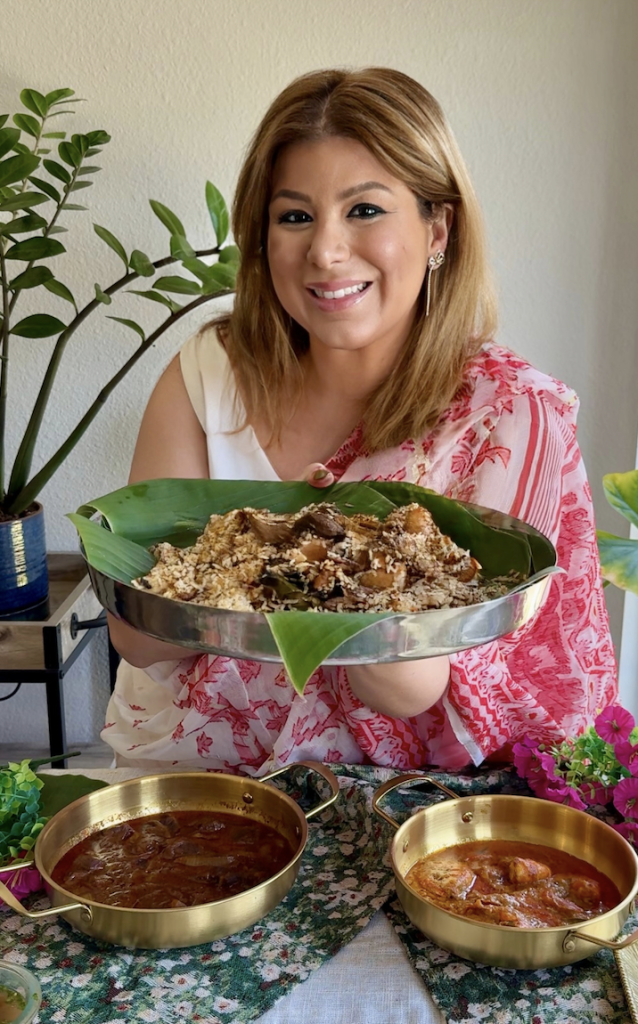
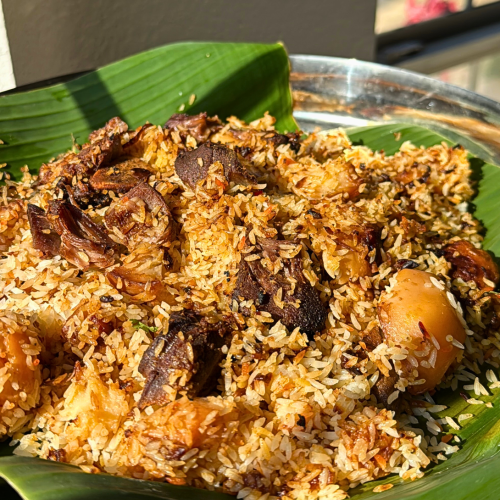
Bangladeshi Kacchi Biryani

Ingredients
For the Marinade
- 2 lbs lamb, cut into biryani sliced pieces
- 1 tbsp ginger paste
- 1 tbsp garlic paste
- 1.5 tsp red chili powder adjust to taste
- 1/2 tsp turmeric powder
- 1 tsp cumin powder
- 1 tsp coriander powder
- 1.5 tsp garam masala
- 1/2 tsp shah jeera (black cumin) optional but traditional
- 1/4 tsp mace
- 1.5 tsp salt adjust to taste
- 2 onions thinly sliced and fried until golden brown
- 2 tbsp ketchup
- 3 tbsp ghee or oil
- 1 cup plain yogurt
For the Potatoes
- 4 medium potatoes peeled and halved
- 1 pinch orange food coloring
- oil for frying
For the Rice
- 3 cups kalijeera rice washed and soaked for 20 min
- water enough to boil the rice
- 2 bay leaves
- 4 cardamom pods
- 1 small part of a cinnamon stick
- 4 whole cloves
- salt to taste
For Layering
- 3 tbsp milk powder
- 4 green chillies
- 6 alubukhara (dried plums)
- 1-2 tsp kewra water
- 1 tsp rose water
- 1/4 cup milk warmed, with a pinch of saffron strands steeped in it
- a few drops of orange food coloring diluted in a spoonful of water
- 1 tbsp ghee to drizzle
For the dough seal
- 2 cups all purpose flour
- 3/4 cup water
Instructions
Fry the Onions
- Heat oil (cover the bottom of the pan). Thinly slice the onions and fry until golden brown (for about 20 minutes). You don't have to fry the onions, you can buy already fried onions at your local Desi supermarket, but I prefer to fry them myself. Set aside.
Prepare Lamb in Marinade
- Wash the lamb (or mutton if using) with cold water and a generous pinch of salt. Rinse thoroughly and pat dry.
- In a large bowl, combine the lamb with: ginger paste, garlic paste, red chili powder, turmeric powder, cumin powder, coriander powder, garam masala, shah jeera (if using), mace, salt, fried onions, ketchup, ghee (or oil), and yogurt.
- Wearing a food-safe glove, massage everything thoroughly into the meat for several minutes.
"Smoke" the Meat (Dhungar Method)
- Heat a piece of natural charcoal until glowing red.
- Place a small metal bowl or a piece of foil in the center of the marinated lamb. Carefully place the hot charcoal inside and drizzle ghee (or oil) over it. Just a drizzle. Immediately cover the bowl tightly for 5–10 minutes to allow the smoke to infuse the meat.
- Remove the charcoal. Cover and refrigerate overnight, or for at least 8 hours.
Prepare the Potatoes
- Peel the potatoes and cut them in half. Add a few drops of orange food coloring to lightly tint the potatoes.
- Heat oil and fry the potatoes until lightly golden. They do not need to cook through completely. Set aside.
Parboil the Rice
- Bring a large pot of water to a boil. Add bay leaves, cardamom, cinnamon, cloves, salt.
- Add the soaked rice and cook for about 5–6 minutes, until it is roughly 60–70% cooked. Drain immediately.
Assemble the Biryani
- Spread the marinated lamb evenly across the bottom of a heavy-bottomed pot (this is the pot you will cook everything in).
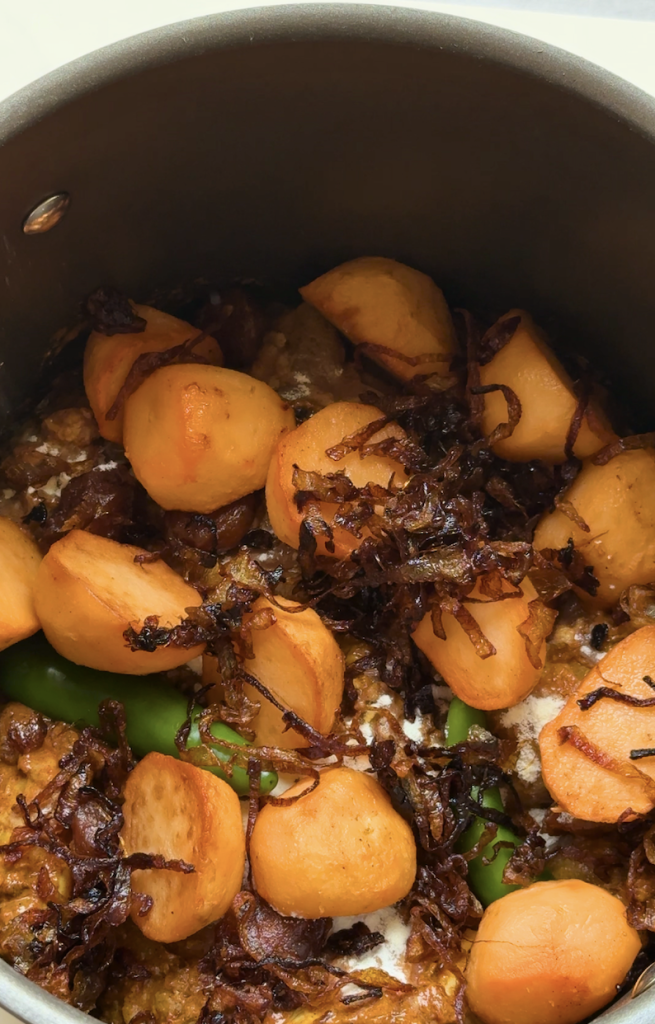
- Arrange the potatoes over the meat. Scatter over green chillies, fried onions, alubukhara. Sprinkle milk powder on top.
- Top evenly with parboiled rice.
- Drizzle kewra water, rose water, milk, saffron milk, a few drops of orange food coloring, over the rice.
Seal the Pot
- Cover the pot tightly with aluminum foil.
- Mix the flour and water into a soft dough and roll it into a long rope.
- Press the dough around the rim of the pot to create a tight seal before placing the lid on top.
Cook (Dum Method)
- Place a heat diffuser (or tava/griddle) over the burner, then place the biryani pot on top. This helps prevent the meat at the bottom from scorching while it cooks slowly.
- Cook over low heat for about 25–30 minutes.
- Turn off the heat and let the biryani rest, still sealed, for 15–20 minutes before opening.
- Break the dough seal and gently fluff the rice, taking care not to break up the tender lamb pieces.
- Serve and enjoy!
Notes
- Use a heat diffuser under the pot. Because the raw lamb cooks beneath the rice, direct heat can scorch the bottom before the meat becomes tender.
- Keep the heat consistently low throughout the dum cooking process.
- Resist the temptation to open the lid while cooking—the trapped steam is what creates the signature texture and aroma of authentic kacchi biryani.
- Kalijeera and Chinigura are both excellent fragrant rice varieties for this dish. While Chinigura is the traditional choice, Kalijeera is also widely used and produces an authentic result.
- If you do not have a heat diffuser, a flat cast iron griddle or tawa placed under the pot works the same way. The goal is to keep direct flame from touching the bottom of the pot, since the raw marinated meat sits right there and can scorch easily.
- Goat is the traditional meat used in Bangladeshi kacchi biryani. Lamb works well as a substitute and is what I used here.
- I referenced two YouTube tutorials while learning this recipe, linked earlier in this post. If this is your first time making kacchi biryani, I recommend watching them alongside this written recipe.