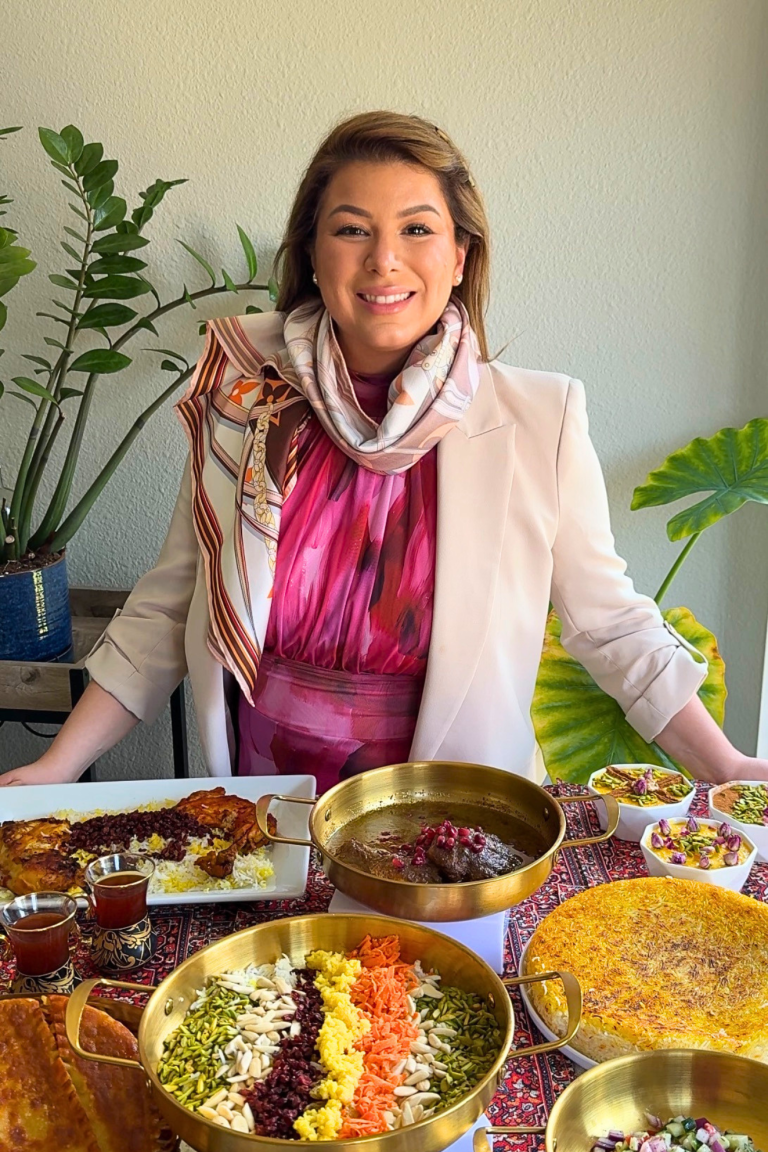
Hosting the World South Africa: A Braai Feast and the Spirit of Ubuntu
Hi! I’m Emilia Kim and I’m Hosting the World! This week on Hosting the World, I’m exploring a food culture shaped by many different communities, traditions, and histories. From gathering around the fire for a braai to a colorful plate of Seven Colours, and favorites like bunny chow and bobotie, food has a beautiful way of bringing people together there. In South Africa, sharing a meal often means sharing conversation, time, and community too.
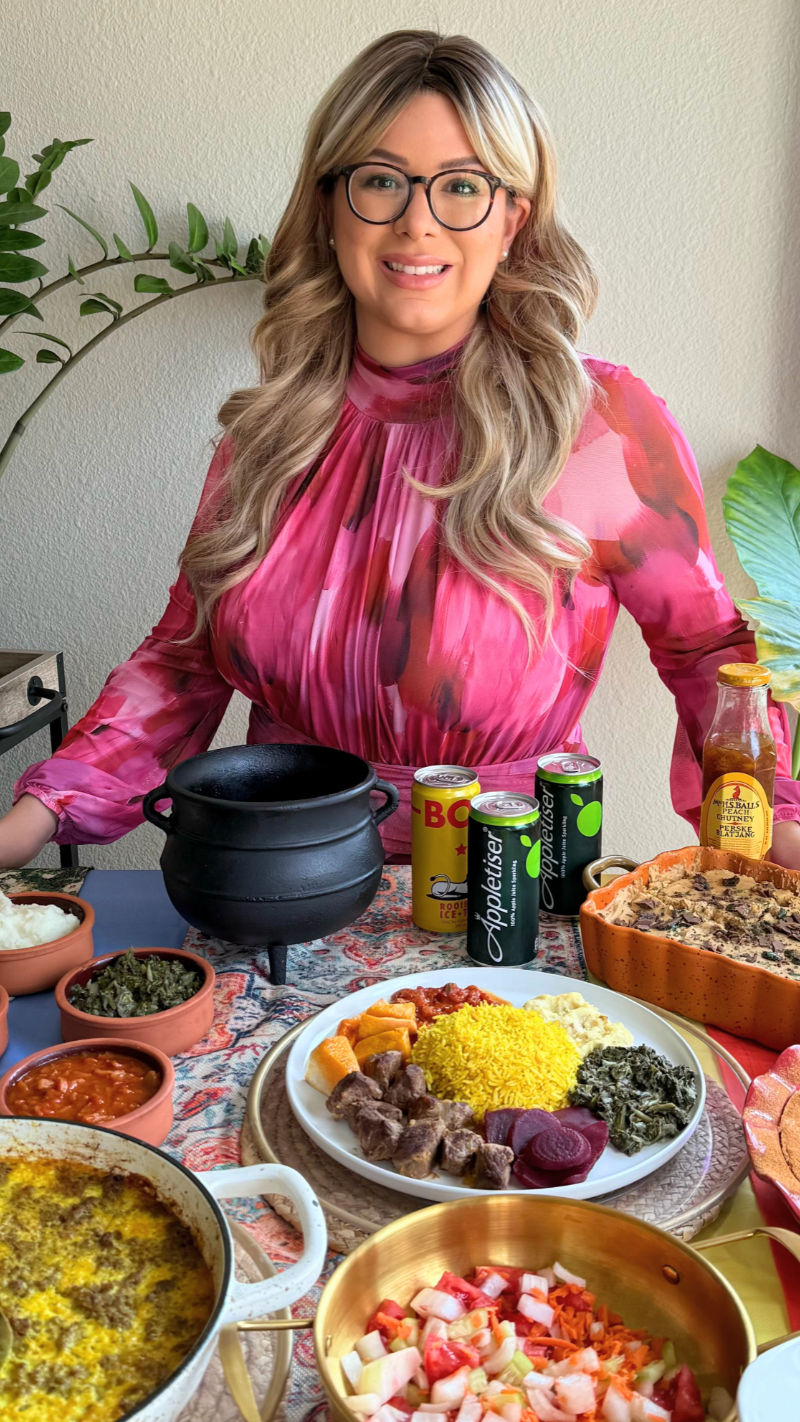
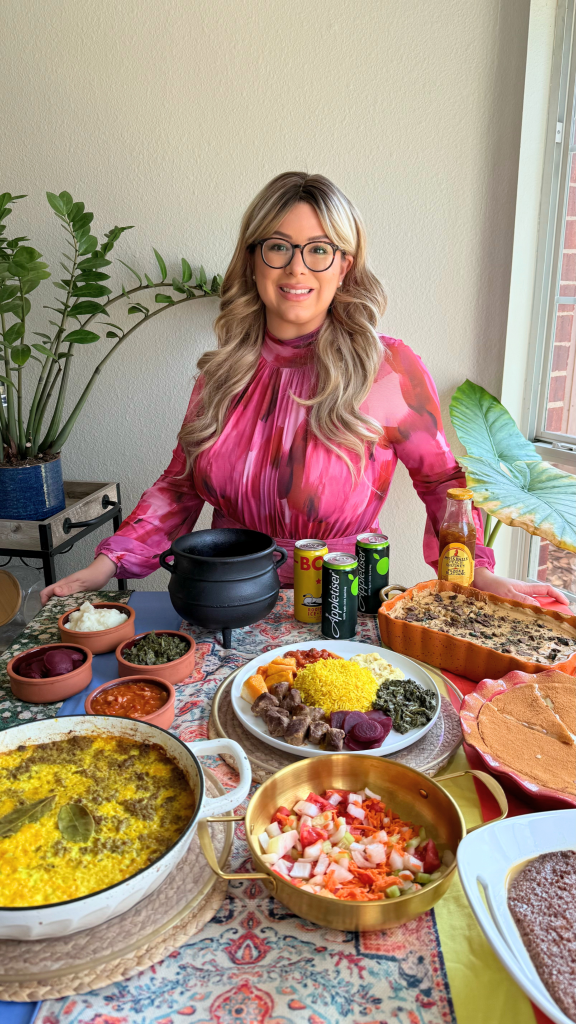
This episode’s menu included seven colors (with pap, beetroot, creamed spinach, butternut, potato salad, meat, and chakalaka), umqa, bunny chow, bobotie, potjiekos, and of course, braai. For dessert, we served peppermint crisp tart, melktert, and malva pudding, with Mrs Balls Chutney on the table and Appletiser and rooibos tea to drink.
Let’s unpack this feast, dish by dish, and talk about why South African hospitality centers so powerfully around the fire.
What Is Ubuntu? The Heart of South African Hospitality
If there is one word that explains why South Africans host the way they do, it is Ubuntu. Ubuntu is a Nguni Bantu concept often translated as “I am because we are.” It reflects the belief that a person’s humanity is bound up in their relationships with others.
At the table, Ubuntu shows up as generosity without hesitation. Guests are welcomed, fed, and included, even unexpected ones. It is common for a neighbor to wander over during a braai and simply be handed a plate. There is no formal invitation required. There is only the fire, the food, and the people gathered around it.
The Menu: A South African Feast Table
South African food reflects the country’s history and its people. It carries Zulu and Xhosa roots, Cape Malay spice, Afrikaner comfort cooking, and the vibrant flavors brought by the Indian community in Durban. Every dish on this table tells a piece of that story.
Seven Colors: A Table Full of Abundance
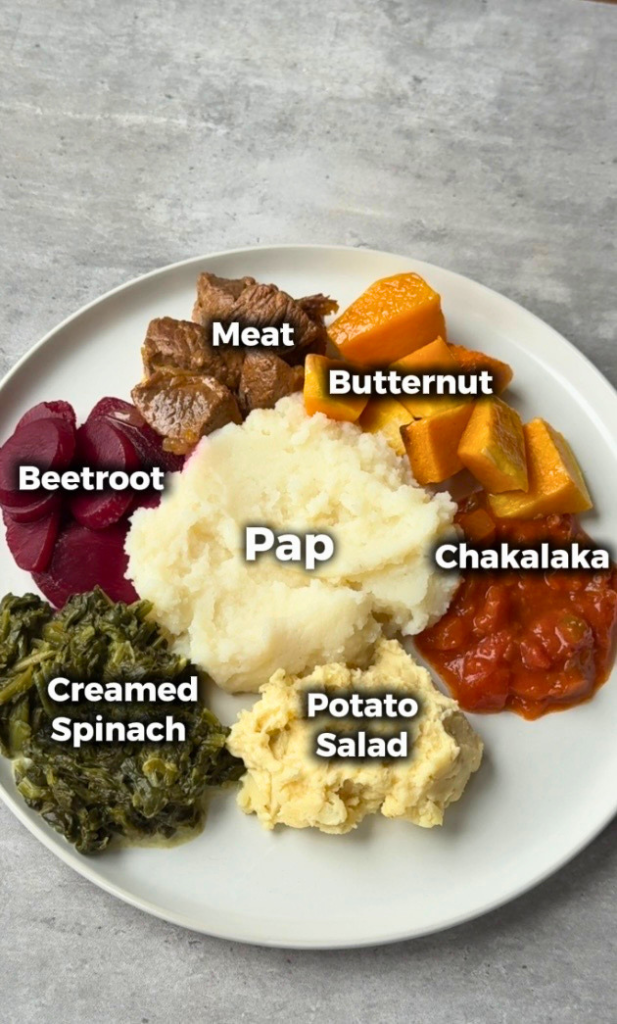
Seven colors, sometimes called Sunday lunch, is a spread built around variety and abundance. True to its name, the meal typically includes seven components on one plate:
- Pap, a maize porridge similar to polenta, and the starchy backbone of the meal
- Beetroot salad, usually sweet and tangy
- Creamed spinach, rich and mild
- Butternut, often roasted with sugar or cinnamon for a caramelized sweetness
- Potato salad, creamy and cool against the warmer dishes
- Meat, commonly chicken, beef, or oxtail, slow cooked until tender
- Chakalaka, a spicy relish of tomatoes, onions, and vegetables that ties the whole plate together
Seven colors is the kind of meal built for a full table and a long afternoon. It is generous by design, meant to be shared and refilled.
Umqa: Pumpkin and Maize Meal Comfort
Umqa brings together pumpkin or squash with maize meal, cooked down into a soft, slightly sweet, porridge-like dish. It is humble, filling, and deeply comforting, the kind of side dish that grounds a big spread like this one. Maize is central to South African cooking, and umqa is a beautiful example of how it gets transformed into something warm and nourishing.
Bunny Chow: Durban’s Indian-Influenced Icon
No conversation about South African food is complete without bunny chow. This dish was born in Durban, home to the largest population of people of Indian descent outside of India itself. Indian laborers and merchants arrived in the region starting in the 1860s, and their culinary influence transformed the city’s food identity.
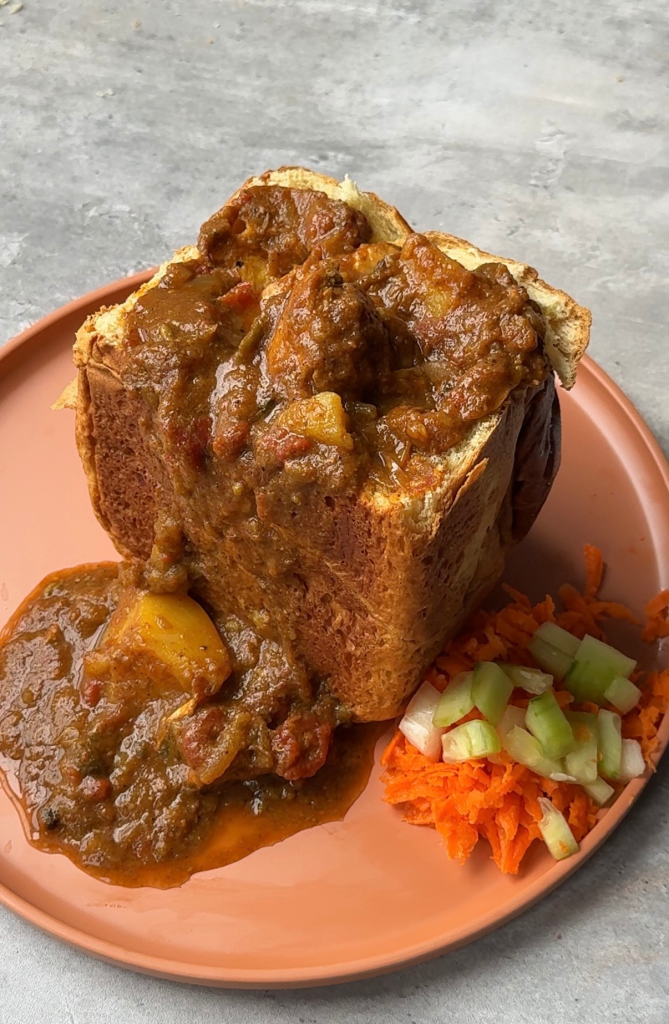
Bunny chow is a hollowed out loaf of bread filled with a rich, spiced curry, often mutton, chicken, or bean based. It is portable, hearty, and a genuine piece of Durban street food history. Don’t worry! The name has nothing to do with rabbits and there are no bunnies involved! It is widely believed to come from “bania,” a term for Indian merchant traders who are thought to have created the dish.
Bobotie: How It’s Pronounced and Why It Matters
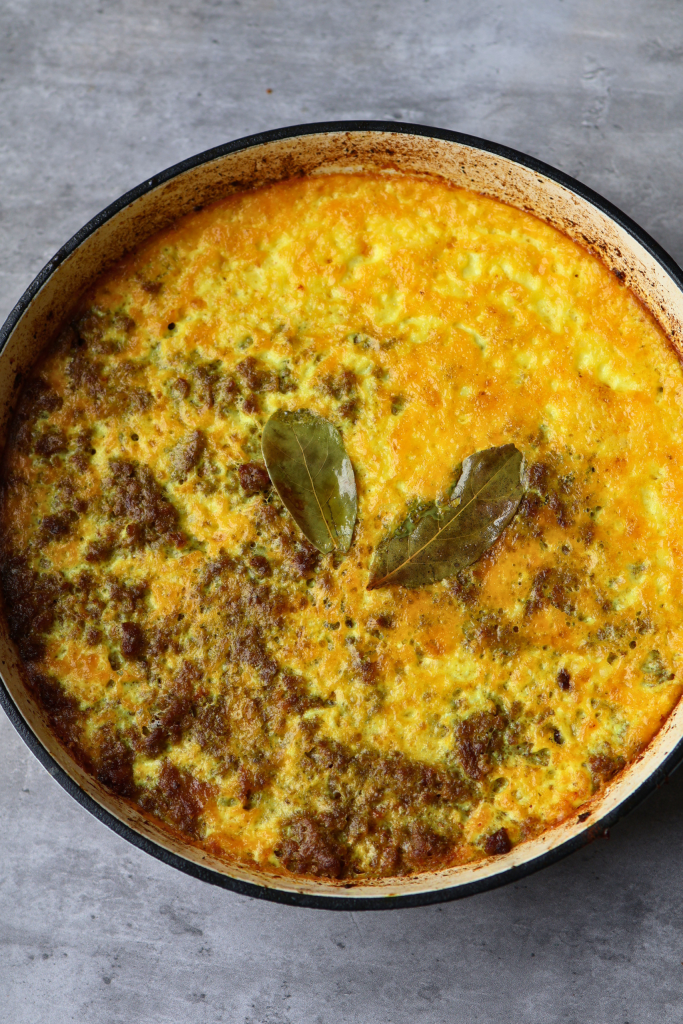
Bobotie (pronounced buh-BOO-tee) is one of South Africa’s most iconic dishes, and its roots trace back to the Cape Malay community of Cape Town. Cape Malay people descend from enslaved and exiled individuals brought to South Africa from present day Indonesia, Malaysia, and other parts of Southeast Asia, primarily by Dutch colonizers starting in the 1600s. Their culinary influence, rich with warming spices like turmeric, cinnamon, and cloves, is stitched into the fabric of South African cuisine. Though bobotie’s earliest known recipe appears in a 1609 Dutch cookbook, the dish as we know it today, warmly spiced and touched with sweetness, was shaped and claimed by Cape Malay cooks.
Bobotie is a spiced minced meat dish, usually beef or lamb, mixed with dried fruit, curry spices, and topped with a baked egg custard. It is sweet, savory, and fragrant all at once.
Potjiekos: The Slow-Cooked Communal Stew
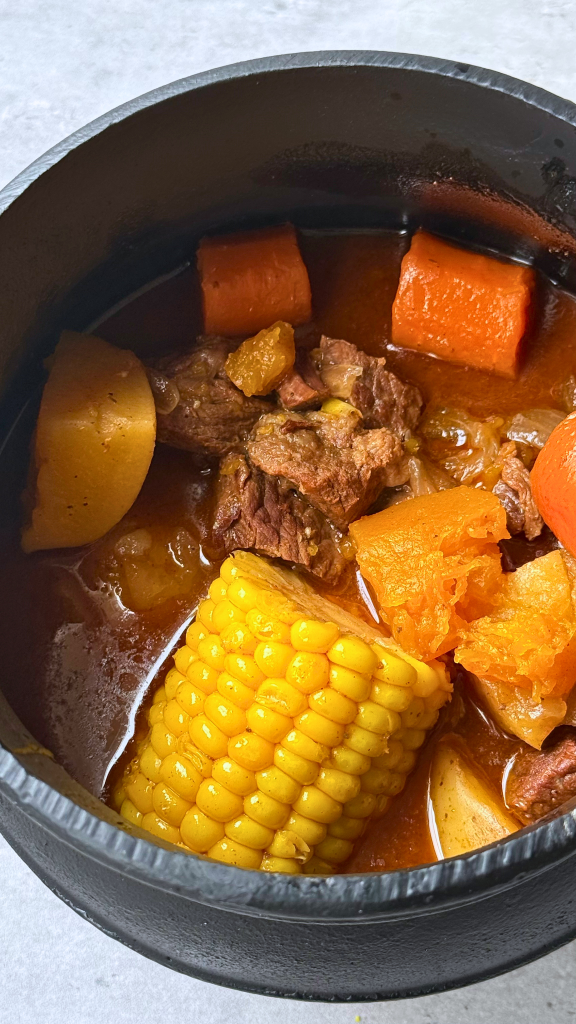
Potjiekos, which translates roughly to “small pot food,” is a stew cooked low and slow in a round, cast iron, three-legged pot over an open fire. It is a dish built for patience. Meat, vegetables, and seasonings are layered rather than stirred, and the pot is left to simmer for hours.
Potjiekos is often prepared outdoors, alongside a braai, and it reflects the same values found throughout South African hosting. It is slow. It is shared. It is meant to be tended to together while people talk, laugh, and wait.
Braai: More Than a Barbecue
If there is one word that captures the soul of South African hospitality, it is braai. A braai is often compared to a barbecue, but that comparison undersells it. A braai is a full social event built around fire, meat, and community.
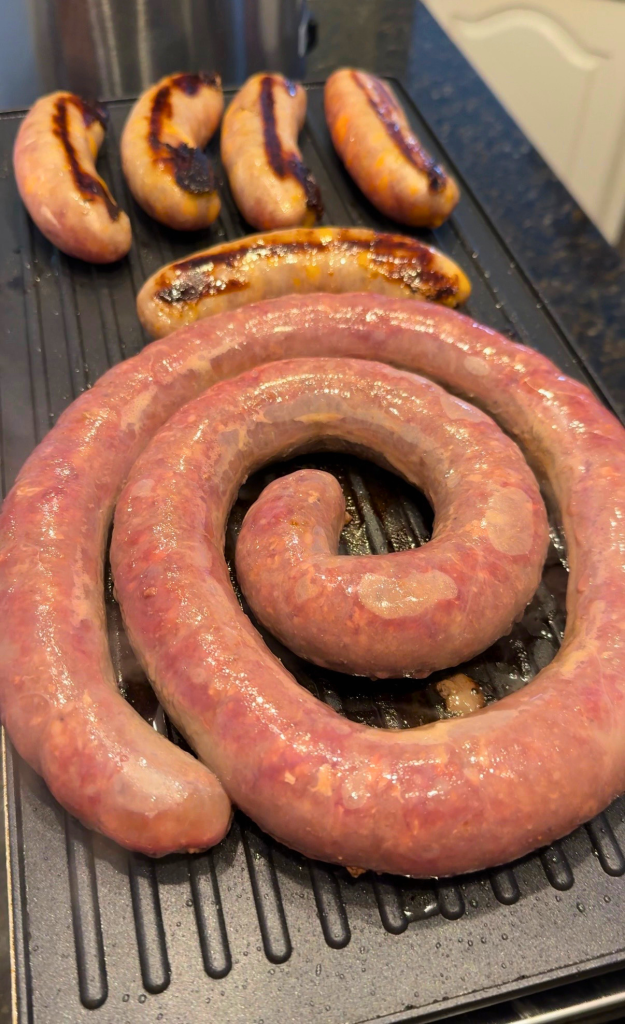
South Africans do not braai quietly or quickly. The fire is tended for hours. Boerewors, a coiled, spiced sausage, sizzles alongside chicken, lamb chops, and steak. People stand around the flames long before the food is ready, drinks in hand, conversations stretching on. Nobody rushes a braai.
This is where Ubuntu becomes visible in real time. A braai is one of the most community friendly traditions in South African life. If you are visiting someone’s home, spending time in their neighborhood, or even just passing through at the right moment, do not be surprised if you are invited to join. Braais are rarely private affairs. They pull people in.
Guests linger. They talk. They circle back to the fire for another piece of meat as the evening deepens. It is common for a braai that starts in the afternoon to still be going well into the night, with people eating in waves rather than all at once. The fire becomes the center of gravity for the whole gathering. My friend Anica, told me that in her community, people would come over, even if no formal invitation was given beforehand, and join in! She told me how community-centered South Africans are and that it’s one of her favorite things about her country; life in South Africa is not generally individualized, rather, social and inviting!
Braai is such a central part of South African identity that the country celebrates National Braai Day every year on September 24, which coincides with Heritage Day. The day was championed as a way to bring South Africans of every background together around one shared tradition, no matter their language, culture, or history.
Dessert Table: Peppermint Crisp Tart, Melktert, and Malva Pudding
South African desserts lean sweet, creamy, and deeply nostalgic.
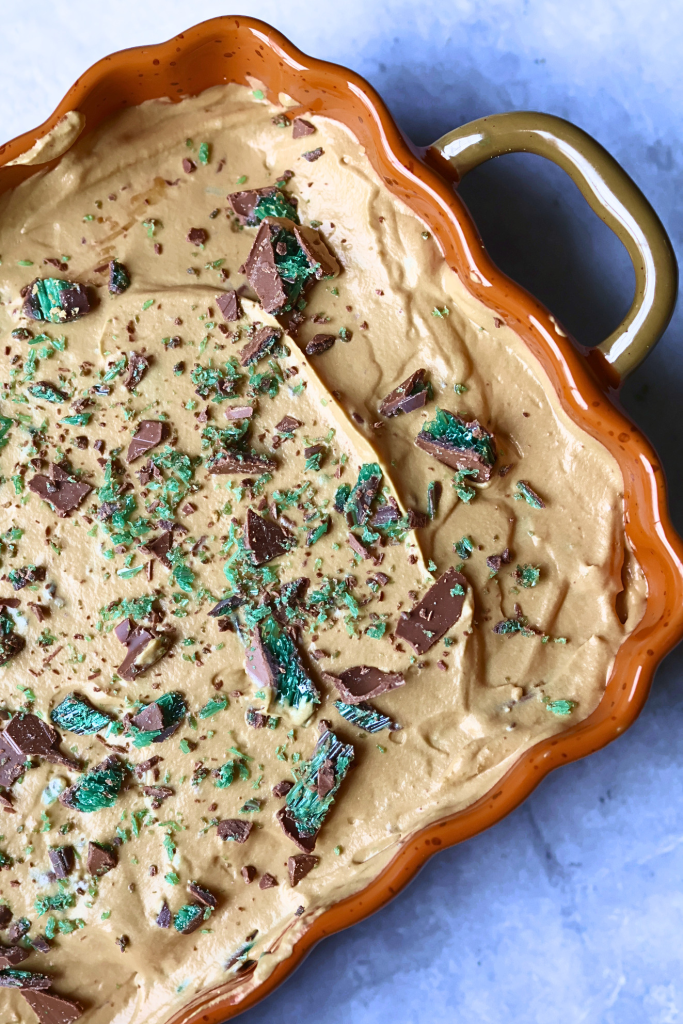
Peppermint crisp tart is a no-bake dessert made from layers of crushed peppermint chocolate, caramel, and whipped cream, chilled until firm. It is a staple at family gatherings and potlucks across the country.
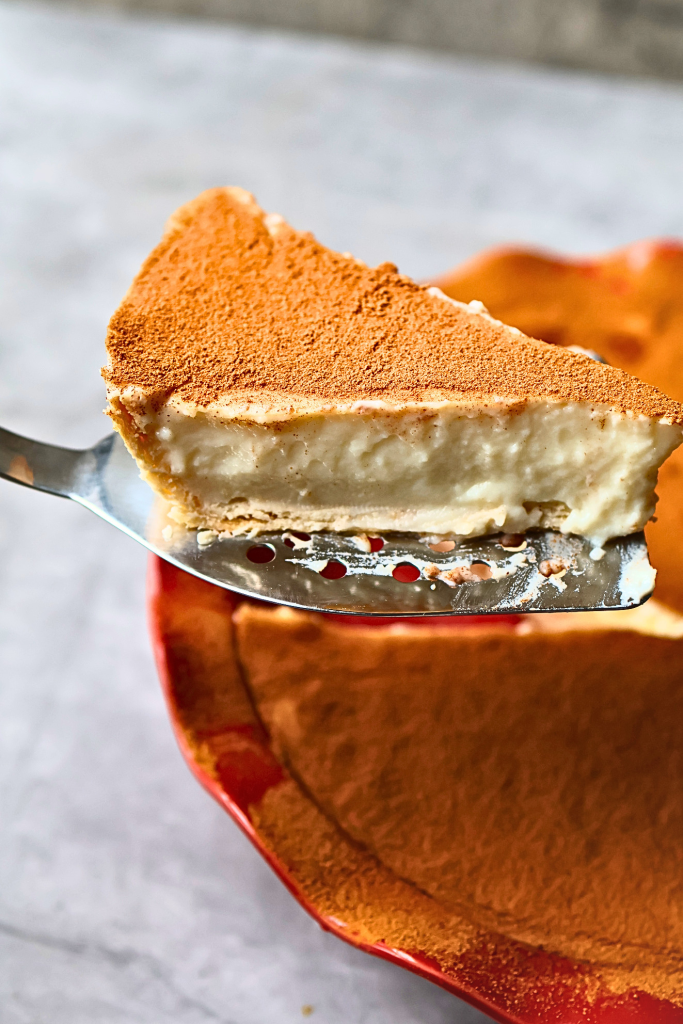
Melktert, meaning “milk tart,” is a custard based tart with a light, cinnamon dusted top. It is so cremy and truly delicious!
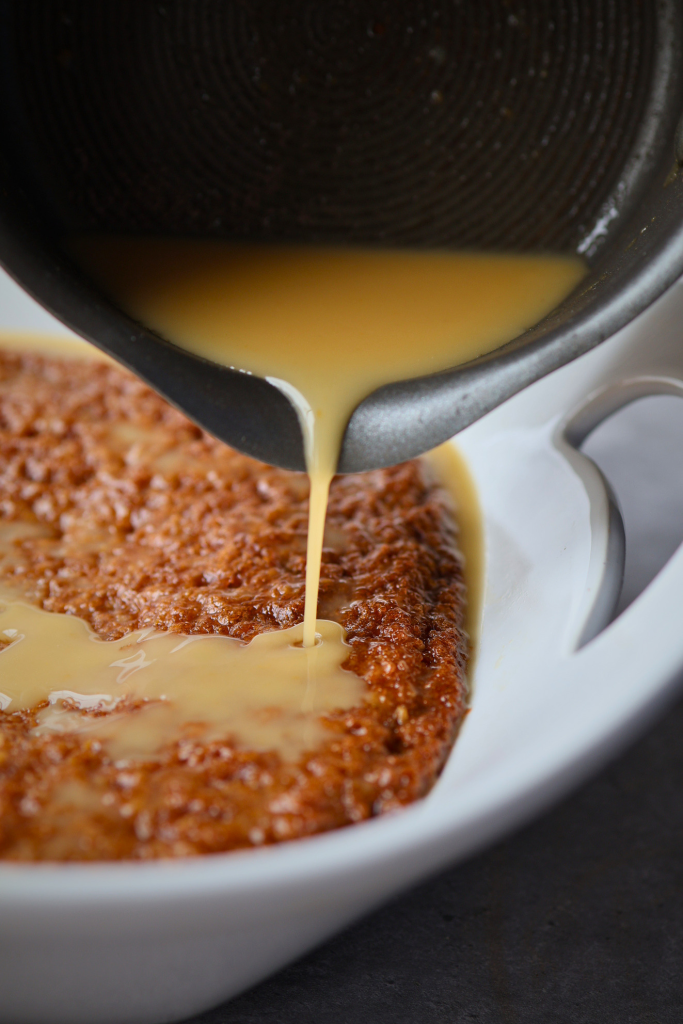
Malva pudding is a warm, spongy, caramelized dessert soaked in a sweet cream sauce, often served with custard or ice cream.
On the Table: Mrs Balls Chutney
No South African spread feels complete without a jar of Mrs Balls Chutney on the table. This sweet and tangy fruit chutney has been a household staple since the early 1900s, and it pairs naturally with bobotie, curries, and grilled meats straight off the braai. It is less a condiment and more a symbol of home cooking passed down through generations.
To Drink: Appletiser and Rooibos Tea
To drink, the table featured Appletiser, a sparkling apple juice that has become a South African household name, and rooibos tea, a naturally caffeine free red tea made from the rooibos plant, which grows almost exclusively in South Africa’s Western Cape region. Rooibos has a warm, slightly sweet, earthy flavor.
The Rainbow Nation: South Africa’s Beautiful Diversity
South Africa is often called the Rainbow Nation, a term popularized by Archbishop Desmond Tutu and embraced by Nelson Mandela to describe the country’s extraordinary cultural diversity following the end of apartheid.
That diversity is not abstract. It shows up directly on the plate.
Zulu and Xhosa communities, the country’s two largest ethnic groups, bring deep culinary traditions rooted in maize, sorghum, and slow cooked meats. Afrikaners, descendants of primarily Dutch, French, and German settlers, contributed dishes like melktert and many braai traditions still practiced today. The Cape Malay community, centered in Cape Town, brought fragrant spice blends and dishes like bobotie that are now considered quintessentially South African. And in Durban, the largest population of people of Indian descent outside of India shaped the city’s food identity entirely, giving the world dishes like bunny chow and Durban style curry.
This blend of cultures, histories, and traditions is exactly why South African food feels so interesting to learn!
Frequently Asked Questions About South African Food and Hosting
What does bobotie taste like?
Bobotie is sweet, savory, and warmly spiced all at once. The minced meat filling is seasoned with curry powder, turmeric, and dried fruit, then topped with a baked egg custard that gives it a soft, almost quiche like finish.
What is a braai, exactly?
A braai is a South African outdoor gathering centered around grilling meat over an open flame. It is closer to a full social event than a quick meal, often lasting for hours, with guests arriving, lingering, and eating throughout the evening.
Why is Durban known for Indian food?
Durban is home to the largest population of people of Indian descent outside of India, a legacy of Indian laborers and merchants who arrived in the region beginning in the 1860s. Their influence shaped the city’s food culture, most famously through dishes like bunny chow.
What is Ubuntu?
Ubuntu is a Nguni Bantu philosophy that centers on shared humanity, often summarized as “I am because we are.” In South African hospitality, it shows up as an instinct to welcome and feed others generously, even without a formal invitation.
Final Thoughts
South African hospitality is loud, generous, and built to include as many people as possible. A braai does not just feed a household. It draws in neighbors, friends, and sometimes total strangers, all standing around the same fire, talking long after the meat is done.
That is the spirit behind this episode of Hosting the World. It is not only about what ends up on the plate. It is about the fire that brought everyone there in the first place.