Hosting the World: Lebanon | A Full Lebanese Menu
By Emilia Kim
Hello, friends, and welcome back to Hosting the World™, the series where I cook my way around the globe one country, one table at a time. This week, I am bringing Lebanon to your table!

This week we are in Lebanon, and I have to be honest with you: this was one of the most generous menus I have ever put together. Lebanese food has a way of multiplying on the table. You start with a few small plates, and before you know it there is no room left for the mains. The cooking is bright and fresh, full of lemon, garlic, parsley, olive oil and yogurt, but it also has a warm, cozy side built on rice, cinnamon, toasted nuts and slow-simmered sauces.
In this post I am walking you through the main dishes and the dessert I made, plus some of my favorite fun facts about this small country with an enormous food legacy. Grab a piece of warm bread and let’s go.
The Mezze Spread
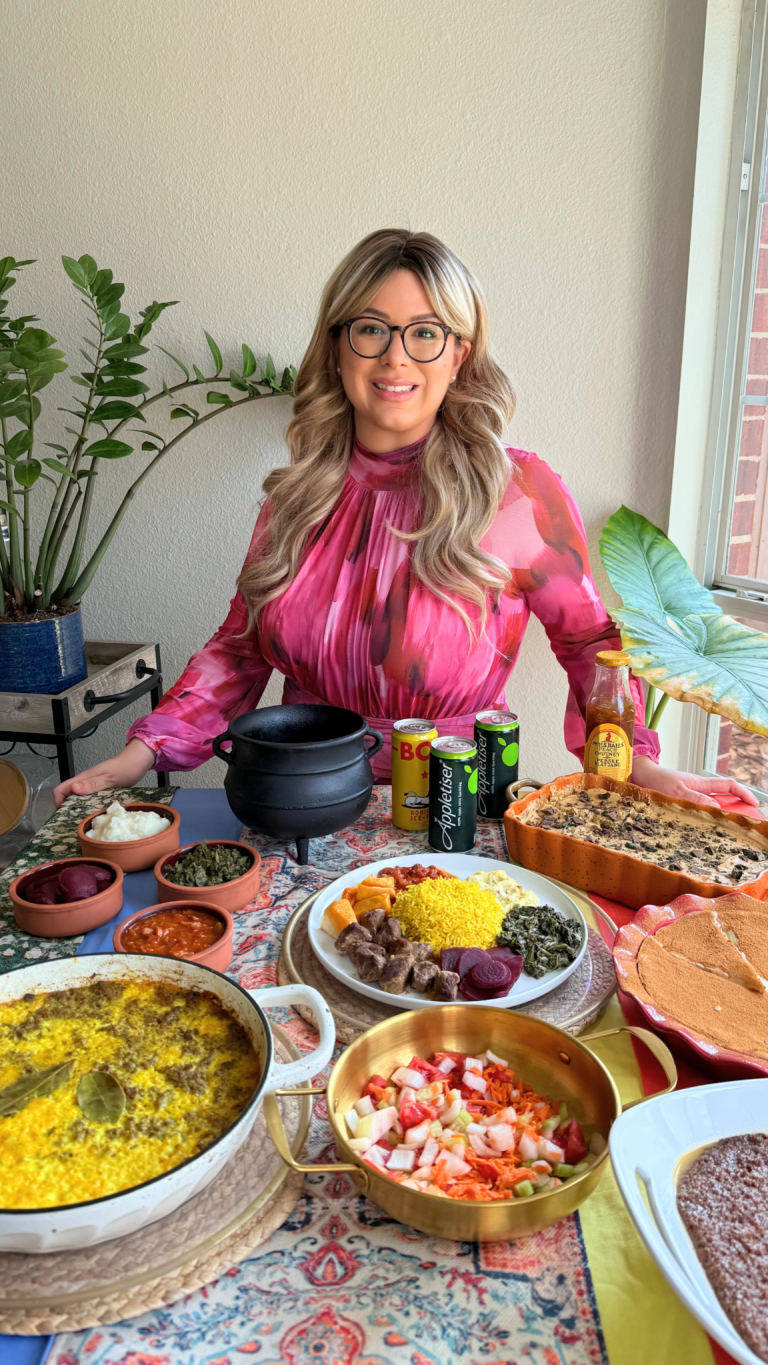
Every Lebanese meal I have ever loved started with mezze, and this one was no exception. My table had baba ganouj, hummus, muhammara, red pepper hummus, labneh with za’atar, a plate of pickles (yes, including the famous pink ones), bread, warak enab, falafel and tabbouleh.
Mezze deserves its own spotlight, so I am working on writing a separate post that breaks down every single dish on that spread: what it is, how it is made and how to serve it (more of this coming soon).
If you followed along with my Syria episode, you will notice a few familiar faces, like muhammara. Lebanon and Syria share a lot of culinary DNA, and it was fun to see how the same dishes show up with slightly different personalities across the border.

For now, let’s move on to the main event.
The Mains
Fattet Hummus
Fattet hummus is the dish I would make for anyone who says they “do not really like chickpeas.” It is a layered dish built on three things: crispy toasted or fried pita at the bottom, warm chickpeas in the middle and a cool, garlicky yogurt and tahini sauce poured over the top. To finish, you add pine nuts toasted in butter or ghee, a sprinkle of paprika or cumin and some chopped parsley.
The word fatteh comes from the Arabic root meaning to crumble or break into pieces, which describes the torn bread that forms the base. Fatteh is a whole family of dishes across the Levant, and if you read my Syria post you may remember fattet makdous, made with stuffed baby eggplant. The chickpea version is one of the most common in Lebanon, and it is especially popular as a weekend breakfast or brunch dish.
The magic of fattet hummus is the contrast. You get hot and cold, crunchy and creamy, rich and tangy all in one spoonful. The one rule: assemble it right before serving. If it sits too long, the bread soaks up the yogurt and loses its crunch.

Kibbeh bil Laban
Kibbeh is widely considered the national dish of Lebanon, and there are dozens of ways to make it: baked in a tray, fried into torpedo shapes, served raw (kibbeh nayyeh) and, my favorite for this menu, simmered in yogurt. That last version is kibbeh bil laban, which simply means kibbeh in yogurt.
The kibbeh shells are made from fine bulgur wheat and finely ground meat, shaped around a filling of spiced meat, onions and pine nuts. Instead of frying them and serving them on their own, you gently cook them in a warm yogurt sauce finished with garlic and dried mint sizzled in butter. The result is creamy, tangy and incredibly comforting, almost like a Lebanese version of a warm soup and dumplings.
Here is the tip that saved my sauce: cooked yogurt can split if you heat it too quickly. Most Lebanese cooks stabilize it with a little cornstarch (some also use an egg), then stir constantly over medium heat, usually in one direction, until it comes to a gentle boil. Once it thickens and stabilizes, you can add the kibbeh and let everything simmer together. Patience is the secret ingredient here.

Riz a Djej (Lebanese Chicken and Rice)
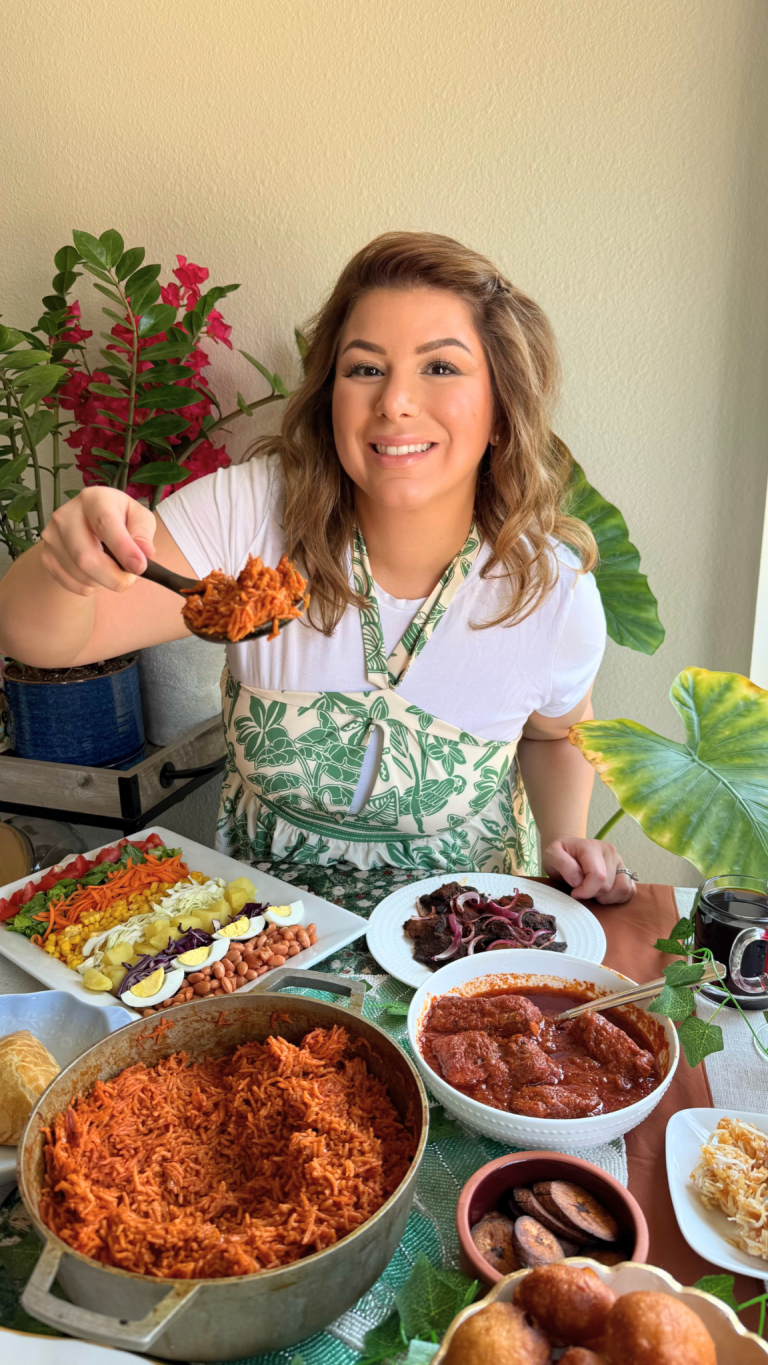
If there is one dish on this menu that felt like a celebration, it was riz a djej, which translates to rice with chicken. This is the dish that shows up at family gatherings, holidays and big Sunday lunches, piled high on a platter in the center of the table.
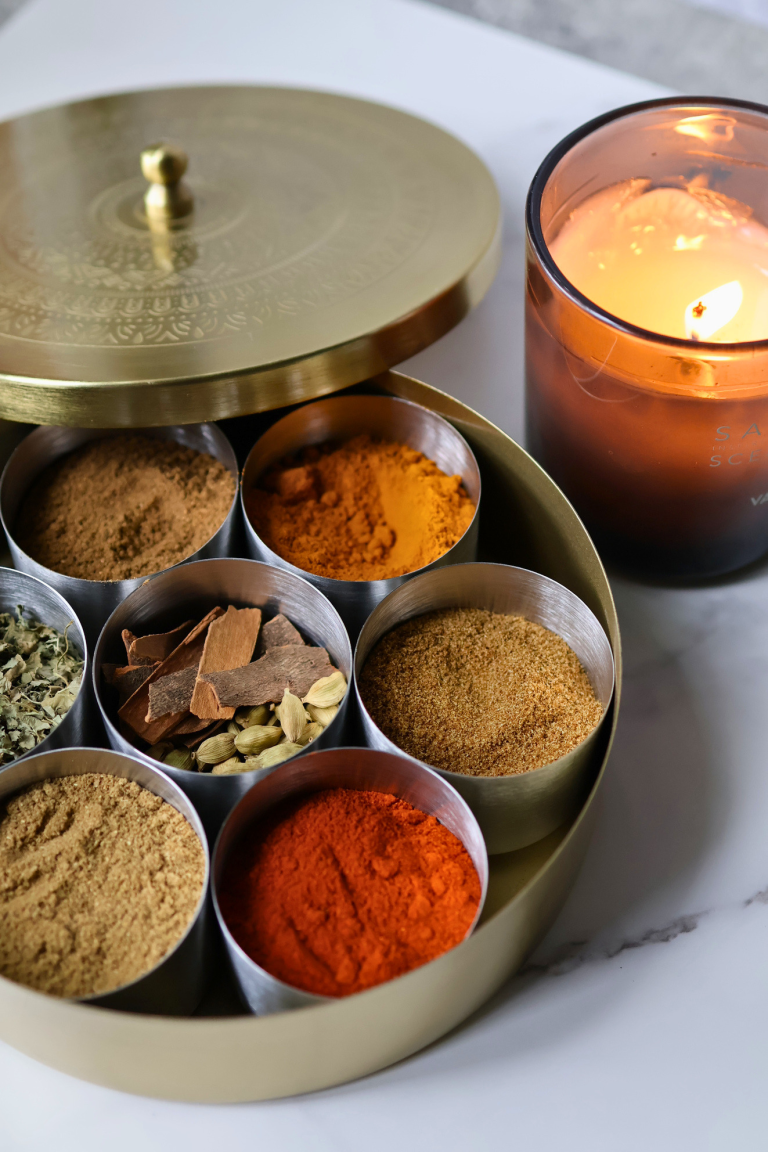
The rice is cooked with ground meat, a little butter and Lebanese seven spice, a warm blend that typically includes allspice, black pepper, cinnamon, cloves, nutmeg, coriander and ginger (recipes vary from family to family). The chicken is poached separately, which gives you a flavorful broth to cook the rice in, then shredded and layered on top. The final touch is a generous handful of toasted almonds and pine nuts.
Coming from a Puerto Rican kitchen, I felt right at home with this one. Chicken and rice is a love language in so many cultures, and riz a djej reminded me of arroz con pollo with a warm, cinnamon-scented twist. If you only make one dish from this menu, I would make this one.

Lebanese-Style Mloukhieh
If you read my Egypt post, you already know about molokhia, the stew made from jute mallow leaves. What surprised me is how different the Lebanese version is. In Egypt, the leaves are usually minced very finely and cooked into a smooth, silky soup. In Lebanon, mlukhiah is typically made with whole or roughly chopped leaves, so it feels more like a hearty, leafy stew than a soup. (You can find it spelled molokhiah, mloukhieh, mloukhiyeh).
The Lebanese version is usually cooked with chicken and a generous amount of garlic and fresh cilantro, finished with lemon juice for brightness. It is often served over rice, sometimes with toasted bread on the side and onions soaked in vinegar or lemon for a sharp bite. That acidic topping is not optional in my opinion. It cuts through the richness and wakes up every spoonful.
Fresh jute mallow can be hard to find in the United States, so I used frozen leaves, which are easy to find at Middle Eastern markets. Frozen jute mallow works, but it is usually the minced Egyptian style that you’ll find, so look carefully at the package if you want the Lebanese texture (I picked up the wrong one initially at the store and had to return).

Kousa Mahshi (Stuffed Zucchini)
Kousa means squash, and in Lebanon it usually refers to a small, pale green summer squash that is sweeter and more tender than the dark green zucchini most of us know in the United States. For kousa mahshi (stuffed squash), each one is hollowed out with a long, narrow tool called a manakra, then filled with a mixture of rice, ground meat and spices and simmered in a garlicky tomato broth, often with a touch of dried mint.
Coring the squash takes practice. My first few were a little lopsided, and one of them sprang a leak, but by the end of the batch I had the rhythm down. The key is to work slowly and keep the walls thin but intact.
Here is my favorite thing about this dish: nothing goes to waste. The scooped-out insides of the squash are traditionally saved and cooked into a separate side dish, often sautéed with onions and eggs or garlic. It is one of those beautiful home-cooking habits that tells you a lot about a food culture.

Dessert: Namoura
To finish the meal, I made namoura, a golden semolina cake soaked in fragrant syrup. It is dense, moist and sweet, with a slightly sandy texture from the semolina. The cake is scored into squares or diamonds before baking, and each piece gets a blanched almond pressed into the center.
The syrup is called ater (sometimes spelled attar), a simple sugar syrup perfumed with orange blossom water or rose water and a squeeze of lemon. The trick is temperature contrast: pour cool syrup over the hot cake straight out of the oven, so it soaks in evenly without turning soggy. Many Lebanese bakers also grease the pan with a little tahini, which adds a subtle nutty flavor to the bottom crust. I loved that detail.
If namoura looks familiar, that is because this cake travels under many names across the region. You may know it as basbousa in Egypt, or harissa in some parts of the Levant (no relation to the North African chili paste). Same family, slightly different recipes, all delicious.

Fun Facts About Lebanon
Lebanon is a small country, roughly the size of Connecticut, but it packs in an incredible amount of history, geography and food culture. Here are some of my favorite facts I learned while researching this episode.
1. Its name comes from the color white
The name Lebanon is generally traced back to an ancient Semitic root meaning white, a reference to the snow that covers its mountain peaks for much of the year. Fun connection: that same root is related to laban and labneh, the yogurt products that appear all over this menu.
2. The cedar tree is on the flag
The green cedar of Lebanon sits in the center of the national flag. These trees are mentioned in ancient texts and were prized for building temples and ships. The Qadisha Valley and the Forest of the Cedars of God are recognized together as a UNESCO World Heritage Site.
3. You can ski and swim on the same day
Because the mountains rise so close to the Mediterranean coast, Lebanon is one of the few places in the region where, in the right season, you can spend the morning skiing and the afternoon at the beach.
4. It is home to one of the oldest cities in the world
Byblos, on the Lebanese coast, is often cited as one of the oldest continuously inhabited cities on Earth, and it is also a UNESCO World Heritage Site.
5. The alphabet has Lebanese roots
The ancient Phoenicians, who lived along this coastline, developed one of the earliest alphabets. It went on to influence the Greek alphabet, and through it the Latin letters you are reading right now. The word “Bible” is even connected to the name of Byblos, which was an important trading port for papyrus.
6. Lebanon has been making wine for thousands of years
Winemaking in the region goes back to Phoenician times. Today, the Bekaa Valley is the heart of Lebanese wine country, and Château Ksara, founded in 1857, is one of the country’s oldest wineries. The town of Baalbek in the same region is home to a remarkably well-preserved Roman temple dedicated to Bacchus, the god of wine.
7. Lebanon has set world records for hummus and tabbouleh
Around 2009 and 2010, Lebanon set Guinness World Records for some of the largest plates of hummus and tabbouleh ever made, part of a friendly rivalry over who could make the biggest batch. When it comes to mezze, Lebanon takes things very seriously.

8. There is a world of caves underground
The Jeita Grotto, just north of Beirut, is a stunning system of limestone caves with an underground river you can explore by boat. It was even a finalist in the global New7Wonders of Nature competition.
Where to Find Lebanese Ingredients
Most of this menu can be made with everyday grocery store ingredients, but a few items are worth a trip to a Middle Eastern market:
- Dried or frozen jute mallow for molokhiah
- Fine bulgur (labeled #1) for kibbeh
- Lebanese seven spice, sold pre-mixed
- Orange blossom water and rose water for namoura syrup
- Coarse or fine semolina for namoura
- Pale Middle Eastern squash (sometimes labeled Mexican or Lebanese squash) for kousa
- A manakra, the coring tool for stuffed squash
If you are in the Dallas area like me, Middle Eastern markets in Richardson carry all of these.
Frequently Asked Questions
What is the national dish of Lebanon?
Kibbeh is widely considered Lebanon’s national dish, although tabbouleh is a close contender. Kibbeh comes in many forms, including baked, fried, raw and simmered in yogurt like the kibbeh bil laban in this post.
What is the difference between Lebanese and Egyptian molokhia?
Egyptian molokhia is made with finely minced jute mallow leaves and has a smooth, silky, soup-like texture. Lebanese mlukhiah usually uses whole or roughly chopped leaves and is cooked into a heartier stew with chicken or beef, lots of garlic, cilantro and lemon.
What is Lebanese seven spice?
Seven spice, or baharat, is a warm spice blend used in many Lebanese dishes, including riz a djej. It commonly includes allspice, black pepper, cinnamon, cloves, nutmeg, coriander and ginger, though every family has its own version.
How do I keep yogurt from curdling in kibbeh bil laban?
Stabilize the yogurt with a spoonful of cornstarch mixed with a little water before heating, then stir constantly over medium heat until it comes to a gentle boil. Do not rush it or crank up the heat. I am still not an expert in this skill and I do admit, I need practice.

Is namoura the same as basbousa?
They are close cousins. Both are semolina cakes soaked in syrup. Namoura is the Lebanese name, basbousa is the Egyptian name and recipes vary slightly by region, with differences in the amount of yogurt, coconut or butter used.
Can I use regular zucchini for kousa mahshi?
Yes, though the pale Middle Eastern squash is sweeter, more tender and easier to core. If you use regular zucchini, choose small, straight ones and cut them into shorter sections before hollowing them out.
Which dishes on this menu are vegetarian?
Most of the mezze spread is naturally vegetarian, and fattet hummus and namoura are vegetarian as well (check that your butter or ghee fits your diet). Kibbeh bil laban, riz a djej, mlukhiah and kousa are traditionally made with meat, but mlukhiah and kousa adapt easily to vegetable broth and a rice and chickpea filling.
Final Thoughts
What struck me most is how much Lebanese food balances freshness and comfort. One minute you are eating something bright and lemony, the next you are eating something warm and cinnamon-spiced that tastes like a hug. It is a cuisine that knows how to make a table feel full!!!!
If you try any of these dishes at home, I would love to see them. Tag me @theemiliakim.
Until next time, keep hosting the world!
With love,
Emilia