Hosting the World: Somalia and the Spice Blend Behind Every Dish
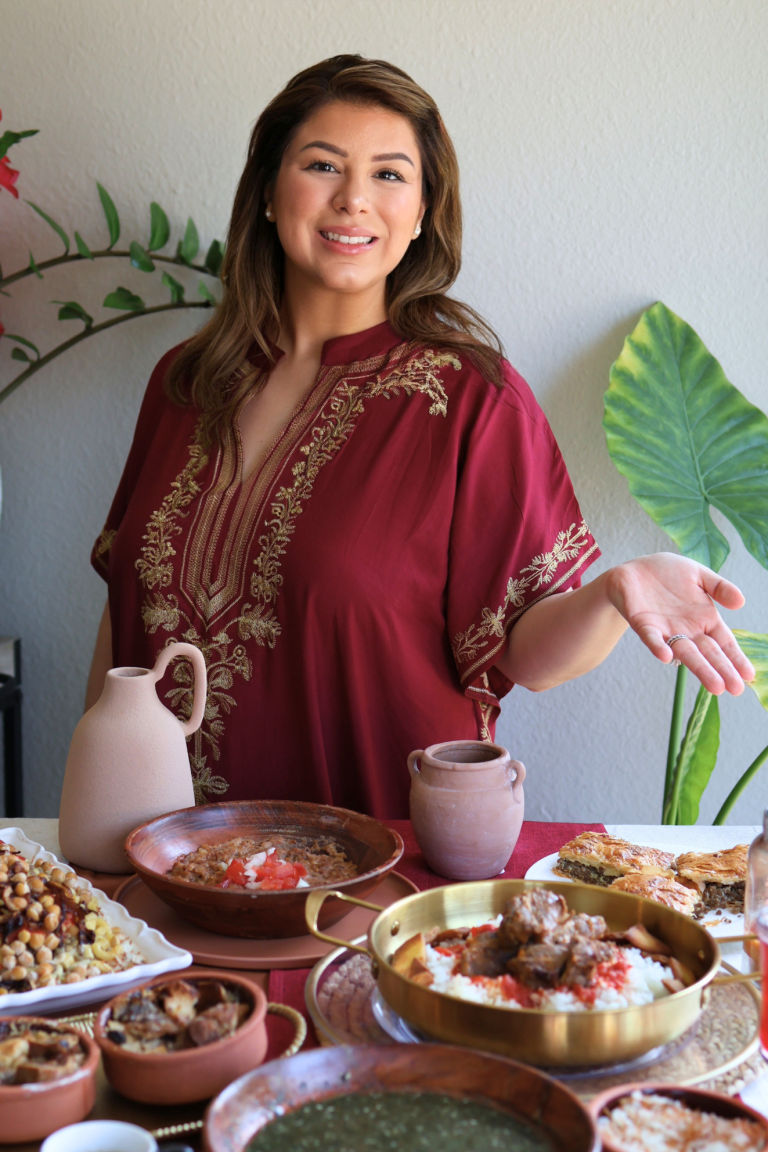
Welcome back to Hosting the World™, the series where I cook my way through one country’s table every week. This week I’m hosting Somalia, and this one turned into such an interesting learning experience. I had never tasted any of these dishes before, and as I researched, I quickly noticed something different: unlike many of the countries I’ve explored, where I tend to see similar versions of the same dish over and over, Somali recipes could vary quite a bit from one cook to another. So I gave myself a little extra time to research, learn, and make sure I felt confident about the table I was putting together. And I’m so glad I did. More on that later!

Once I started exploring Somali cooking, one ingredient kept appearing again and again: xawaash. This warm, aromatic spice blend became the thread that tied so many of the dishes together, and once I made my own, the rest of the menu really started to come to life!
Xawaash: The Spice That Runs Through Everything
If there is one thing I want you to take away from this post, it’s the word xawaash. Pronounced roughly “ha-waash,” it’s a Somali spice blend that has been compared to Indian garam masala, and for good reason. It functions the same way, as the backbone flavor of a national cuisine, present in one form or another in nearly every savory dish a Somali household makes.
The name itself translates to something close to “essentials”. The traditional blend brings together cumin, coriander, cardamom, cloves, cinnamon, black pepper, and ground turmeric, toasted and ground down into a warm, earthy, faintly sweet mixture. Some family recipes tweak the ratios or add nutmeg, but the core lineup stays remarkably consistent across sources, which tells you how central it is to the cuisine as a whole.
What makes xawaash so essential is not just its flavor, it’s its versatility. The same blend that seasons a pot of Bariis Iskukaris also goes into Suqaar, into stews, into soups, even into some breads. Once a Somali cook has xawaash on hand, they have the starting point for almost any savory dish on the table. I found myself reaching for it constantly while testing this menu, and it’s genuinely the reason so many of these dishes taste like they belong to the same family of flavors even though they look completely different on the plate.
I made my own batch at home, toasting the whole spices lightly before grinding them, which is a step I’d recommend if you ever try this yourself. It only takes a few minutes, and the difference in aroma compared to using pre-ground spices straight from the jar is significant. If a recipe in this series ever feels intimidating, start with the spice blend first. Once you have it made, everything downstream gets easier.
I also found a recipe for xawaash on the Xawaash blog, along with the cutest idea: portioning the spice blend into little jars, tying them with a ribbon, and giving them as gifts! I absolutely loved that idea. You can find their recipe and instructions here.

How I Learned to Cook Somali Food
I want to be transparent about my process for this segment, because it looked different from most of my other episodes. Somali cuisine doesn’t have the same volume of English-language cookbooks and food blogs that some other cuisines do, so I leaned heavily on two specific resources.
The first was Xawaash, a Somali food blog that shares its name with the spice blend and has become something of an institution in its own right. If you ask Somalis how they learned to cook their own national dishes, a striking number of them will point to this blog by name. It functions almost like a shared family recipe box for the diaspora, a place where recipes that used to live only in someone’s grandmother’s memory got written down, measured out, and passed along to a generation growing up far from home. That’s a genuinely important role for a food blog to play, and it’s part of why I trusted it as heavily as I did.
The second was the Soomaaliya cookbook by Ifrah F. Ahmed, which gave me a more structured, recipe-by-recipe reference for dishes I couldn’t find consistent information on anywhere else. Between the two, I finally had enough overlapping detail to feel confident I was cooking something reasonably close to the real thing.

Even with both resources in hand, I still hit a wall. Several dishes had wildly different versions depending on the source, different enough that I genuinely couldn’t tell which one was correct. I ended up delaying this post by a few weeks until a Somali follower on Instagram reached out asking me to host Somalia, and I was able to confirm I was on the right track. I am so thankful! I won’t pretend that wasn’t a relief when it finally happened.
A Crossroads Cuisine
Somalia sits on the Horn of Africa, right along historic trade routes connecting East Africa to the Arabian Peninsula, India, and eventually Europe. That geography shows up on the plate in a big way, and it’s part of why xawaash itself reads as a bit of a crossroads spice blend. The warm, layered profile has real kinship with Yemeni and Indian spice traditions, brought over centuries of trade across the Gulf of Aden and the Indian Ocean.

Then there’s the Italian colonial fingerprint, most obviously visible in the country’s enduring love of baasto, or spaghetti. What struck me most is how naturally all of these influences sit next to each other on a Somali table. Nobody treats the pasta as foreign or the spice blend as ancient history. It’s all just Somali food now, layered and adapted over generations the way a lot of great cuisines are.
The Menu
Here’s everything I cooked for this segment, and a bit about what each dish is doing on the table.
Bariis – The Rice
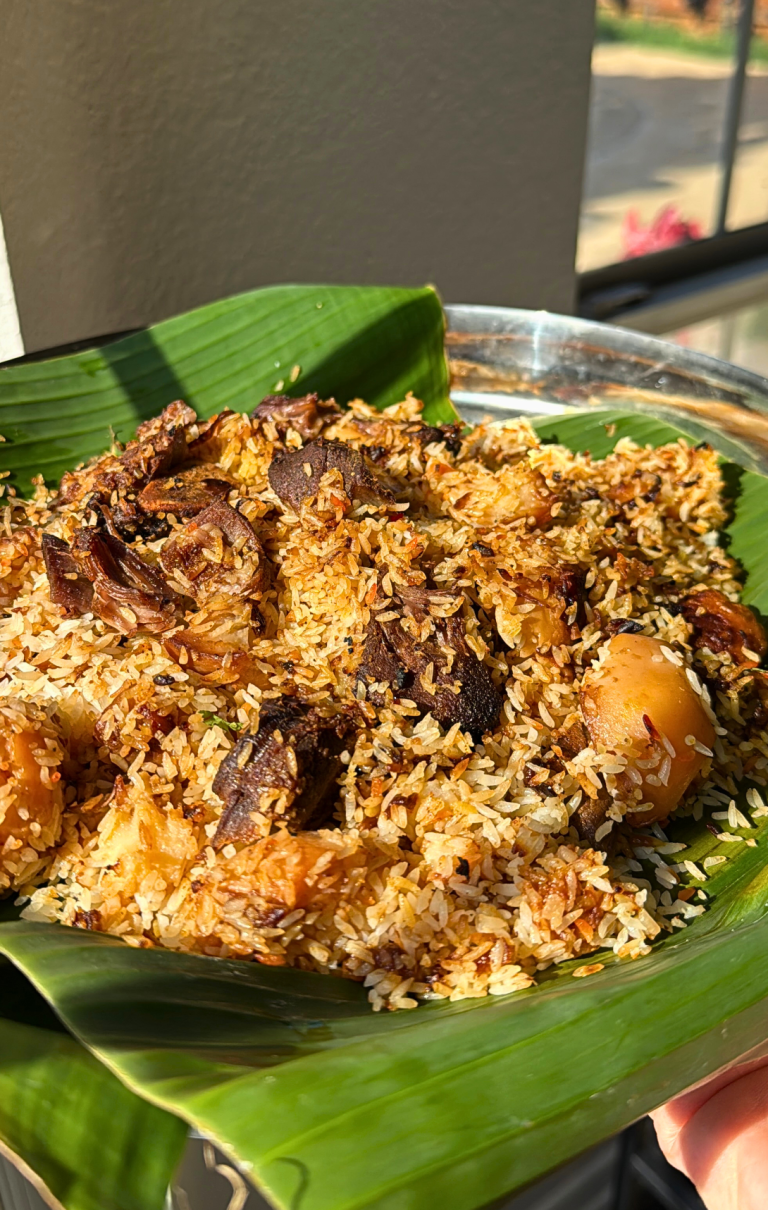
Bariis Iskukaris was the anchor of the whole meal. This is Somalia’s signature spiced rice, traditionally cooked in one pot alongside meat so the rice absorbs all of that flavor as it cooks, xawaash included. The name roughly means “rice cooked mixed together,” and it’s the dish most often served at Somali weddings and major celebrations. The recipe I followed was on the Xawaash blog. Click here for the recipe link.

I also made Galey iyo Qumbo, corn cooked with coconut milk and tomato sauce, which brought a softer, slightly sweet contrast to the more heavily spiced Bariis Iskukaris. Galey iyo Qumbo is especially associated with southern Somalia, where maize and coconut are more prominent in the region’s cooking. The dish combines whole corn with a creamy, spiced coconut sauce.

The Meat and Stews
Suqaar is diced meat, usually beef, stir-fried quickly with onions, peppers, and a heavy hand of xawaash so it stays tender and deeply seasoned. It’s meant to be spooned over rice or scooped up with bread rather than eaten on its own.
Alongside it, I made Koosto iyo Baamiye, an okra-based stew that added an earthiness balancing out the richer meat dishes on the table. I absolutely loved this dish, in fact, I think it was my favorite one from this segment!

Canjeero
Canjeero is a spongy, slightly sour flatbread that will look immediately familiar to anyone who’s had Ethiopian injera. It’s a breakfast staple in Somalia, often torn and used to scoop up stews, and it was one of my favorite textures on the entire table. My Canjeero was not the best! I need to keep practicing to get the texture right!

Baasto
This is where Somalia’s Italian colonial history shows up most clearly. I made a straightforward Baasto, spaghetti tossed in a savory tomato-based sauce.

I also made a Tuna Spaghetti variation that swaps in tuna for a lighter, brinier take. Pasta night is a real and beloved tradition in Somalia, not a novelty import, and Somalis take their spaghetti seriously.

The Condiments
Basbaas is a hot sauce, and the green version is a bright, herby, chili-forward condiment that Somalis spoon generously over rice, meat, and pasta alike. It’s the acidic, spicy counterpoint to all that warm spice from the xawaash, and the two work together on the plate more than they compete.
The Extras
I also made Nafaqo a popular Somali snack of boiled eggs wrapped in seasoned mashed potato and fried until golden.

I rounded out the table with Labaniyad for dessert, a creamy Somali custard delicately flavored with cardamom.

Federation, Tying It All Together
Of everything I made, Federation was the dish that surprised me the most, both in flavor and in story. It’s exactly what it sounds like on the plate: half rice, half spaghetti, served side by side on the same large plate, usually topped with stewed meat and vegetables, with a banana served alongside.
The name isn’t a coincidence. The dish is widely understood to represent the union of Somalia’s different regions and food traditions coming together on one plate, since it’s uncommon in a typical Somali household to cook rice and pasta for the same meal. You mostly find Federation at restaurants rather than home kitchens, which made it feel like a fitting, celebratory way to close out this table. There’s something genuinely charming about a country having a national combo plate that doubles as a symbol of unity.

Somali Table Etiquette
Cooking the food was only half of what I learned this week. The etiquette around how it’s eaten taught me just as much about the culture behind it.
- Eat with your right hand. Somali meals are traditionally eaten by hand, and specifically with the right hand only. The left hand is considered unclean for eating in this tradition.
- Banana and green sauce on the side, always. A ripe banana served next to rice or pasta is a completely normal, expected pairing rather than a novelty. The same goes for a small dish of green basbaas served alongside nearly every plate, so each person can control their own heat level.
- Vimto and milk, together. One of the more unexpected things I learned is that mixing the purple fruit drink Vimto with milk is a genuinely common combination at Somali gatherings. It sounds unusual on paper but it works.
- Everyone eats together, from one table. Meals are a communal event, not a series of individual plates eaten in isolation. Sharing a table, and often sharing a single large serving platter, is a normal, expected part of how a meal happens.
Frequently Asked Questions
What is xawaash?
Xawaash is a traditional Somali spice blend, typically made from cumin seeds, coriander seeds, cardamom, cloves, cinnamon, black pepper, and turmeric. The name translates roughly to “essentials,” and it appears in nearly every savory Somali dish, making it the single most important ingredient to understand in this cuisine.
Is xawaash the same as garam masala?
They’re not identical, but they play a similar role. Both are warm, aromatic spice blends that function as the flavor backbone of their respective cuisines, and both share overlapping spices like cumin, coriander, cardamom, and cloves.
Why is a dish called “Federation”?
Federation is a combination plate of rice and spaghetti served side by side, usually with stewed meat and a banana. The name is tied to the idea of Somalia’s different regions and culinary traditions being united on a single plate.
Is it true pasta is part of Somali cuisine?
Yes. Pasta, called baasto, became a staple of Somali cuisine during the Italian colonial period and remains one of the most commonly eaten meals in the country today, usually served with a savory tomato-based sauce.
What is Vimto with milk?
This is a popular beverage combination at Somali gatherings and celebrations. The sweetness of the Vimto softens against the milk, and it’s common enough that most Somalis wouldn’t think twice about it.
Where did you learn these recipes?
I relied primarily on the Xawaash food blog, which many Somalis credit as a major resource for learning to cook their own national dishes, and the Soomaaliya cookbook by Ifrah F. Ahmed. I also had a Somali friend review online and confirm my final results.
Final Thoughts
This might be the most satisfied I’ve felt at the end of a Hosting the World week. Somalia took me a little longer to figure out, and there were definitely moments when I wondered if I was getting it right. Then a Somali woman who had originally reached out to me on Instagram asking me to host Somalia looked over my menu and confirmed that I was on the right track. I cannot explain the RELIEF. That was my “okay… I did it!” moment.
This week challenged me, taught me a lot, and made finishing it feel that much more rewarding. Woohoo, we did it! 🇸🇴
Thank you for hosting Somalia with me this week!