
Bobotie: South Africa’s National Dish and the Cape Malay Kitchen Behind It
Hi friends, welcome back to Hosting the World™. We already spent a week in South Africa together, sitting around the fire for a braai and talking about Ubuntu. Ubuntu is the idea that a person is a person through other people. Today we’re going back into that same kitchen for a single dish, and it happens to be the one most of the world associates with South Africa above every other: bobotie.

I want to share a little about where bobotie comes from, because its history is much more layered than I expected when I first started researching it. I also learned that while bobotie is often introduced internationally as South Africa’s national dish, not every South African necessarily sees their own food culture reflected in it. That doesn’t take anything away from this beautiful dish; it simply speaks to how incredibly diverse South African cuisine really is. And for me, that has been one of the most interesting lessons of Hosting the World: sometimes the story behind a dish is just as interesting as the recipe itself.
Ubuntu
One of the most meaningful concepts I learned about while hosting South Africa was Ubuntu, a Nguni philosophy often expressed through the idea, “I am because we are.” At its heart, Ubuntu is about our shared humanity and the belief that who we are is shaped by our relationships with others, and that community, generosity, and care for one another matter deeply.
Ubuntu became one of my favorite things I learned during my South Africa week because it captures so beautifully the sense of connection and hospitality I experienced while researching the country.
Click here to explore my full Hosting the World: South Africa segment, where I share the food, traditions, and cultural details I discovered along the way.
Where Bobotie Comes From: Its History
Bobotie has a fascinating history that reflects just how many cultures have shaped the food of South Africa. Its story goes back centuries to the Cape, where Dutch settlement brought together European cooking traditions with the flavors and techniques of people brought to the region from places including Indonesia, India, and other parts of Asia and Africa.
Through my research I learned that many of those influences became part of what we now know as Cape Malay cuisine, a culinary tradition especially associated with Cape Town and its Muslim community. Cape Malay cooks became known for combining aromatic spices, fruit, and savory ingredients in ways that helped create some of the Cape’s most recognizable dishes, including bobotie.
You can see that history right in the recipe. Minced meat, bread, and milk reflect European influences, while ingredients such as turmeric, curry spices, and other warm seasonings point toward Asian culinary traditions. Then there is that characteristic touch of sweetness, which can come from dried fruit, chutney, or jam depending on the family and recipe.
Even the name has an interesting story. One theory connects bobotie to the Indonesian dish bobotok, although the exact origin of the word is still debated. Over generations, bobotie developed into the distinctly South African dish we recognize today.
Some food historians trace the earliest known recipe associated with bobotie to a Dutch cookbook from 1609… that’s more than 400 years ago! The exact origins of the dish and how that early version developed into the South African bobotie we recognize today are still debated, but I think that makes its story even more interesting.
Over centuries at the Cape, different culinary traditions and ingredients came together and evolved into the sweet, savory, gently spiced dish that is now such a recognizable part of Cape Malay and South African food history.

A Little Note About the National Dish Label
If you research South African food, you’ll almost certainly see bobotie described as the national dish of South Africa. That’s actually how I first came across it! But one of the things I learned while hosting South Africa is that the label comes with a little more nuance than many international articles suggest.
Bobotie has strong ties to Cape Malay cooking and the Western Cape, and while it is certainly an important and beloved part of South Africa’s culinary story, it isn’t a dish that represents every South African table. South Africa is incredibly diverse, with food traditions shaped by many different communities, regions, languages, and histories. Plenty of South Africans have grown up with completely different dishes at the center of their food culture.
I actually love learning details like this because they remind me why I started Hosting the World in the first place. A country’s food is almost never captured by one recipe! So while you’ll often see bobotie introduced as “South Africa’s national dish,” I prefer to think of it as one wonderful piece of a much bigger South African food story.
And it is absolutely a piece worth trying.

Making It Your Own
With all of that history in mind, I wanted to keep my bobotie fairly traditional and let the flavors that make the dish so distinctive really shine. I started with onion, garlic, curry powder, and turmeric, keeping the spices warm and aromatic rather than overly hot.
One of the things that surprised me most was the bread soaked in milk. It might sound like an unusual addition at first, but once mixed into the beef, it helps keep the filling wonderfully soft and tender as it bakes. Then come some of my favorite flavors in the dish: apricot jam, Worcestershire sauce, and lemon juice, which give bobotie that lovely balance of sweet, savory, and tangy. I added raisins to mine, but they are absolutely something you can adjust to your preference.
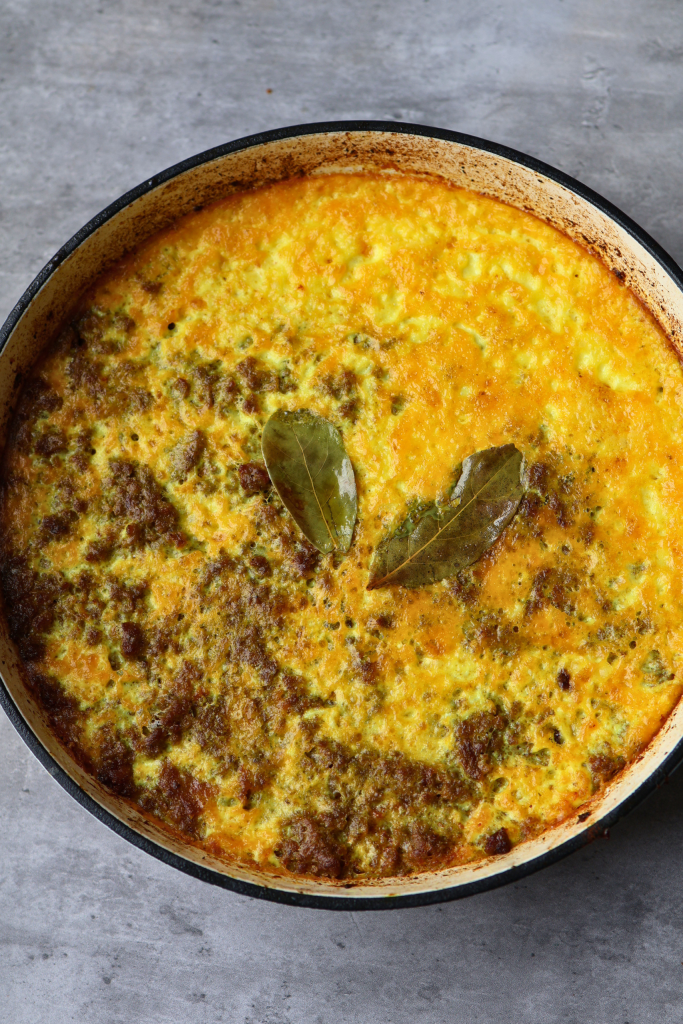
And then there’s the part that really makes bobotie look like bobotie: that beautiful golden custard layer on top! I poured the egg-and-milk mixture gently over the meat, added a few bay leaves, and baked it until the custard was just set and lightly golden. I found that letting it rest for about 10 minutes afterward made it much easier to slice and serve.
It is typically served with turmeric-yellow rice and fruit chutney on the side, and I loved how everything comes together; the warm spices, little touches of sweetness, savory beef, and creamy topping all in one bite. It’s such an interesting dish to make, especially once you know a little more about the history behind it.
Frequently Asked Questions
Is bobotie the same thing as Cape Malay food in general?
Bobotie is one dish within Cape Malay cuisine, not a stand-in for the whole tradition. Cape Malay cooking also includes dishes like bredie (a slow-cooked stew), samosas, and koesisters, all shaped by the same Indonesian, Malaysian, and Indian influences layered onto Dutch colonial cooking at the Cape.
Is bobotie eaten across all of South Africa?
Bobotie can be found throughout South Africa, but its cultural roots are especially connected to the Western Cape and Cape Malay cuisine. South Africa has an incredibly diverse food culture, so how familiar or common bobotie is can vary greatly depending on the region, community, and family.
Can I use lamb instead of beef?
Yes. Lamb or a beef-lamb blend is common and arguably closer to older, traditional versions of the dish, since it was originally a way to use leftover roasted meat.
What should I serve alongside bobotie?
Turmeric-yellow rice and a fruit chutney (sometimes called blatjang) are the classic pairing. A simple green salad on the side helps cut the richness of the custard.
Can I make bobotie ahead of time?
You can fully cook and cool the meat mixture up to a day ahead and refrigerate it, then add the fresh custard and bake it just before serving so the topping stays properly golden rather than reheated and rubbery.
Final Thoughts
Bobotie absolutely deserves to be celebrated. It’s delicious, full of history, and a beautiful reflection of the Cape Malay culinary tradition that helped shape it. But one of my favorite things about exploring South Africa has been realizing just how impossible it is to capture its food culture in a single dish.
In a country with so many communities, traditions, languages, and flavors, Ubuntu feels especially meaningful. Bobotie is one beautiful piece of that much larger story, and learning where it fits has only made me appreciate the dish as well as South African food, even more.

South African Bobotie

Ingredients
For the meat filling (mince)
- 2 tbsp butter or neutral oil
- 1 onion finely chopped
- 2 garlic cloves
- 1 tbsp mild curry powder
- 1/2 tsp ground turmeric
- 2 lb ground beef
- 1 tsp salt or to taste
- 1/2 tsp black pepper
- 2 tbsp apricot jam
- 1 tbsp Worcestershire sauce
- 1 tbsp lemon juice
- 2 slices white bread
- 1/2 cup whole milk for soaking the bread
- 1/4 cup raisins optional
For the custard topping
- 1 cup whole milk
- 2 large eggs
- pinch of salt
- 2-3 bay leaves
- 1/4 tsp ground turmeric optional, for a more golden custard
Instructions
Soak the bread
- Place the bread in a bowl and pour ½ cup of milk over it. Let it soak for about 5 minutes. Squeeze out the excess milk, mash the softened bread, and set aside.
Cook the onion
- Preheat the oven to 350°F (175°C). Heat the butter or oil in a large skillet over medium heat. Add the onion and cook for about 5–7 minutes, until soft and translucent.
Add the garlic and spices
- Add the garlic, curry powder, and turmeric. Stir for about 30 seconds, just until fragrant.
Brown the beef
- Add the ground beef and cook until browned, breaking it apart with a wooden spoon as it cooks. Season with the salt and black pepper.
Add the remaining ingredients
- Stir in the apricot jam, Worcestershire sauce, lemon juice, soaked bread, and raisins, if using. Cook for another 2–3 minutes, stirring until everything is evenly combined. Taste and adjust the salt if needed.
Transfer to the baking dish
- Spoon the beef mixture into a lightly greased baking dish and spread it into an even layer.
Make the custard
- Whisk together the milk, eggs, and a pinch of salt until smooth. Add the optional turmeric powder if desired and mix. Pour the mixture evenly over the beef.
Add the bay leaves
- Place 2–3 bay leaves across the top of the custard.
Bake
- Bake uncovered for 30–35 minutes, or until the custard has set and the top is lightly golden.
Rest and serve
- Let the bobotie rest for 5–10 minutes before serving and enjoy!