
Syrian Muhammara: A Smoky and Delicious Roasted Pepper Dip
I am hosting Syria this week on Hosting the World™, and this recipe is a direct extension of that episode. If you have not read the full country feature yet, click here to catch up on karam, the concept of generosity that shapes everything about how Syrians welcome a guest to their table, before you settle in with this one.

Today we are making muhammara, a smoky, tangy, slightly sweet dip built from roasted red peppers, toasted walnuts, and pomegranate molasses. It is one of the most recognizable dishes to come out of Syria, and it happens to be one of my favorite things I have ever put on a mezze table. If you have never had it, imagine something in the same family as hummus or baba ghanoush, but deeper in color, a little sweeter, a little smokier, and built on walnuts instead of chickpeas or eggplant.
What Karam Means at the Table
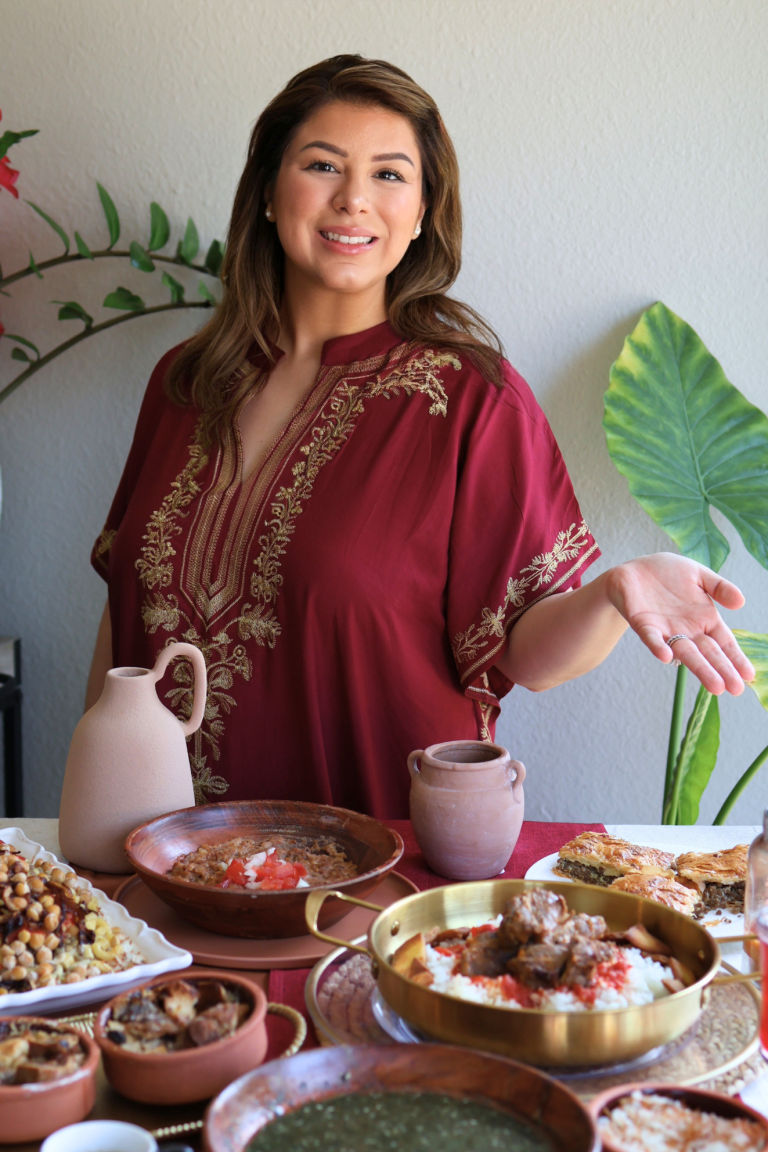
Karam is an Arabic word that roughly translates to generosity, but in practice it means something closer to over-providing for a guest. It has roots in Bedouin hospitality traditions, where offering a stranger food, shelter, and protection was not just polite, it was a matter of honor. A muhammara-topped mezze spread is a small, edible expression of that idea. You do not serve one dip and call it done. You serve six or seven small plates, so that no matter what a guest likes, there is something already in front of them before they even have to ask.

Aleppo, the City Behind the Dip
Muhammara is most closely associated with Aleppo, one of the oldest continuously inhabited cities in the world and, for centuries, a major crossroads on the trade routes connecting the Mediterranean to Mesopotamia and beyond. Aleppo has long had a reputation as Syria’s most refined food city, and it is the birthplace of several dishes that show up again and again across the region, including kibbeh, kebab karaz, and muhammara itself.
The name muhammara comes from the Arabic word for something that has turned red, a nod to the deep color the dish takes on from the roasted peppers. The dish shows up in print as early as 1981, when the Syrian encyclopedist Khayr al-Din al-Asadi described it as an appetizer of crumbled bread, pomegranate molasses, walnuts, and peppers, which is remarkably close to how it is still made today.
Muhammara has also traveled well beyond Syria’s borders. It appears in Armenian cuisine, and in southeastern Turkey it goes by the name acuka. In 2022, the Turkish city of Gaziantep secured official geographical indication status for its own version of the dish, though most Arab food historians and home cooks still credit Aleppo as its true home. A short drive away in Damascus, some cooks add tahini to their muhammara, a small but telling reminder that Syria’s two great culinary capitals, Damascus and Aleppo, have always had their own distinct ways of feeding a guest.

The Great Breadcrumbs Debate
While researching and testing this recipe, I came across a lot of variation in how people build their muhammara. Some cooks use breadcrumbs as a thickener, which is the more traditional approach and gives the dip a slightly heartier, more cohesive texture. Other cooks skip the breadcrumbs entirely and add a bit more walnuts in their place instead, which keeps the dip naturally gluten free and leans a little more into the nutty flavor. Both versions are completely legitimate, and honestly, both are delicious. I wrote this recipe with breadcrumbs because that is the more classic Aleppo style, but if you want to leave them out, simply add an extra amount of walnuts and you will end up with a dip that is just as good.
Making It Your Own
A few things I learned while testing this recipe at home. First, do not skip draining the roasted peppers if they seem watery. Muhammara is meant to be thick and spreadable, closer to a paste than a salsa, and a few extra minutes in a colander makes a real difference. Second, toast your walnuts. It is a small step, but it deepens the flavor of the whole dip in a way that raw walnuts simply cannot match. Third, taste as you go, especially with the pomegranate molasses. Brands vary a lot in how sweet or how tart they are, so I always adjust the final seasoning at the end rather than trusting the recipe alone.
I like to serve mine the traditional way, spread thin across a shallow dish, with a generous pour of good olive oil over the top and a scatter of pomegranate arils, extra walnuts, and chopped parsley. It is a dish that looks far more impressive than the effort it actually takes.
You can adjust this dip to your liking; you can omit the cumin and you can also omit the Aleppo pepper flakes if you’d like a mild version. Feel fry to adjust with salt and pomegranate molasses.
Frequently Asked Questions
Is muhammara spicy?
Muhammara has a gentle warmth from the Aleppo pepper, but it is not meant to be a hot dish. Aleppo pepper is mild and fruity compared to something like cayenne, so the overall effect is more smoky and savory than spicy. You can always reduce the amount if you are sensitive to heat, or fully omit it if you prefer it without a kick.
Can I make muhammara without breadcrumbs?
Yes. As mentioned above, many home cooks skip the breadcrumbs entirely and use a bit more walnuts instead, which also makes the dip naturally gluten free.
What is Aleppo pepper, and can I substitute it?
Aleppo pepper is a mild, fruity, slightly tangy dried chile named for the city where muhammara originated. If you cannot find it, a mix of sweet paprika and a small pinch of crushed red pepper flakes will get you close, though the flavor will not be identical.

How long does muhammara keep?
Stored in an airtight container in the refrigerator, muhammara will keep well for about five days. The flavor actually improves after a day or two, once everything has had time to meld.
Is muhammara vegan?
Yes, as written this recipe is fully plant based, as long as your breadcrumbs do not contain any animal-derived ingredients.
What do you serve muhammara with?
Pita bread is the classic pairing, but it is also wonderful with fresh vegetables, spread onto sandwiches, used as a sauce for grilled meats or vegetables, or added to a full Syrian mezze spread alongside dishes like kishkeh and warak enab.

Final Thoughts
Muhammara is a perfect example of what I love about Syrian cooking, and about karam more broadly. It takes humble ingredients, peppers, walnuts, a bit of bread, and turns them into something that feels generous and celebratory. Whether you make it with breadcrumbs or without, with more heat or less, this is a dip that is meant to be shared, and shared generously.
If you have not already, click here to read the full Syria episode, where muhammara is just one of the dishes on a much bigger table.

Syrian Muhammara – Roasted Red Pepper & Walnut Dip

Equipment
- 1 food processor
Ingredients
- 3 large red bell peppers
- 1 cup walnuts 115 g
- 1/2 cup plain breadcrumbs
- 2 tbsp pomegranate molasses
- 1.5 tbsp Aleppo pepper or to taste
- 1/2 tsp ground cumin optional
- 1 small garlic clove grated
- 1 tbsp fresh lemon juice
- 1/2 tsp salt or more to taste
- 1/3 cup extra virgin olive oil plus more for serving
For serving, optional
- pomegranate arils
- walnuts
- chopped fresh parsley
- extra virgin olive oil
Instructions
Roast the peppers
- Preheat the oven to 450°F (230°C). Place the whole red bell peppers on a baking sheet and roast for about 25–35 minutes, turning occasionally, until the skins are blistered and heavily charred in several places.
Steam and peel
- Transfer the hot peppers to a bowl and cover for about 10–15 minutes. This allows the steam to loosen the skins. Peel away and discard the skins, stems, and seeds. Avoid rinsing the peppers under water, since this can wash away some of their roasted flavor.
Toast the walnuts.
- Add the walnuts to a dry skillet over medium heat. Toast for 4–6 minutes, stirring frequently, until fragrant and lightly golden. Watch them closely, as walnuts can burn quickly. Remove from the pan and let cool before blending.
Remove excess moisture.
- If the roasted peppers are particularly juicy, allow them to drain in a colander for several minutes. This helps create a thick muhammara rather than a watery dip.
Blend.
- Add the roasted peppers, toasted walnuts, breadcrumbs, pomegranate molasses, Aleppo pepper, cumin (if using), garlic, lemon juice, and salt to a food processor. Pulse until combined but still slightly textured.
Add the olive oil.
- With the food processor running on low, slowly drizzle in the olive oil. Process just until the muhammara reaches a thick, spreadable consistency. It should retain a little texture rather than becoming completely smooth like hummus.
Taste and adjust.
- Taste and add additional salt, Aleppo pepper, pomegranate molasses, or lemon juice if needed. Pomegranate molasses varies considerably in sweetness and acidity, so adjusting at the end gives the best result.
Serve
- Spread the muhammara onto a shallow serving dish. Drizzle generously with olive oil and, if desired, garnish with pomegranate arils, toasted walnuts, and fresh parsley, as pictured.Serve at room temperature with pita or as part of a Syrian mezze spread.