Hosting the World: Brazil and a Feijoada Feast | Emilia Kim
By Emilia Kim
Hello, friends, and welcome back to Hosting the World™!
This week our table traveled to South America, to the largest country on the continent and one of the most joyful food cultures I know. Brazil is a place where meals stretch for hours, where the table is never allowed to look empty, and where a guest is told to make themselves at home within minutes of walking through the door.

Today I am walking you through the heart of Brazilian hospitality and every dish on my table, from a big, smoky pot of feijoada with all its traditional sides, to party favorites like coxinha and pão de queijo, comfort dishes like chicken stroganoff and galinhada, and a slice of bright orange bolo de cenoura to finish. Pull up a chair. In Brazil, there is always room for one more.
Fique à Vontade: Make Yourself at Home
There is a phrase you are likely to hear when you enter a Brazilian home: “Fique à vontade.” The literal translation is something like “be at ease,” but what your host is really telling you is: make yourself at home.
And Brazilians can mean it quite literally.
Brazilian hospitality tends to be warm and informal. You may arrive as a guest, but the goal is often to make you stop feeling like one. Sit wherever you like. Have another serving. Grab something from the kitchen. Stay a little longer. The formality can disappear surprisingly quickly.
Of course, food is usually somewhere in the middle of all this. Someone may offer you a cafezinho, the small cup of coffee that appears in homes, offices and businesses throughout Brazil. Turning up around mealtime can easily lead to an invitation to eat, and saying you are full does not necessarily mean the offers are finished.
Then there is the almoço de domingo, or Sunday lunch. For many Brazilian families, Sunday is when everyone comes together around the table. Lunch can stretch well into the afternoon as people eat, talk, laugh, go back for seconds and linger long after the plates should probably have been cleared.
That is what I love about “fique à vontade.” It is only three words, but it captures something much bigger about hospitality: you are here now, so relax. Stay awhile. You belong with us. It reminds me of my Brazilian friend’s BBQ, when I used to live in Chicago. They’d invite me for evenings full of music, brigadeiros, chicken heart skewers, quail eggs, and lots and lots of meats! Everyone was festive, happy, and wiling to party!
A Quick Look at Brazilian Cuisine
Brazil is enormous, and its food changes dramatically from region to region. Still, a few threads tie it together.
Indigenous foundations gave Brazil its most essential ingredient: cassava, also called mandioca or aipim. Cassava shows up as flour in farofa, as starch in pão de queijo, and boiled, fried, or mashed on tables across the country. Portuguese colonizers brought stews, sweets, salt cod, and baking traditions. African cooks, many of them enslaved, shaped Brazilian cooking profoundly, especially in Bahia, through techniques, ingredients like palm oil, and countless dishes. Later waves of immigrants from Italy, Germany, Japan, Lebanon, and beyond added pasta, pastries, sushi, and kibbeh, which you can now find in Brazilian bakeries and snack bars.
You will also see that rice and beans, arroz e feijão, form the backbone of everyday Brazilian eating. Many families eat some version of it at lunch nearly every day. My menu this week celebrates that everyday comfort as well as the festive side of the Brazilian table.
The Menu: What Was on My Brazilian Table
Feijoada: Brazil’s National Dish
At the center of my table was feijoada, the dish most Brazilians would call their national dish. It is a rich, slow-cooked stew of black beans and a variety of pork and beef cuts: smoked sausage such as linguiça, bacon, pork ribs, and carne seca (salted, dried beef), with some traditional versions also including pork ears, feet, or tail. The beans simmer for hours with onion, garlic, and bay leaves until the broth turns thick, dark, and deeply savory.
Feijoada is a social event as much as a meal. In many Brazilian cities, restaurants traditionally serve it on Wednesdays and Saturdays, and a Saturday feijoada with friends is a leisurely, all-afternoon affair. It is heavy, so the unspoken rule is to plan nothing too ambitious for afterward.
A note on its history: You may have heard that feijoada was created in the slave quarters of colonial Brazil, made from pork scraps the plantation owners discarded. It is a powerful and widely told story, but many food historians question it. They point out that meat stews with beans already existed in Portugal and that the cuts in question were valued, not thrown away. Most agree that feijoada as we know it took shape over time, blending Portuguese stew traditions with African and Brazilian ingredients and cooking knowledge. Either way, it is a dish built by many hands.

The Sides That Make It Feijoada
A feijoada is never served alone. These sides are just as important as the stew itself, and each one has a job:
- White rice: plain, fluffy rice to soak up the dark bean broth.
- Farofa: toasted cassava flour cooked in butter, often with onion, garlic, or bacon. It adds a sandy, crunchy texture and a toasty flavor. Brazilians sprinkle it generously over beans and meat.
- Collard greens (couve): sliced into very thin ribbons and quickly sautéed with garlic, a style often called couve à mineira. The greens bring freshness and a slight bitterness that balance the rich pork.
- Orange slices: perhaps the most surprising side for first-timers. Fresh orange cuts through the richness of the stew, cleans the palate between bites, and, according to Brazilian kitchen wisdom, helps with digestion. Once you try it, you will understand why no one skips it.

Farofa com Ovo
Farofa is so loved in Brazil that it comes in endless variations, so I made a second version for my table: farofa com ovo, or farofa with egg. Eggs are scrambled right in the pan with butter and onion, then the cassava flour is stirred in and toasted until golden. The egg makes it softer, richer, and a little more substantial than plain farofa, almost a side dish of its own. It is a classic companion for rice and beans and for grilled meats at a churrasco, the famous Brazilian barbecue.

Maionese: Brazilian Potato Salad
In Brazil, when someone says they are bringing maionese, they do not mean a jar of mayonnaise. They mean salada de maionese, Brazil’s beloved potato salad. It is made with diced boiled potatoes and carrots, often with peas, corn, hard-boiled eggs, onion, parsley, and sometimes apple or green olives, all folded into a creamy mayonnaise dressing.
Maionese is a fixture of Sunday lunches, birthday parties, churrascos, and Christmas dinners. Every family has its own version, and there are passionate opinions about whether apple or raisins belong in it. It is cool, creamy, and the perfect contrast to hot, rich dishes like feijoada.

Brazilian Chicken Stroganoff
If there is one dish that surprises people when they learn how Brazilian it is, it is strogonoff de frango, chicken stroganoff. The dish originated in Russia as beef stroganoff and traveled through European kitchens before arriving in Brazil, where it was completely adopted and transformed into an everyday comfort food.
The Brazilian version is quite different from the Russian original. Bite-sized pieces of chicken are cooked with onion and garlic, then simmered in a sauce of tomato sauce or ketchup, mustard, often mushrooms, and finished with creme de leite, a shelf-stable table cream. The result is a creamy, slightly tangy, pink-hued sauce.
The non-negotiable accompaniments are white rice and batata palha, crunchy shoestring potato sticks scattered over the top just before eating. That contrast of creamy sauce and crispy potatoes is what makes Brazilian stroganoff so addictive. It is a staple of family dinners, birthday parties, and weeknights alike.

Galinhada: Golden Chicken and Rice
Galinhada is Brazil’s answer to a one-pot chicken and rice dish, and it is pure country comfort. Its name comes from galinha, meaning hen. Bone-in chicken pieces are browned with garlic and onion, then rice is added to the same pot and cooked in the chicken’s juices and broth until tender and flavorful.
Its signature golden color comes from turmeric, which Brazilians often call açafrão-da-terra, or from annatto. Galinhada is especially associated with the interior states of Goiás and Minas Gerais, where some versions include pequi, a pungent, strongly aromatic fruit from Brazil’s central savanna. It is commonly finished with fresh parsley and green onion and is a favorite for big family gatherings, since one pot feeds a crowd.

Pão de Queijo: Brazil’s Cheese Bread
Few foods are as instantly lovable as pão de queijo, Brazil’s small, round cheese breads. They are crisp on the outside and chewy, stretchy, and airy on the inside, with a rich cheesy flavor.
The secret is that they are made not with wheat flour but with tapioca starch, known in Brazil as polvilho, which comes in sweet (doce) and sour (azedo) versions. The starch is scalded with hot milk and oil, then mixed with eggs and cheese, traditionally queijo Minas, a Brazilian cheese, with Parmesan as a common substitute abroad. Because there is no wheat, pão de queijo is naturally gluten free.
Pão de queijo comes from Minas Gerais, and its roots are often traced to the colonial era, when cooks made use of cassava starch in place of wheat. Today it is eaten everywhere in Brazil, especially for breakfast or the afternoon coffee break with a cafezinho.

Moqueca de Camarão: Brazil’s Golden Coastal Stew
If you visit the coast of Bahia, you will find moqueca bubbling away in clay pots. This fragrant seafood stew is one of Brazil’s most celebrated dishes, and the shrimp version, moqueca de camarão, is a favorite at family lunches and beachside restaurants alike.
A moqueca de camarão starts with layers of shrimp, sliced onions, tomatoes, and bell peppers, gently simmered in coconut milk and finished with dendê, a vibrant red palm oil that gives the stew its golden-orange color and rich, earthy flavor. Fresh cilantro and a squeeze of lime brighten everything up.

Suco de Caju: Cashew Fruit Juice
To drink, I served suco de caju, juice made from the cashew apple. Many people do not realize that the cashew nut grows attached to the bottom of a soft, colorful fruit. That fruit, called caju in Portuguese, is juicy, fragrant, and tropical, with a slightly astringent finish that leaves a dry feeling on the tongue.
The cashew tree is native to Brazil, and caju is especially beloved in the Northeast, where it is eaten fresh and turned into juices, sweets, and preserves. The fresh fruit is very delicate and rarely travels well, so outside Brazil the easiest way to enjoy it is with frozen caju pulp blended with water and sugar. It is refreshing, unusual, and a fun conversation starter for guests who have never tasted it.
Bolo de Cenoura: Brazilian Carrot Cake
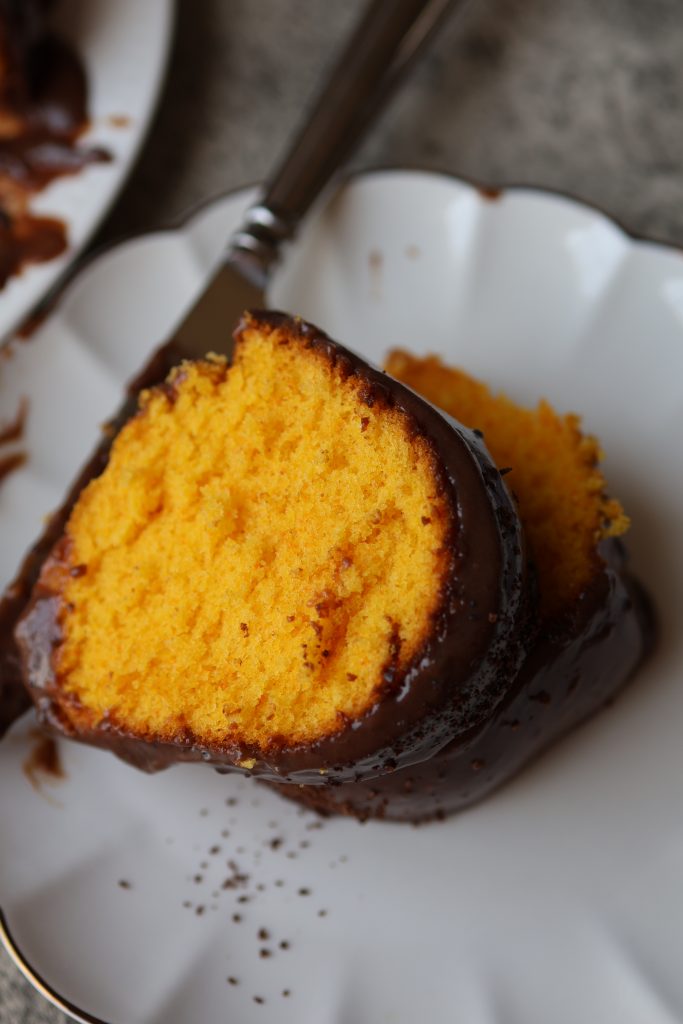
For dessert, I made bolo de cenoura, and if you are picturing American carrot cake with shredded carrots, nuts, and cream cheese frosting, forget all of that. The Brazilian version is completely different.
Raw carrots are blended in a blender with eggs, oil, and sugar until smooth, then mixed with flour and baking powder. The result is a light, fluffy, tender cake with a vivid orange color and no visible carrot pieces at all. The crowning glory is a glossy chocolate topping, sometimes a simple chocolate glaze and sometimes a soft brigadeiro-style layer, poured over the warm cake.
Bolo de cenoura is a classic of the Brazilian café da tarde, the afternoon coffee time, and it is one of the most nostalgic home-baked cakes in the country.
Eating the Brazilian Way: Table Etiquette to Know
- Greet everyone warmly. Brazilians often greet with a hug or kisses on the cheek. The number of kisses varies by region, so follow your host’s lead.
- Accept the cafezinho. Being offered coffee is a gesture of welcome, and accepting it is a gracious way to receive it.
- Take your time. Meals, especially Sunday lunch, are long and social. Rushing off right after eating can seem impolite.
- Expect seconds. Your host will likely insist you eat more. Taking a little more is a compliment to the cook.
- Relax about time. At casual social gatherings, arriving a bit after the stated time is common and usually expected.
Where to Find Brazilian Ingredients in the US
Most of this menu can be made with ingredients from a regular supermarket, but a Brazilian or Latin grocery store, or an online Brazilian shop, makes it easier and more authentic. Look for:
- Farinha de mandioca (cassava flour) for farofa, or ready-made seasoned farofa
- Polvilho doce and polvilho azedo for pão de queijo, or frozen ready-to-bake pão de queijo
- Carne seca and linguiça calabresa for feijoada
- Creme de leite and batata palha for stroganoff
- Catupiry for coxinha filling
- Frozen caju pulp for juice
Black beans, collard greens, oranges, chicken, potatoes, carrots, and turmeric are all easy to find at any grocery store.
Frequently Asked Questions
What is feijoada?
Feijoada is a slow-cooked stew of black beans with pork and beef cuts like sausage, bacon, ribs, and salted dried beef. It is considered Brazil’s national dish and is served with white rice, farofa, collard greens, and orange slices.
Why is feijoada served with orange slices?
The fresh, acidic orange cuts through the richness of the pork and beans, refreshes the palate, and, according to Brazilian tradition, helps with digestion.
What is farofa?
Farofa is toasted cassava flour cooked in butter or fat, often with onion, garlic, bacon, or eggs. It adds a crunchy, toasty texture and is sprinkled over beans, rice, and meats.
Is pão de queijo gluten free?
Yes. Traditional pão de queijo is made with tapioca starch instead of wheat flour, so it is naturally gluten free. Always check packaged versions if you have celiac disease.
Why do Brazilians put potato sticks on stroganoff?
Batata palha, crunchy shoestring potato sticks, add texture to the creamy stroganoff sauce. Brazilian stroganoff is traditionally served with white rice and batata palha on top.
What is caju?
Caju is the cashew apple, the soft fruit that the cashew nut grows on. It is native to Brazil and is popular as juice, with a sweet, tropical, slightly astringent flavor.
How is Brazilian carrot cake different from American carrot cake?
Brazilian bolo de cenoura is made by blending raw carrots into the batter, so it has a smooth, fluffy texture and bright orange color. It has no nuts or spices and is topped with chocolate instead of cream cheese frosting.
Final Thoughts
Brazil taught me that hospitality can be measured in abundance. Not abundance as showing off, but abundance as reassurance: there is enough for you, there is enough for whoever shows up next, and nobody leaves this table hungry.
From a slow Saturday pot of feijoada with all its sides, to crispy coxinhas, warm pão de queijo, and a slice of chocolate-topped carrot cake with coffee, this menu was about comfort, generosity, and the joy of lingering together. If you try any of these dishes at home, cook a little extra, tell your guests “fique à vontade,” and let your own mesa farta overflow.
See you at the next table!