
Iranian Makaroni: My Version of this Iranian Delicacy
By Emilia · Hosting the World Series · Recipes · Iran · September 2, 2026
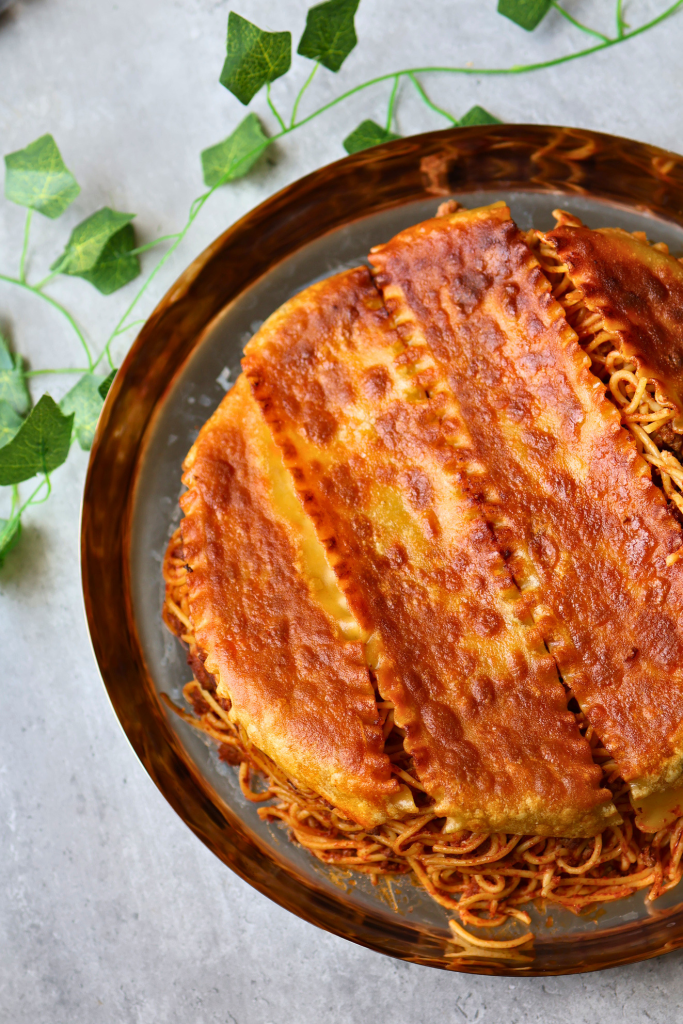
Save a seat at my table because today’s table looks a little different than usual. We’re still in the Hosting the World™ series, still building a menu one culture at a time, but this post is the first of a new kind: a recipe. That means history and heart like always, but it also means a full recipe card waiting for you at the bottom, ready to screenshot or print. First up in this new lane is a dish that took over my research feed for weeks: Iranian Makaroni, delicious spiced spaghetti nestled in a golden, crackling tahdig on the bottom.
The Word Behind the Table: Tarof
Every post in this series opens with a word, because a single word can carry a whole culture’s approach to hosting. For Iran, that word is tarof (تعارف). Tarof is the elaborate custom of gracious insistence by offering food again and again even after a guest says they’re full, refusing a compliment out of modesty, insisting the guest take the last serving while quietly hoping they’ll politely decline once. It sounds confusing from the outside, but at its core, tarof is just hospitality turned up as high as it will go: nobody leaves a Persian table wondering if they were wanted there.
It’s a fitting word to sit next to a dish like makaroni, because this is exactly the kind of food that shows up when tarof is in full effect, which is a big, shareable pan built for second and third helpings, with the best part (the tahdig) fought over and offered to guests first.
Where Makaroni Comes From
Pasta is not native to Iran, and Persian cooks have never pretended otherwise. Noodles entered Iranian cuisine through European trade routes in the early-to-mid 20th century, and Italian-style pasta in particular caught on in Iranian cities as an affordable, adaptable staple. Rather than serving it the Italian way, Persian home cooks did what Persian home cooks do with almost any imported ingredient: they folded it into the existing logic of a Persian meal.
That logic almost always includes rice with a crisped bottom layer, so it was only a matter of time before someone applied the same technique to pasta. The result is makaroni (sometimes spelled makarouni or macaroni, depending on who’s transliterating it that day) — pasta tossed with a tomato-based sauce, layered into a pot, and steamed low and slow so the bottom forms a crust. The word tahdig itself literally means “bottom of the pot” (tah = bottom, dig = pot), and in Persian households it is treated less like a side effect of cooking and more like the whole point. Family lore is full of siblings racing each other to the pot for the crispy pieces before anyone else gets a chance.
So while makaroni isn’t an “ancient” Persian dish the way a saffron rice or a slow-cooked khoresh might be, it’s a genuinely Persian one. Any starch left alone in a hot, oiled pan long enough will eventually earn its place at the table.
Dozens of Tahdigs: What I Found Researching on TikTok
Before I made a single noodle, I went down a research hole on TikTok, and I mean that literally… I watched dozens of versions of this dish before I picked one to try. What struck me was how much the “bottom” itself could change from cook to cook while the goal stayed identical: something crispy, something golden, something worth fighting over. I say this literally…I’ve heard some people have debates on who can eat the crispy bottom layer! Haha!
Some creators built their tahdig the most traditional way, letting the spaghetti itself form the crust on the bottom of the pot. Others swapped in thin potato slices under the noodles, which is a well-loved trick borrowed straight from Persian rice tahdig. But one version stopped my scroll completely: a cook using lasagna sheets as the crisping layer instead of round spaghetti or potatoes. That’s the one I couldn’t stop thinking about, and it’s the version I ended up adapting for this post.
I want to be honest about something here: I can’t speak to how authentic that lasagna-sheet method actually is. I saw it a few times, in a sea of other approaches, made by someone I don’t personally know, cooking a dish from a culture that isn’t mine. What I can tell you is that there are clearly multiple legitimate paths to a good Iranian makaroni, and I picked the one that intrigued me most and made it my own from there. So consider this recipe inspired by Persian makaroni rather than a claim to the “correct” or only way to make it.

Making It My Own (Inspired, Not Authentic)
Because I genuinely did not want to mess this up on the first attempt, I built the whole process around caution rather than confidence. Here’s roughly how it went:
I started by adding water and oil to the bottom of the pot before anything else went in — my insurance policy against sticking, and the same basic principle behind almost every tahdig method I’d watched. Into that went the lasagna sheets, which I let brown just slightly before adding anything on top of them. That browning step felt important; it’s the head start that turns into a real crust later instead of just softening into mush.
Note: I definitely recommend using a non-stick pot.
From there, I layered in spaghetti on top of the lasagna sheets, then came back later and added the rest of the spaghetti once the base layer had a little time to set. The pot then went down to low heat with the lid on, and I let it sit and cook slowly so it could essentially steam in its own residual moisture — and I’ll admit “steam” might not be the technically precise word for what’s happening in a sealed, oiled pot, but it’s the word that describes what it felt like: gentle, patient, hands-off cooking that let the top finish softening while the bottom quietly turned crisp.
That low-and-slow stretch is really the heart of tahdig cooking, no matter which base you choose. You’re not actively doing anything during that window — you’re trusting the process, which, if I’m honest, was the hardest part for a first attempt.

Tips for a Tahdig That Actually Releases
A few insights I picked up along the way, most of them learned by nearly getting it wrong:
- Use a nonstick or well-seasoned pot. Tahdig lives and dies by whether it releases cleanly, and a pot with any sticking history will fight you. This is a non-negotiable.
- Don’t rush the low-heat stage. This is a “walk away and let it be” dish. Checking on it too often by lifting the lid lets steam escape that the top layer needs to finish cooking.
- Let it rest before you flip it. Pulling it off the heat and letting it sit for a few minutes helps the crust firm up so it holds together when you invert the pot onto a plate.
- Listen for the sizzle to change. A shift from a wet sizzle to a drier, quieter crackle is usually a good sign the bottom has crisped.
- Have a plate bigger than your pot ready before you flip — this is not a moment to be searching the cabinet one-handed.
Frequently Asked Questions
Is this the “authentic” way to make Iranian makaroni?
Not exactly, and I want to be upfront about that. This version is inspired by one of many approaches I found while researching, specifically the lasagna-sheet tahdig method. Traditional versions more commonly use the spaghetti itself, or thin potato slices, as the crisping layer. Consider this recipe my own take rather than a definitive one.
A Note on My Tahdig Method: Traditionally, the lasagna sheets and makaroni are layered in the pot together, then cooked over higher heat initially before the heat is lowered, allowing everything to steam and the tahdig to crisp at the bottom. Since this was my first time making lasagna-sheet tahdig, I played it safe and gave the sheets a head start so I could check their color before adding the makaroni. It gave me a little more control over the browning and worked beautifully!
Can I use regular spaghetti or potatoes instead of lasagna sheets?
Yes. Both are common, well-loved bases for the tahdig layer. If you use spaghetti for the bottom as well as the top, you can skip the browning-before-layering step described above and go straight to building the pot in layers.
What does “letting it steam” actually mean here?
It’s a loose way of describing the low, covered, slow-cook stage where the pasta on top finishes cooking through in trapped moisture while the bottom layer crisps against the direct heat of the pot. It’s less a formal culinary “steaming” and more a gentle, patient simmer-and-set.
What sauce works best with makaroni?
A simple tomato-based sauce is the most common base, sometimes seasoned with turmeric and a touch of saffron water for color and warmth. Makaroni is also frequently served alongside a Persian stew (khoresh) or a simple side salad to balance the richness of the crispy bottom.
Can I make this vegetarian?
Yes, easily. The base method described here doesn’t require meat at all as it’s really about the pasta, the sauce, and the tahdig technique. Swap in a vegetarian tomato sauce and you’re set.
Final Thoughts
What I loved most about researching this dish wasn’t landing on one “right” answer. It’s that there wasn’t one. Every version I watched on TikTok was somebody’s own act of tarof in its own way: an offering, made with care, for whoever was going to eat it. My lasagna-sheet version is just one more addition to that long, generous pile of approaches. I hope it earns a spot at your table, crispy bottom and all.
Hosting the World: Iran 🇮🇷
Want to see what else I made this week? Come explore my full Hosting the World: Iran experience, from the dishes on my table to what I learned about Iranian food and hospitality.
[Explore Iran with me →] Click here!

Iranian Inspired Makaroni with Lasagna Sheet Tahdig

Ingredients
- 1 lb spaghetti
- 1 lb ground beef
- 1 small yellow onion
- 2 tbsp olive oil
- 1 jar Rao's Marinara Sauce
- 1 tsp garlic powder
- 1 tsp onion powder
- 1 tsp turmeric
- 1 tsp paprika
- 1 small packet sazón with annatto optional, for a deeper red color
- salt and black pepper to taste
- 3 lasagna sheets
- 2-3 tbsp neutral oil for the tahdig
- 2-3 tbsp water
Instructions
Cook the Spaghetti
- Bring a large pot of generously salted water to a boil and cook the spaghetti until just al dente. Remove the spaghetti with tongs, keeping the cooking water at a boil. Add the lasagna sheets to the same water and cook for about 5–6 minutes, or until pliable but still al dente. Drain and set aside.
Make the meat sauce.
- Heat the olive oil in a pan over medium heat. Add the onion and sauté until softened. Add the ground beef and cook until browned, breaking it apart as it cooks.
- Season the beef with garlic powder, onion powder, paprika, salt, and black pepper. Stir in the marinara sauce and, if using, the sazón with annatto for a richer red color. Simmer for a few minutes to bring the flavors together.
Combine
- Add the cooked spaghetti to the meat sauce and toss until everything is evenly coated.
Prepare the Tahdig
- Add the neutral oil and water to the bottom of a clean, wide pot. Heat over medium-high heat until very hot.
- Arrange the 3 lasagna sheets across the bottom of the pot, covering as much of the surface as possible. Let them cook briefly until the bottoms begin to turn golden.
Add the makaroni
- Once the lasagna sheets have started to brown, gently pile the spaghetti mixture on top without disturbing the sheets.
- Cover the pot, reduce the heat to the lowest possible setting and cook for about 15 minutes, allowing the flavors to come together and the lasagna tahdig to become crisp and golden.
Flip!
- Place a large serving platter over the pot. Carefully invert the pot in one confident motion to reveal the crispy, golden lasagna-sheet tahdig on top.Serve immediately while the tahdig is at its crispiest.
Notes
- Sazón: Completely optional, but it gives the sauce a deeper, more vibrant red color.
- Non-stick pot: I really recommend using a non-stick pot for this recipe or for every time you make tahdig. Trust me, I learned the hard way while using all-clad once.
- Lasagna tahdig: Letting the lasagna sheets brown slightly before adding the spaghetti makes it easier to control the crispness and helps prevent burning.
- Heat matters: Once the spaghetti is added, keep the heat low so the tahdig continues to crisp without getting too dark.
- The flip: Use a serving platter slightly larger than your pot and flip while the makaroni is still hot.
- Make it your own: Iranian makaroni varies from household to household. This version uses a tomato-based ground beef sauce with my own little shortcuts and twists.
- Best served immediately so that crispy lasagna-sheet tahdig stays crisp.