How I Hosted Afghanistan at My Table: Melmastia, Mantu, and a Dress Full of Mirrors
If there is one word that changed the way I think about hospitality, it is melmastia.
It is a Pashto word with no clean English translation. The closest you can get is something like “the sacred duty to honor your guest“… but even that falls short. Melmastia is not just about being polite. It is not about having the right dishes or setting a pretty table. It is a deeply held cultural value in Afghanistan that says: when someone walks through your door, you give them everything. Your best food. Your best seat. Your full attention. Your protection, if necessary.
When I sat down to plan the Afghanistan episode of Hosting the World, I knew the food alone would not be enough. I needed to understand melmastia — really understand it — before I could do this country justice at my table in Texas.
This post is the full story of how that dinner came together: the menu, the table, the dress, and what I learned about one of the most generous hospitality cultures on earth.
What Is Melmastia? Afghanistan’s Sacred Law of Hospitality
Long before I started cooking, I started reading.
Melmastia is one of the nine pillars of Pashtunwali, the ancient code of ethics that has governed Pashtun society for centuries. Under Pashtunwali, hosting a guest is not optional and not transactional. It does not matter whether you are wealthy or struggling. If a guest arrives, you feed them. You shelter them. You treat them as an honored member of your own family for as long as they are under your roof.
In Afghan culture, there is a saying that the guest is a gift from God. Turning away a guest — or offering them less than your very best — is considered one of the greatest social failures imaginable!!!!
This blew my mind the first time I truly absorbed it. We live in a world where hosting has become something we prepare for weeks in advance, stress over, and apologize through. In Afghanistan, hospitality is simply what you do. It is woven into identity.
I wanted to honor that. Every decision I made for this dinner — the menu, the table, the details — was filtered through that one question: Is this the best I can give?
Setting the Table: When You Cannot Find the Dastarkhan
In Afghanistan, traditional meals are often served on a dastarkhan — a large cloth spread directly on the floor or on a low table, around which the family and guests gather to eat together. There are no individual plates placed at a distance from one another. Everyone is close. Everyone is sharing. The dastarkhan is not just a tablecloth; it is a gathering place.
I searched for a traditional dastarkhan to use for this dinner, and I could not find one in time.
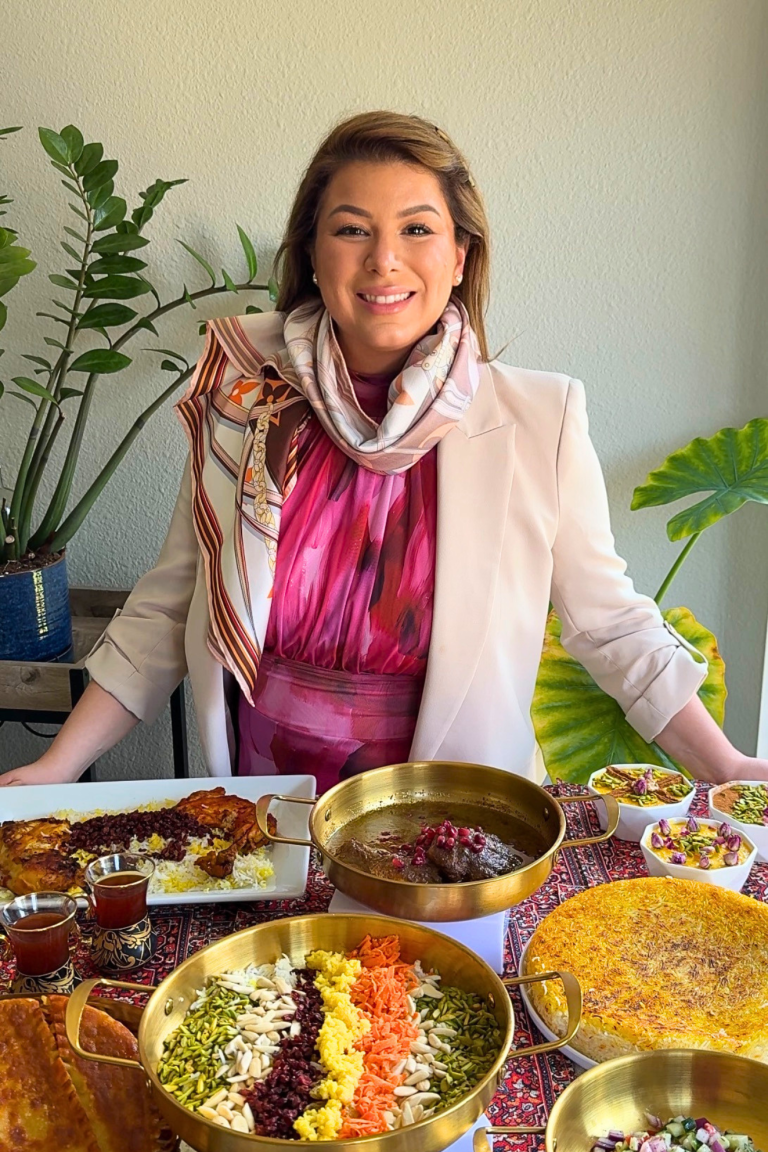
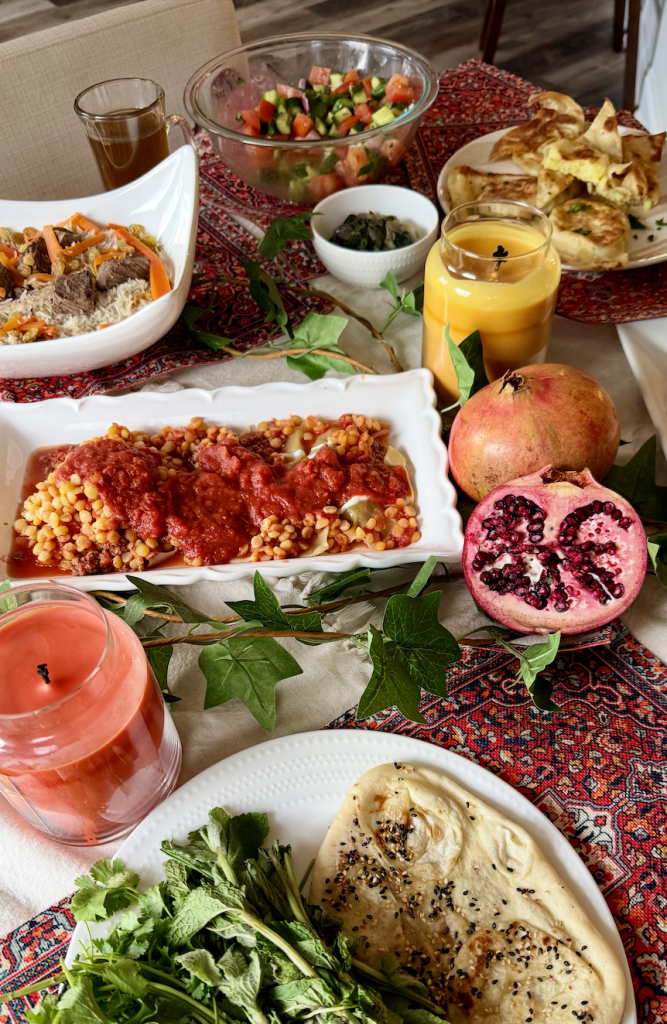
So I did what any resourceful host does: I improvised with intention. I chose a richly patterned style placemat with deep reds and intricate geometric designs — the kind of textile that visually echoes the carpet traditions of the broader Central Asian region that Afghanistan is part of. When you look at the photo from this dinner, you will see exactly what I mean. The placemat grounds the whole table. It brings that sense of textile warmth and pattern richness that is so central to Afghan visual culture.
Was it a perfect substitute? No. But it was a deliberate, researched choice, and I think it communicates the spirit of what I was going for: a table that feels like a place, not just a surface.
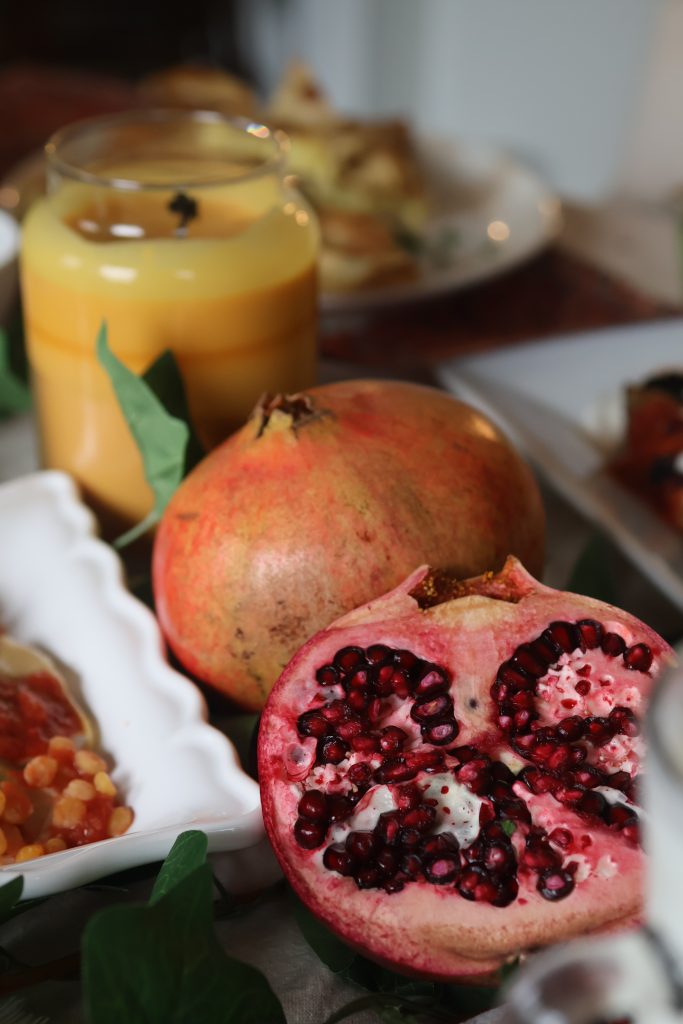
To that foundation I added fresh pomegranates and scattered deep green leaves as decoration. The pomegranate is not incidental in Afghan culture. It is practically the national fruit. Afghanistan, and particularly the Kandahar province, is famous throughout the world for producing some of the most extraordinary pomegranates you will ever taste — sweet, jewel-red, almost impossibly flavorful. The pomegranate appears in Afghan poetry, in celebrations, in gifts between families. Placing them on the table was not just a styling choice. It was a statement about the country I was hosting.
The Dress My Friend Maysa Lent Me
Before I talk about the food, I have to talk about the dress.
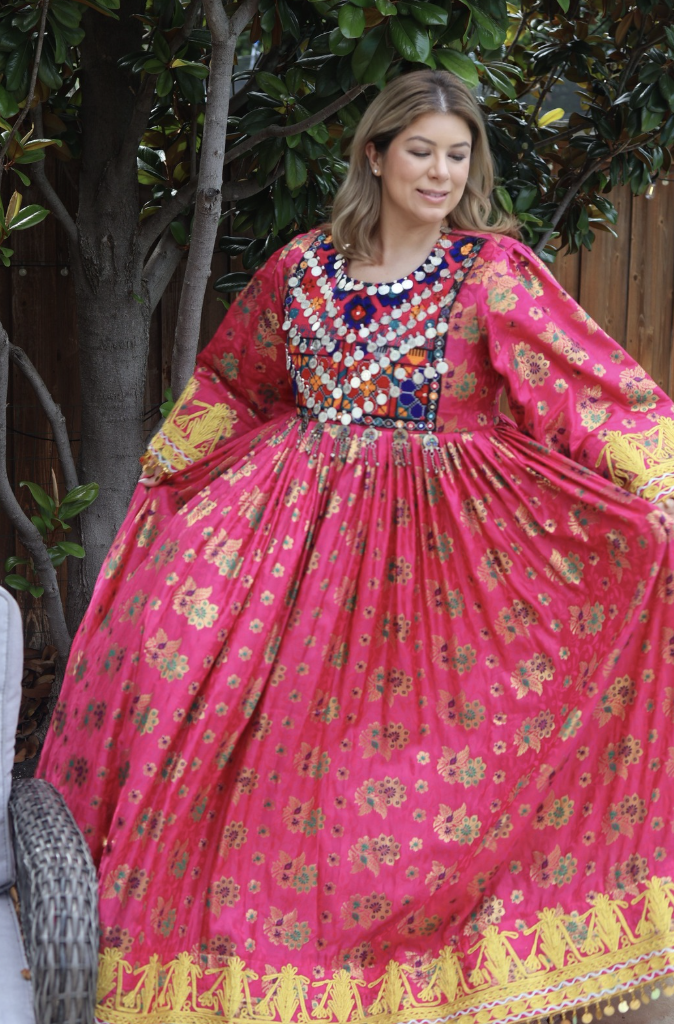
My dear friend Maysa — who has been an incredible guide and resource for this episode in more ways than one — lent me her traditional Afghan dress for the filming of this dinner. When I say this dress is something else, I mean it in the most literal sense.
It is a floor-length gown in a vivid fuchsia pink, absolutely alive with color. The skirt is made of layered, pleated silk-like fabric covered in intricate gold and multicolor floral embroidery. The neckline and bodice are an entirely different world: they are covered in coin-like mirror embellishments, stitched pieces of reflective glass and metal that catch the light with every movement, surrounded by bold geometric embroidery in red, blue, navy, and gold.
The dress is heavy. Genuinely heavy, in a way that reminds you that what you are wearing is not fast fashion but true craftsmanship. I had to wear the dress after I cooked. I could not wear it during cooking because of how heavy it was…. Every mirror, every thread, every pleat represents hours of skilled work. Afghan dresses like this one are often made for celebrations: weddings, Eid, special gatherings. They are made to be seen.
Wearing it while hosting this dinner felt significant. It was a reminder that in Afghan culture, dressing with intention for your guests is itself an act of respect. You put on your finest because your guest deserves to be greeted by your best self.
I am deeply grateful to Maysa for trusting me with something so beautiful and so personal. It made the whole experience feel real in a way that a costume never could.
The Menu: A Full Afghan Feast
I went all in on this menu. My goal was to create a spread that reflected the true generosity of Afghan hospitality and not one or two dishes, but a real, abundant table. Here is everything I made.
Afghan Naan
Every Afghan meal begins with bread. Naan in Afghanistan is not the soft, pillowy naan you might know from Indian restaurants. Afghan naan is longer, flatter, and has a beautiful chew to it. It is scored with a distinctive ridge pattern before baking, giving it that characteristic look.
I served the naan warm alongside fresh herbs — cilantro, mint, and flat-leaf parsley — which is the traditional Afghan way. The herb platter (called sabzi) is always on the table. You tear a piece of naan, pick up some herbs, and eat. It is simple and extraordinary.
Afghan Salad
Clean, fresh, and bright. Afghan salad is typically a mix of tomatoes, cucumbers, and onion, dressed simply with lemon juice, salt, and sometimes a touch of dried mint. It cuts through the richness of the heavier dishes and provides that freshness that every abundant table needs.
Bolani
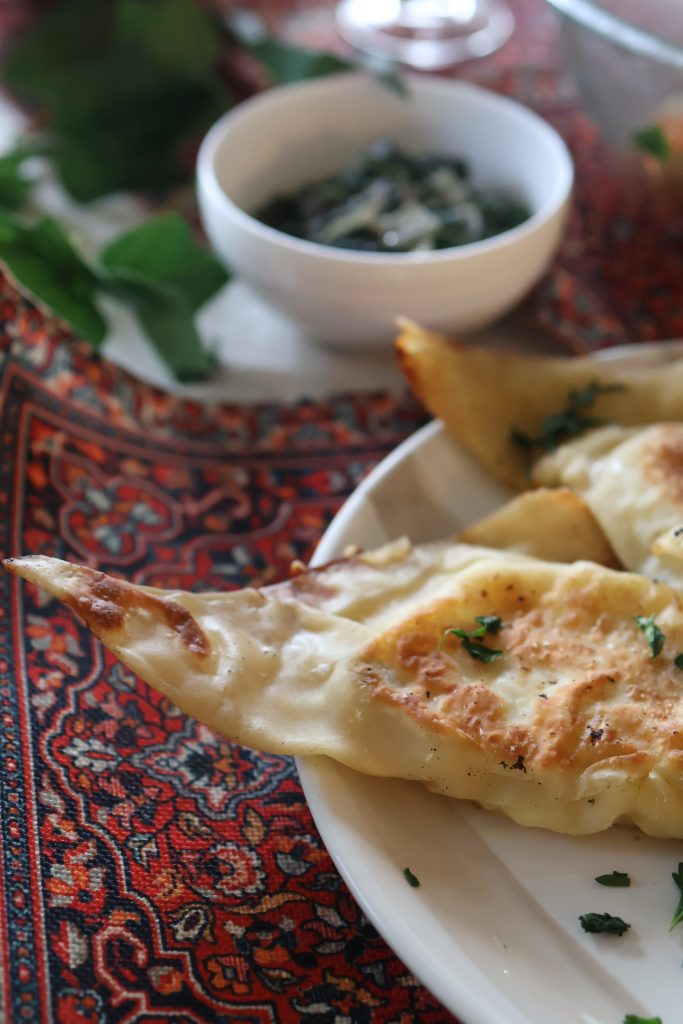
Bolani is one of my absolute favorite things I made for this dinner. These are thin, pan-fried flatbreads stuffed with a filling — mine was a potato and cilantro mixture — and cooked until golden and crispy on the outside with a soft, savory interior.
They are traditionally served as an appetizer or alongside the main meal, and they are the kind of thing that disappears from the table before you can blink. Bolani are humble food in the best possible sense: straightforward ingredients, extraordinary result.
Mantu
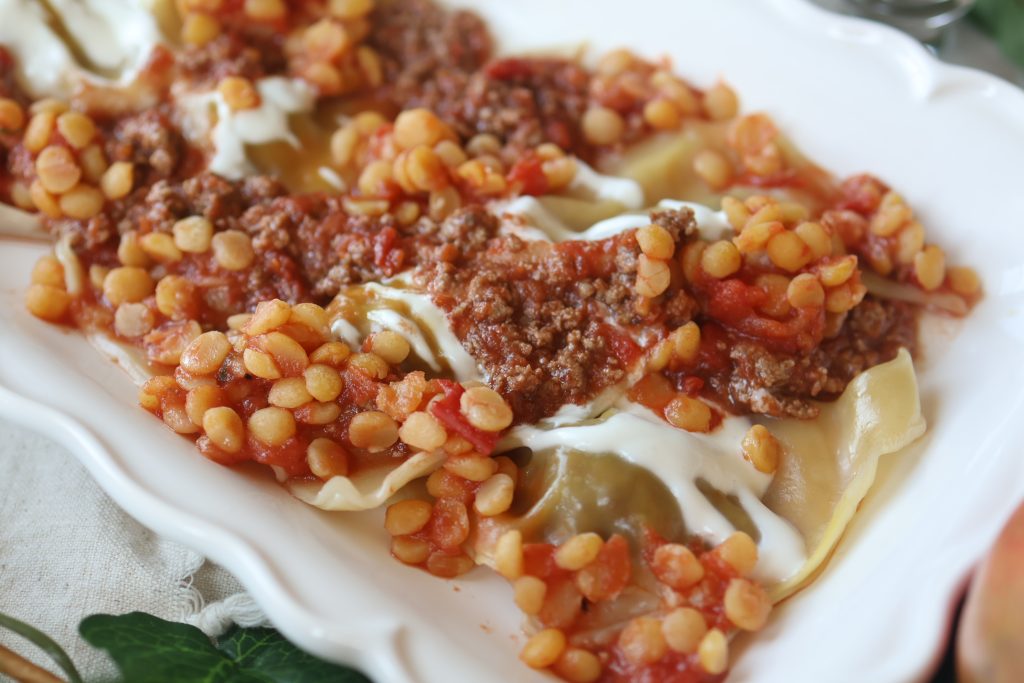
Mantu is the dish I am most proud of from this dinner. These are Afghan steamed dumplings filled with seasoned ground beef and onions, served over a yogurt sauce and topped with a tomato and chickpea ragu, finished with dried mint and sometimes split peas.
If you have never had mantu, I want you to understand that they are extraordinary. The dumpling wrapper is thin and delicate. The filling is warmly spiced. And the contrast of the cool yogurt underneath with the savory meat topping above is one of those flavor combinations that makes you stop mid-bite.
They are also time-consuming to make. Folding each dumpling by hand takes patience. But that labor is part of the point. In Afghan culture, making mantu for guests is a way of saying: you are worth my time.
Kabuli Pulau with Beef
This is the crown jewel of Afghan cuisine and arguably one of the greatest rice dishes in the world.
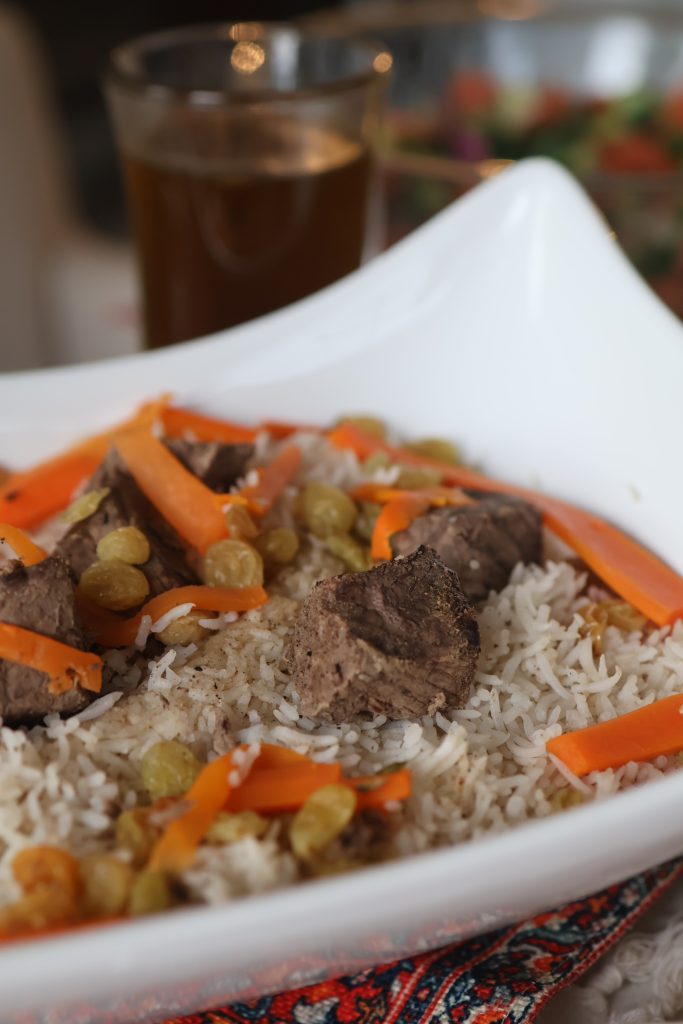
Kabuli pulau (also spelled qabili palaw) is Afghanistan’s national dish. Long-grain basmati rice is cooked in a rich meat broth, then layered with slow-braised beef, and topped with carrots that have been julienned and caramelized in a spiced syrup, along with raisins that have been plumped in the same pan.
The result is a dish of genuine complexity: savory, slightly sweet, aromatic with cardamom and cumin, with a saffron-tinged golden color that makes it look like something from a feast in another century. Because it is.
For this dinner, my friend Iman (who was recently on Master Chef and served Kabuli Pulau with chutney as her audition dish) had shared a recipe for a green chutney that I made to serve alongside the kabuli pulau. This chutney — made with fresh cilantro, green chilies, garlic, and lemon — was absolutely, completely, stop-everything delicious. It added a bright, herbaceous heat that lifted the whole dish. I cannot recommend it enough.
Borani Banjan
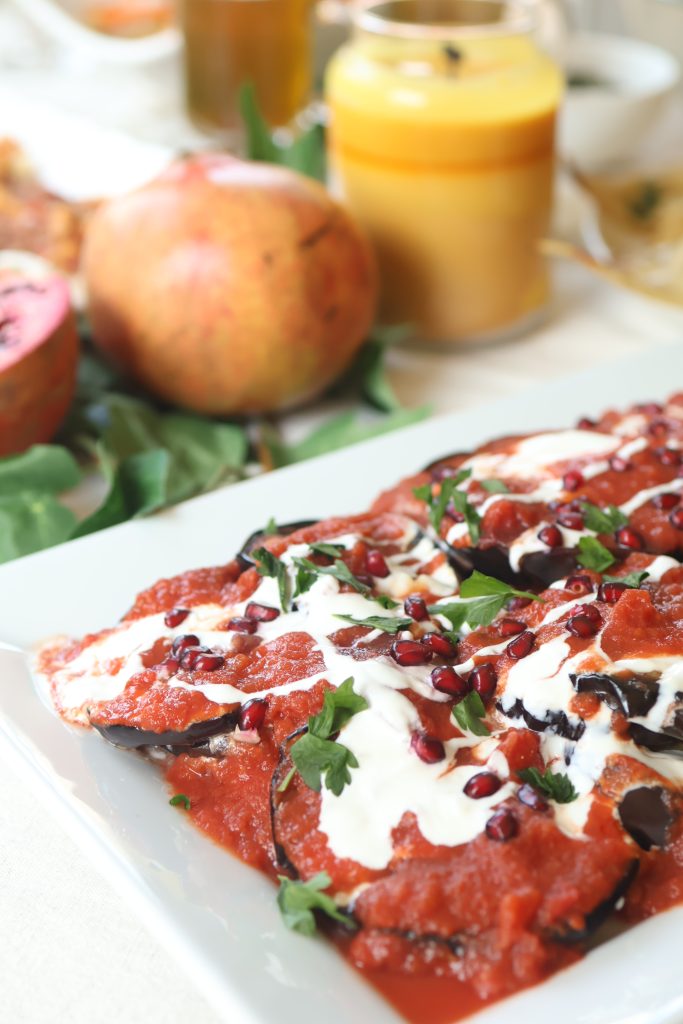
Borani banjan is an Afghan eggplant dish that is quietly one of the most elegant things on the table. Eggplant is fried until tender and slightly caramelized, then layered with a garlicky tomato sauce and finished with a cool yogurt drizzle.
It is vegetarian, deeply flavorful, and one of those dishes that non-eggplant-lovers tend to love because the preparation transforms the eggplant completely.
Doogh
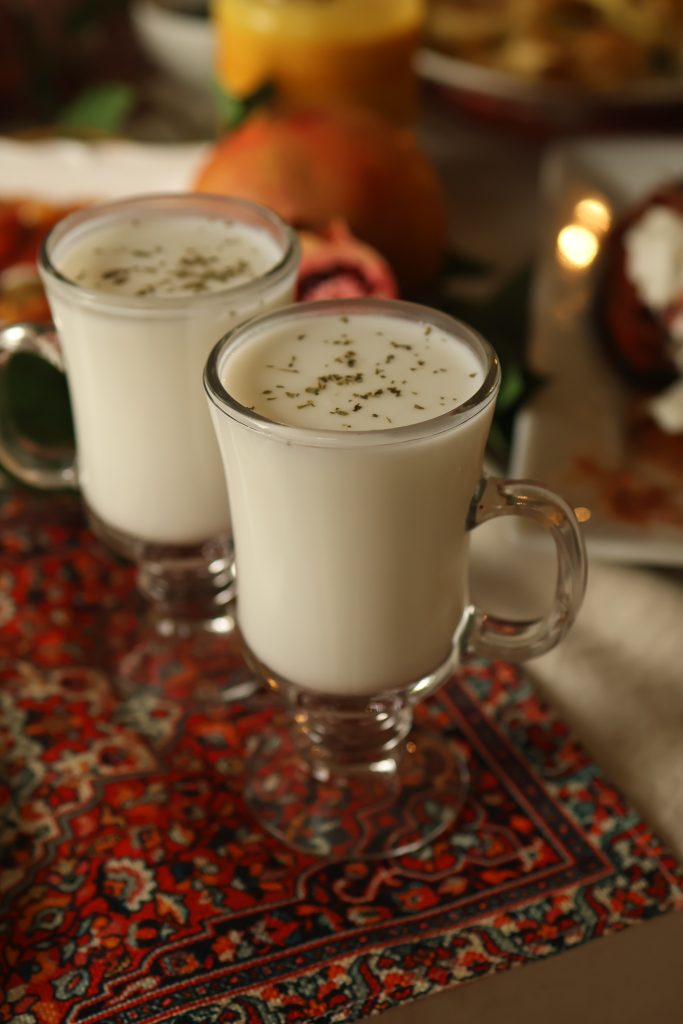
Doogh is the traditional Afghan yogurt drink — a savory, cold beverage made from yogurt, water, dried mint, and salt. Think of it as a cousin to the Persian doogh or the Indian lassi, but distinctly its own thing.
It is the perfect drink for a rich, abundant meal like this one. It is refreshing, slightly tangy, and helps the body digest everything you have just eaten. I served it cold alongside the meal and it was a complete hit.
Green Tea with Saffron
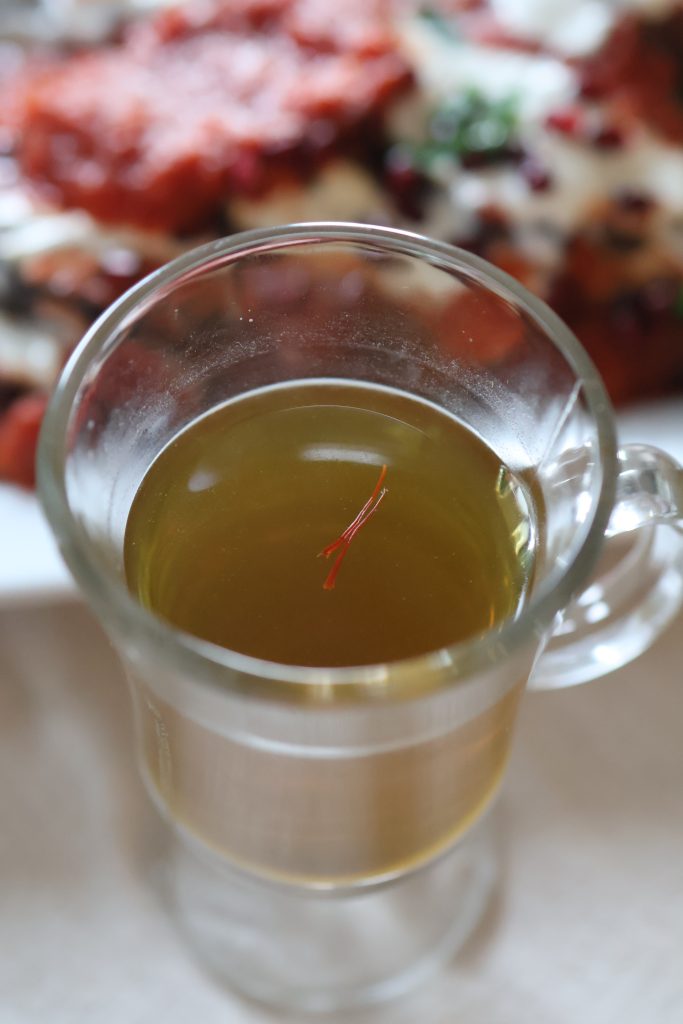
Saffron holds a place of honor in Afghan culture. Afghanistan produces some of the world’s finest saffron, particularly from Herat province, and it appears everywhere — in rice dishes, in desserts, and in tea.
For this dinner, Maysa gave me her own saffron — a deeply generous gift — and I used it to make traditional Afghan green tea infused with saffron threads. The color it gives the tea is a gorgeous pale gold. The flavor is floral and warm and unlike anything a tea bag will ever give you.
Drinking this tea at the end of the meal felt like the most fitting possible close to a dinner built around the concept of giving your guest the very best you have.
Rice Pudding
For dessert, I made Afghan rice pudding (sheer birinj) — a creamy, gently sweetened pudding flavored with cardamom and rose water, sometimes garnished with pistachios. It is delicate and comforting in the way that only a dessert made from pantry staples and slow time can be.
What Melmastia Taught Me About Hosting
Hosting the Afghanistan episode of Hosting the World changed me a little.
Not in a dramatic way. But in the way that happens when you genuinely try to see the world through another culture’s eyes, even briefly and imperfectly.
Melmastia says that hospitality is not about impressing your guest. It is not about the Instagram shot (yes, I see the irony). It is about making another human being feel that their presence in your home is a gift — because it is! Every person who sits at your table brings their whole life with them. Their stories, their hunger, their need for connection.
The Afghan table does not ask: Do I have enough? Is everything perfect? Will they judge me?
The Afghan table says: You are here. Everything I have is yours.
I am still working on getting there. But this dinner brought me closer.
The Full Menu at a Glance
- Afghan naan with fresh herb platter
- Afghan salad
- Bolani (potato and leek stuffed flatbread)
- Mantu (steamed dumplings with yogurt and tomato ragu)
- Kabuli pulau with braised beef and Iman’s green chutney
- Borani banjan (Afghan eggplant)
- Doogh (savory yogurt drink)
- Green tea with Maysa’s saffron
- Rice pudding for dessert
Cook This With Me
If you want to bring Afghan hospitality into your own kitchen, I recommend starting with bolani — they are approachable, fast, and absolutely delicious. The kabuli pulau is a weekend project worth every minute. And the doogh you can make in five minutes with things already in your fridge.
Save a seat at my table. ✦
Have you ever experienced melmastia firsthand? Or cooked Afghan food at home? Tell me in the comments. I want to hear every story.